Oklahoma State University will build a 275,000‑square‑foot veterinary teaching hospital in Stillwater to expand clinical training, enrollment capacity and access to advanced animal care. The facility will include CT and MRI imaging, radiography, ultrasound, a linear accelerator and enhanced large‑animal space. Backed by a $250 million state appropriation toward an estimated $330 million total, the project complements scholarships and rural‑practice programs aimed at addressing veterinary shortages in more than 80% of Oklahoma counties.
OSU to Build 275,000‑Sq‑Ft Veterinary Teaching Hospital to Tackle Rural Vet Shortages
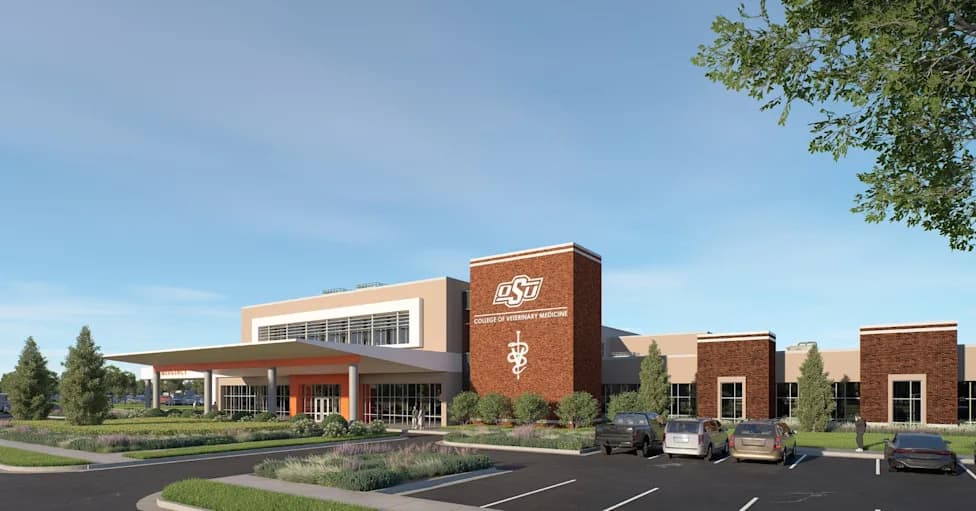
Oklahoma State University's new veterinary teaching hospital will expand clinical training opportunities while increasing access to advanced veterinary care. (Image courtesy of Oklahoma State University)
Oklahoma State University is moving forward with a major expansion of its veterinary medicine program: a planned 275,000‑square‑foot veterinary teaching hospital on university land at the Agronomy Research Station in Stillwater, just north of State Highway 51 and about a half‑mile west of Western Road.
Growth, Capacity and Modern Diagnostics
The new facility is designed to relieve capacity constraints at OSU's existing hospital, which was originally built for class sizes of about 70 students but now serves cohorts exceeding 100. The hospital will expand space for instruction, clinical rotations and patient care, and will feature advanced diagnostic and treatment technologies including CT and MRI imaging, radiography, ultrasound, and a linear accelerator for cancer treatment. Enlarged large‑animal facilities will support care for beef cattle, swine, sheep and other food animals.
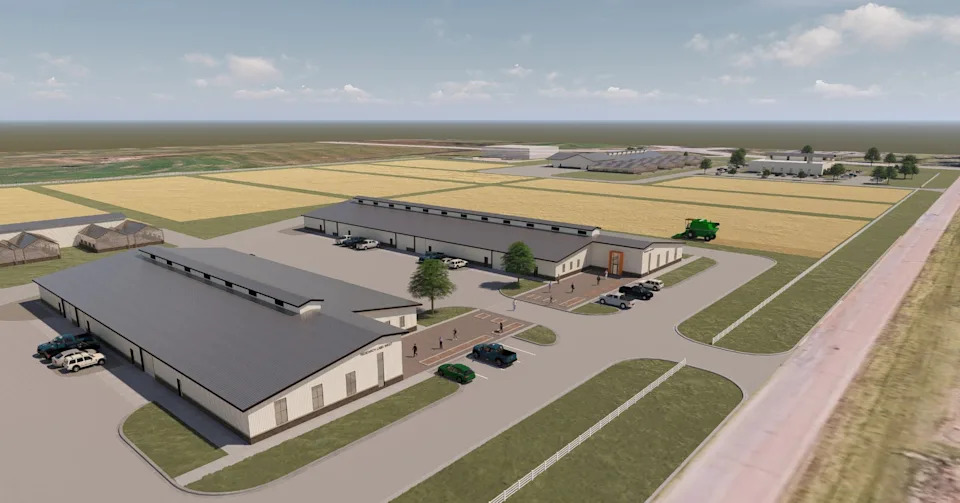
Oklahoma State University's planned veterinary teaching hospital will expand clinical training and animal care capabilities. (Image courtesy of Oklahoma State University)
Addressing Rural Veterinary Shortages
OSU reports more than 80% of Oklahoma counties experience veterinary shortages. The shortage is acute in regions that depend on livestock production, where veterinarians provide routine care, disease surveillance, biosecurity and protections for the food supply. The U.S. Department of Agriculture designated multiple Oklahoma regions as high‑priority veterinary shortage areas for FY2026, highlighting specific needs for food‑animal veterinarians in north‑central, northeastern, southeastern, southwestern and western parts of the state.
Workforce Development and Financial Support
OSU has ramped up programs to train vets for rural practice. The Center for Rural Veterinary Medicine emphasizes hands‑on training for farm and ranch settings, and the Oklahoma Rural Veterinary Scholarship and Loan Forgiveness Program can provide qualifying students up to $25,000 per year for as many as four years in exchange for commitments to practice in rural Oklahoma. Earlier this year OSU awarded rural veterinary scholarships to 14 students who pledged to serve rural communities.
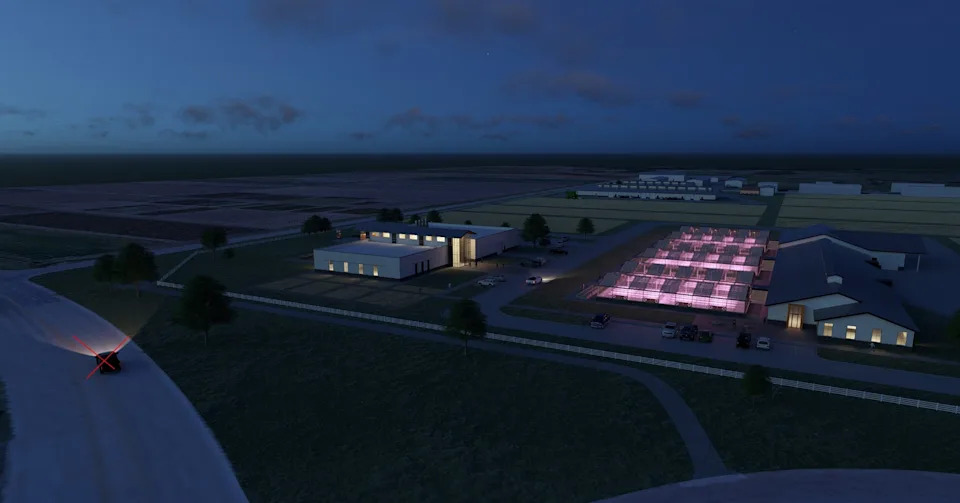
The new OSU veterinary teaching hospital will include enhanced large-animal facilities and advanced diagnostic technology for veterinary education and patient care. (Image courtesy of Oklahoma State University)
Funding, Timeline and Complementary Projects
The state legislature appropriated $250 million in 2025 toward construction; total costs are currently estimated at $330 million, with private fundraising expected to support additional program elements and equipment. The hospital is being developed alongside a new Agronomy Discovery Center—backed with a $40 million legislative investment—to consolidate modern research in wheat breeding, crop science, soil fertility, forage and turfgrass. Both projects are in the design phase, and OSU says it will release further details as planning advances.
"Our mission is to provide state‑of‑the‑art veterinary care for every patient, from companion animals to livestock," said Dr. Richard Prather, dean of the OSU College of Veterinary Medicine. "This care improves animal health, supports the people who depend on these animals, and helps safeguard a strong and sustainable food supply for our state and nation."
OSU leaders say the investment will help keep the university competitive nationally, attract students, faculty and researchers, and better prepare veterinarians to serve rural and food‑animal needs across Oklahoma and beyond.
Help us improve.