Stardust Solutions, a 2023 Israeli–U.S. startup, proposes cooling Earth by spraying engineered silica- and calcium carbonate–based particles into the stratosphere, estimating about $10 billion per million tons per year for ~0.9°F of cooling. The company says its particles could be safer and tunable, but leading scientists warn of major uncertainties—including health risks, altered rainfall, governance gaps and the danger of "termination shock." Stardust plans government-supervised, incremental field tests, while critics urge transparency and stronger international oversight.
Startup Says It Can Cool the Planet for $10B a Year — Scientists Warn of Major Risks
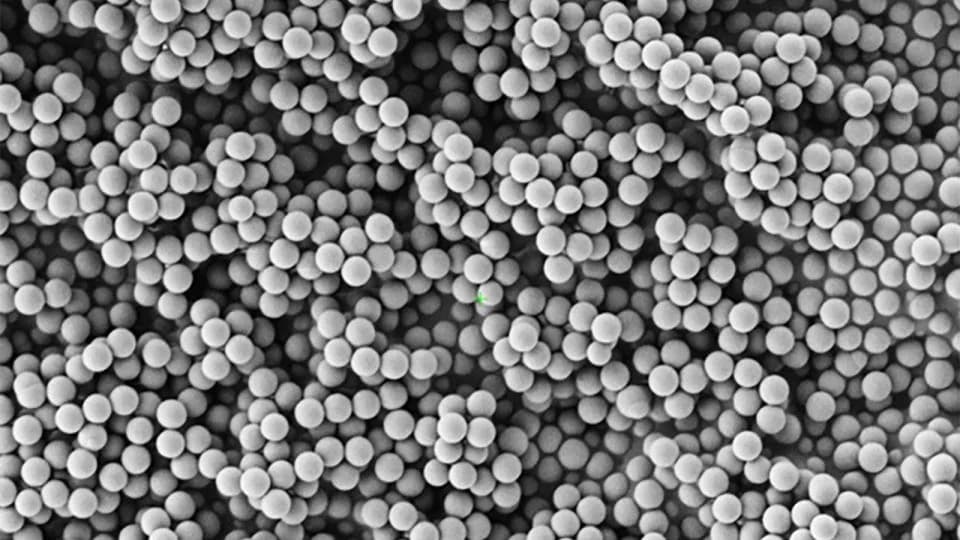
Stardust Solutions has developed particles that it says can be sprayed into the atmosphere to cool the planet. - Stardust Solutions
Stardust Solutions, an Israeli–U.S. startup founded in 2023, is pitching a dramatic—and controversial—plan to slow global warming by spraying engineered particles into the stratosphere to reflect sunlight back into space. The company says its silica-based designs could deliver measurable cooling at an estimated cost of about $10 billion per million tons per year. Many climate scientists and ethicists caution that the risks, uncertainties and governance challenges remain large and unresolved.
What the Company Proposes
Stardust’s co-founders, Yanai Yedvab and Amyad Spector—both former Israeli government nuclear physicists—have developed two particle types described in preliminary papers pending peer review. One is made of amorphous silica, a substance commonly used as an anti-caking agent in foods and in consumer products. The other combines a calcium carbonate core (the main component of eggshells) with an outer shell of amorphous silica.
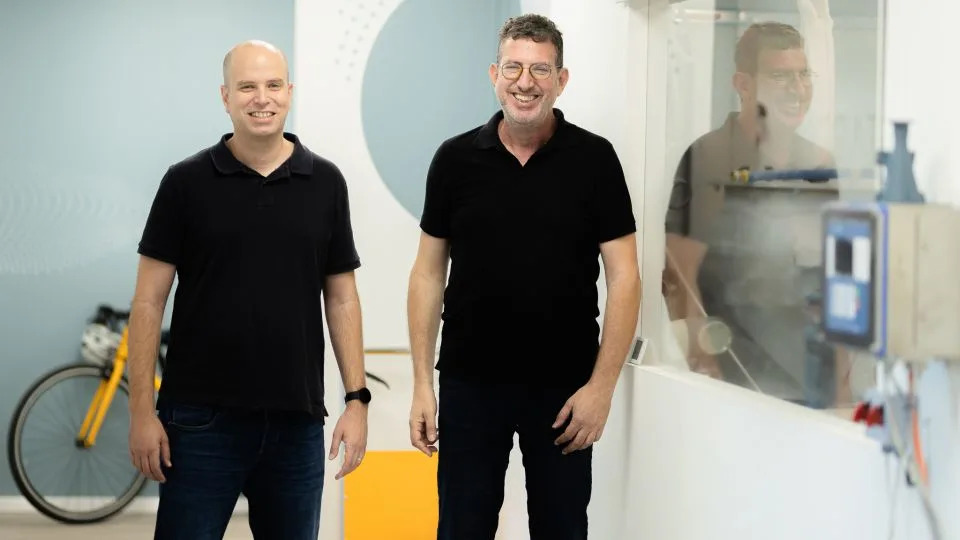
Stardust Solutions co-founders Amyad Spector (left) and Yanai Yedvab (right) at the company's facility in Israel. - Roby Yahav/Stardust
How the Approach Would Work
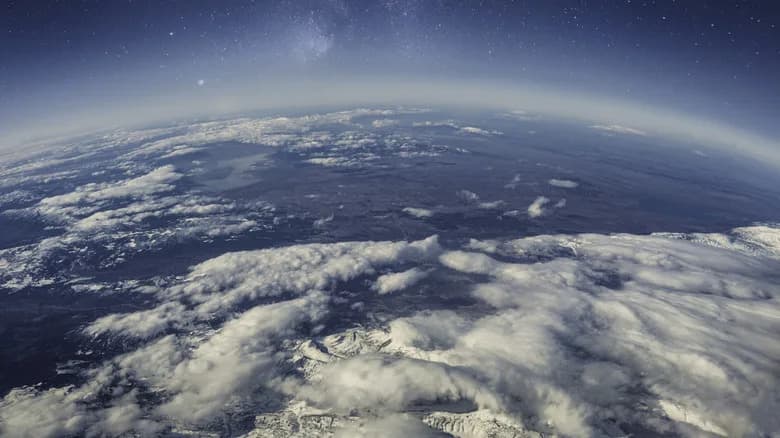
The idea mirrors the climate-cooling effect of large volcanic eruptions, which inject sulfur dioxide into the stratosphere and temporarily lower global temperatures. Stardust estimates that each million tons of its particles deployed in the stratosphere could produce roughly 0.9°F (0.5°C) of cooling, but the particles would need annual replenishment because they fall out of the stratosphere after about a year. The company calculates a deployment cost of roughly $10 billion per million tons per year.
Claims of Safety and Controllability
Stardust argues its particle designs would be safer and more controllable than sulfur-based approaches, which can cause acid rain and harm ozone. The company points to prior uses of silica in civilian contexts to suggest a low hazard profile and says its architecture addresses known concerns such as particle aggregation or uptake of contaminants.
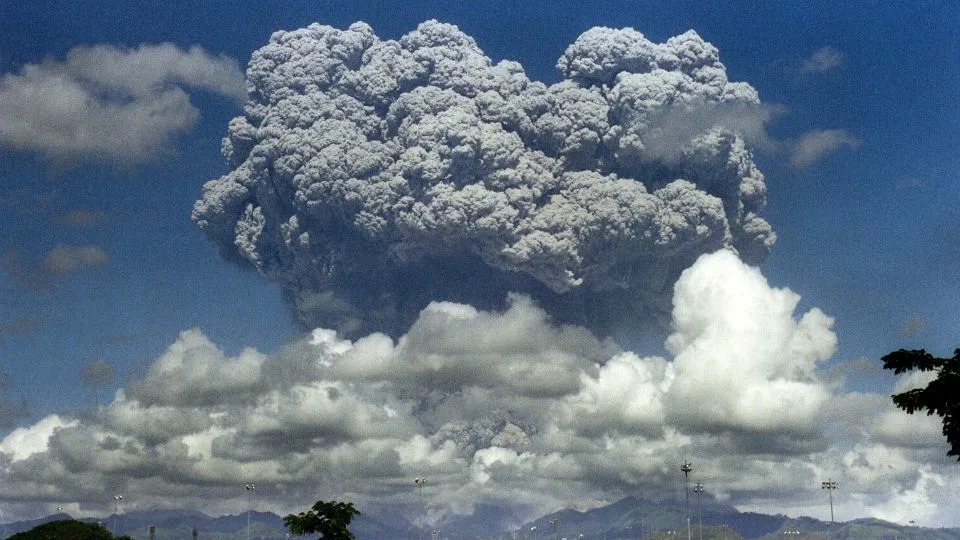
Mount Pinatubo in the Philippines erupted on June 12, 1991, sending a cloud of ash into the atmosphere, which cooled global temperatures. - Arlan Naeg/AFP/Getty Images
Scientific, Health and Governance Concerns
"When the whole world is at stake, satisfying the needs of venture capitalists for profits should not enter at all into decisions about what, if anything, should be deployed," said Raymond Pierrehumbert, professor of planetary physics at the University of Oxford.
Independent experts counter that laboratory results cannot fully predict how engineered particles will behave at atmospheric scale. Key scientific and public-health concerns include the "hitchhiker hypothesis"—the risk that airborne particles could pick up metals or pollutants that become harmful when inhaled—and the potential for large-scale disruption of rainfall patterns, monsoons and regional climates.
Another major worry is so-called "termination shock": if an ongoing program of solar geoengineering were abruptly halted, the suppressed warming could rebound quickly, producing rapid and severe temperature increases over a short period.
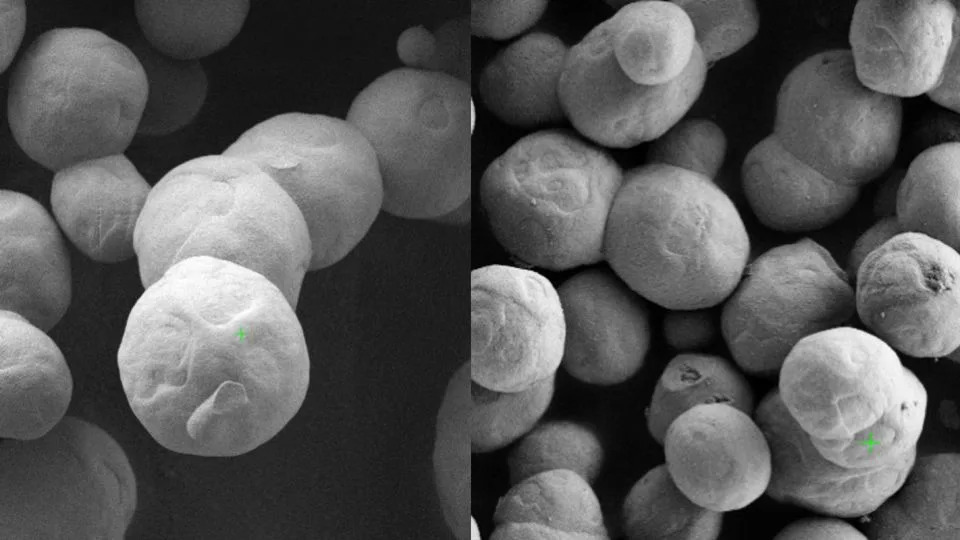
The second particle Stardust has developed is a core of calcium carbonate surrounded by a shell of amorphous silica. - Stardust
Testing, Politics and Corporate Motives
Stardust has so far limited work to laboratory studies and says it hopes to conduct carefully staged outdoor experiments under government supervision. Field tests are politically fraught—plans for Harvard-led test flights in Arctic Sweden were canceled in 2021 amid local opposition, and a unilateral test attempt by a U.S. startup in Mexico in 2022 prompted that country to ban such experiments.
Some scientists also voice ethical and governance concerns about a for-profit company developing proprietary geoengineering technology. Critics say commercial incentives and proprietary claims could conflict with the transparency, open data and inclusive decision-making many researchers argue are essential for any climate intervention with global consequences.
Why This Matters
Proponents say researched and regulated solar geoengineering could buy time for emissions cuts and adaptation measures in an increasingly dangerous climate. Opponents warn it could enable risky shortcuts, deepen geopolitical tensions, and create uneven benefits and harms across regions. The debate over Stardust’s proposals highlights the urgent need for rigorous science, clear regulation and broad international governance before any outdoor deployment is attempted.
Key facts: Stardust has raised roughly $75 million in private funding; its particle designs await peer review; scientists urge caution and broader oversight before field tests or deployment.
Help us improve.