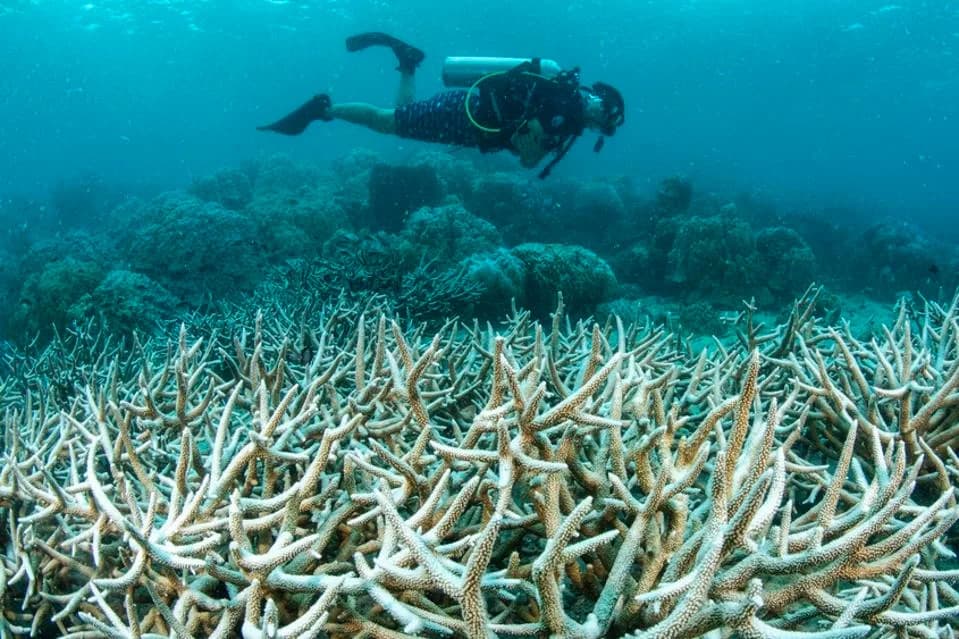
Researchers in Mo'orea found that yellowtail damselfish substantially accelerate healing of injured stony corals: small wounds healed 38% faster and large wounds 55% faster when fish were present. The fish also helped maintain algal photosynthetic efficiency, which declined with wound size in fish‑free conditions. Scientists propose three possible mechanisms — nutrient input from fish waste, increased water flow from fish movement, or direct wound cleaning — and call for experiments (including isotope tracers) to determine the cause.
Yellowtail Damselfish Speed Coral Healing Up to 55% — Scientists Still Don’t Know Why
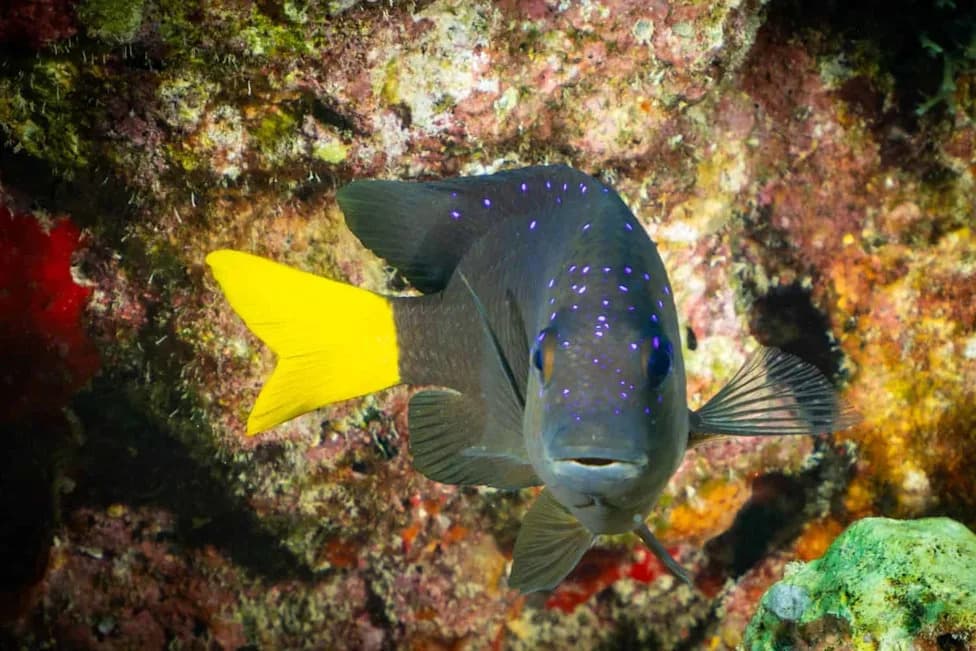
A yellowtail damselfish looking straight on to the camera. This pretty little guy was shot on a wild tropical reef in the Cayman Islands© Drew McArthur/Shutterstock.com
New research shows that yellowtail damselfish (Dascyllus trimaculatus) substantially accelerate recovery of injured stony corals in the Indo‑Pacific — in some cases by more than half. The study, published in Biology Letters on July 8, found that corals exposed to these small reef fish healed much faster than corals observed without fish present.
Study Design and Results
Researchers working in Mo'orea, French Polynesia collected 72 similarly sized coral colonies and assigned them to three treatment groups: no wounds, small wounds, and large wounds. Within each group, subsets were monitored in the presence of reef fish under controlled conditions while matched subsets were kept fish‑free. Over 21 days the team photographed colonies daily and measured tissue regeneration.
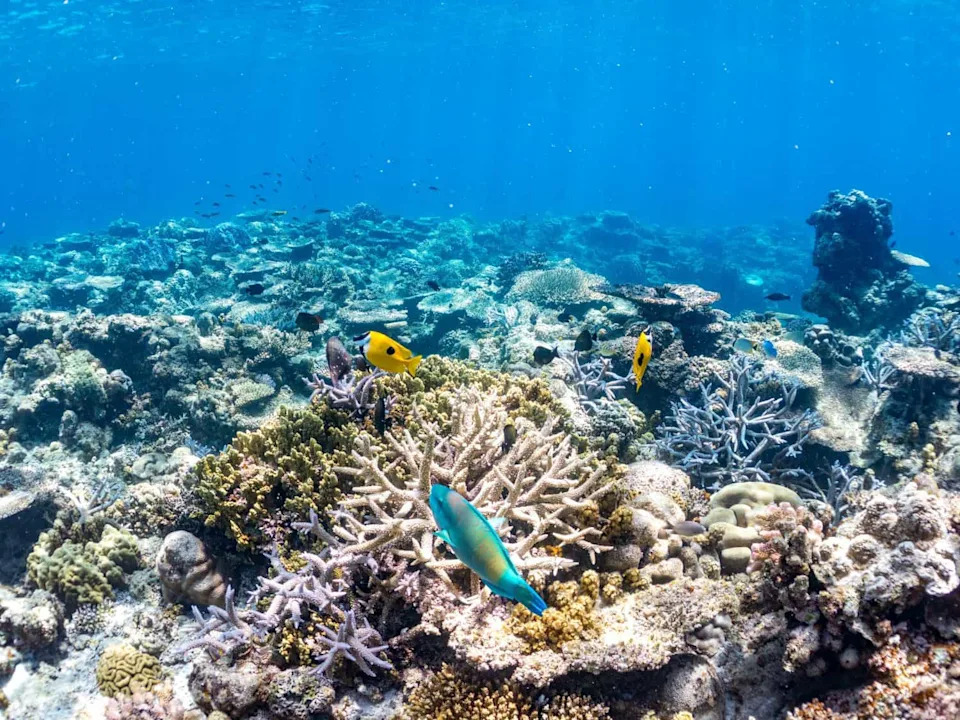
Coral reefs have experienced considerable decline in recent years due to water warming and human pressures.©d3_plus/Shutterstock.com
The findings were striking: corals with small wounds healed 38% faster when damselfish were present, and corals with large wounds healed 55% faster with fish nearby. The presence of damselfish also helped maintain the photosynthetic efficiency of the symbiotic algae (zooxanthellae) in coral tissue; when fish were absent, photosynthetic performance declined as wound size increased.
Possible Explanations
While the correlation is clear, the mechanism remains uncertain. The authors propose three leading hypotheses:
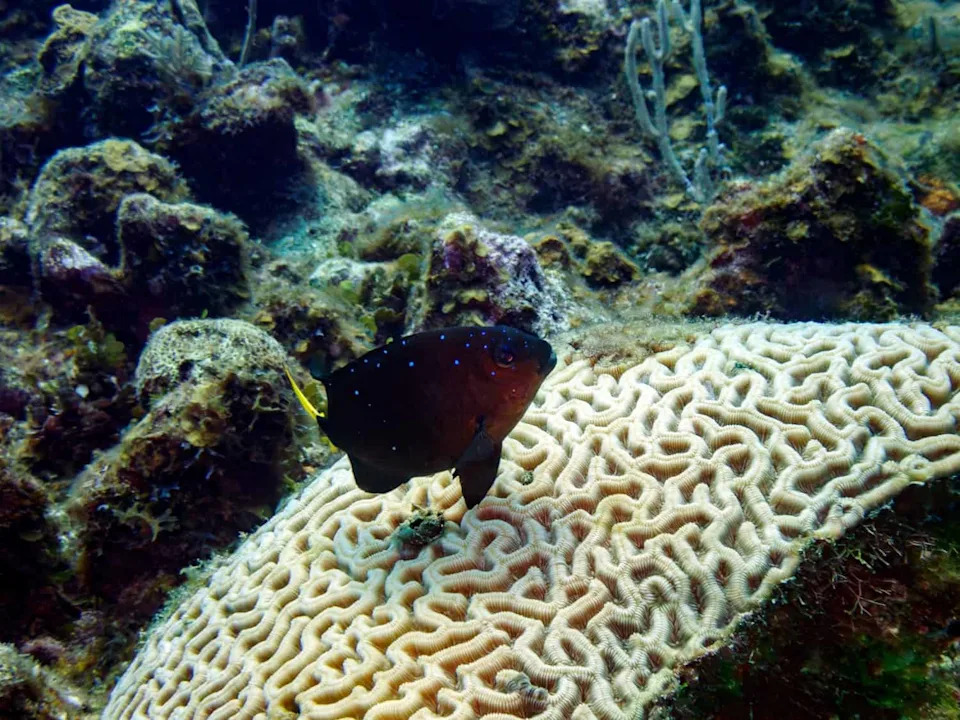
Researchers aren't sure if damselfish repair coral wounds heal quickly due to improving water flow or supplying nutrients.©Ingrid Rousseau/Shutterstock.com
- Nutrient Subsidy: Fish excrement may supply nitrogen and phosphorus that fertilize symbiotic algae, supporting tissue repair.
- Hydrodynamic Effects: Constant fish movement could increase local water flow, improving oxygenation and exchange of nutrients and waste around wounds.
- Cleaning Behavior: Fish may remove sediment, algae, or pathogens from wound sites directly, reducing infection and promoting regrowth.
“These positive interactions between species under stress end up creating a network of resilience in ecosystems,” lead author Hayden Vega told Mongabay.
Conservation and Next Steps
The study also highlights conservation concerns: nearly 90% of damselfish collected for the aquarium trade are reportedly wild‑caught, sometimes with destructive methods. Removing these fish from reefs could unintentionally reduce natural recovery processes for corals.
The authors recommend follow‑up experiments — for example, isotope‑based tracers to track nutrient flow from fish to coral and manipulative trials that isolate the effects of nutrients, flow, and cleaning — to identify the causal mechanism. Protecting both reef fish and corals, and establishing refuges that conserve their interactions, may help boost reef resilience as oceans warm.
Help us improve.