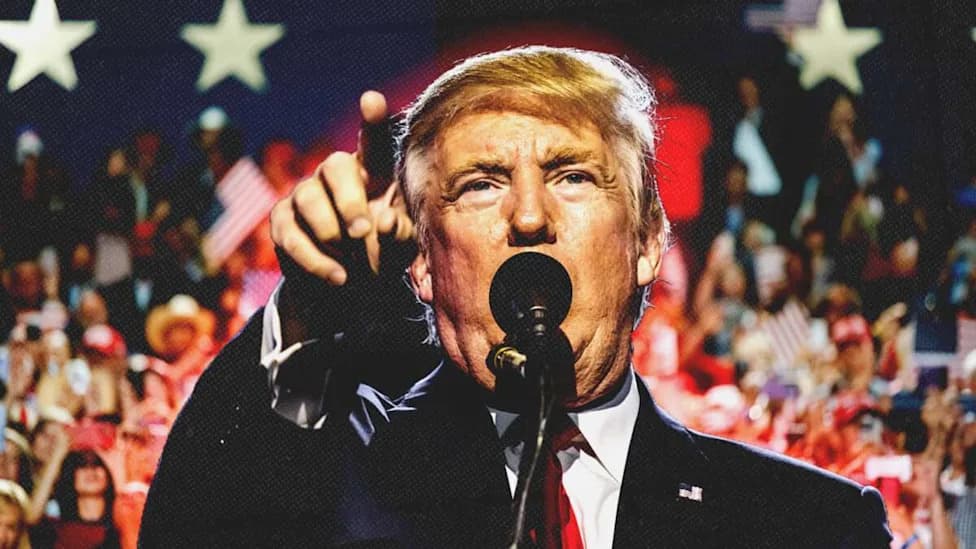
The April 2026 DOJ indictment of the Southern Poverty Law Center alleges the SPLC routed more than US$3 million to informants linked to extremist groups between 2014 and 2023; the SPLC denies the charges. Within hours, white supremacist channels and some partisan outlets amplified simplified narratives that recast the case as proof of institutional corruption. Those narratives have been tied to antisemitic conspiracy themes and the "Great Replacement" theory, creating potent recruitment and radicalization opportunities in decentralized online spaces.
How a DOJ Indictment of the SPLC Is Being Weaponized to Legitimize White Supremacy and Boost Recruitment
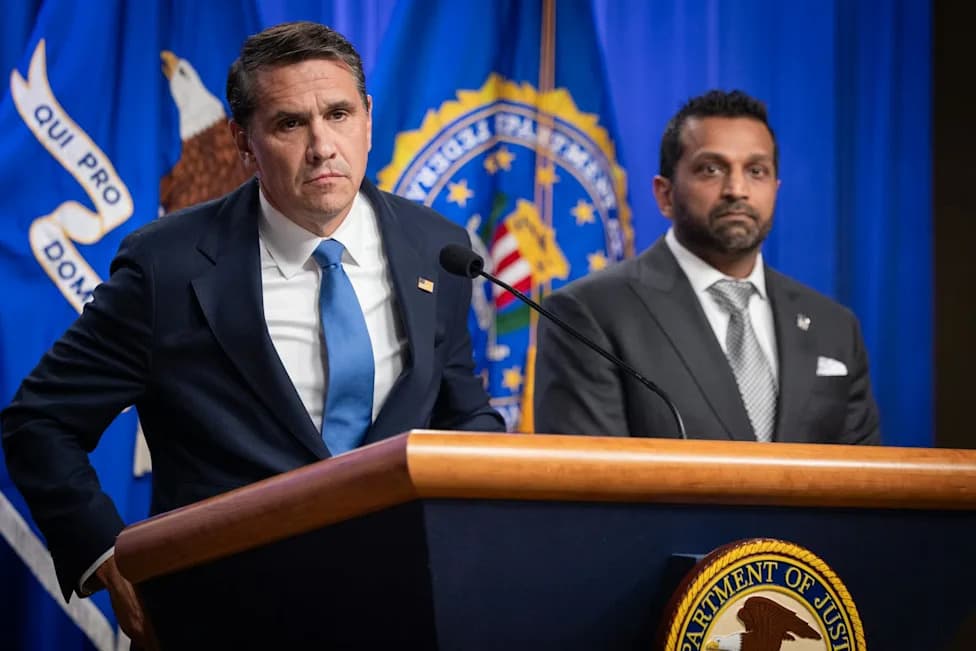
Attorney General Todd Blanche announces the indictment against the Southern Poverty Law Center on April 21, 2026, in Washington.Nathan Posner/Anadolu via Getty Images
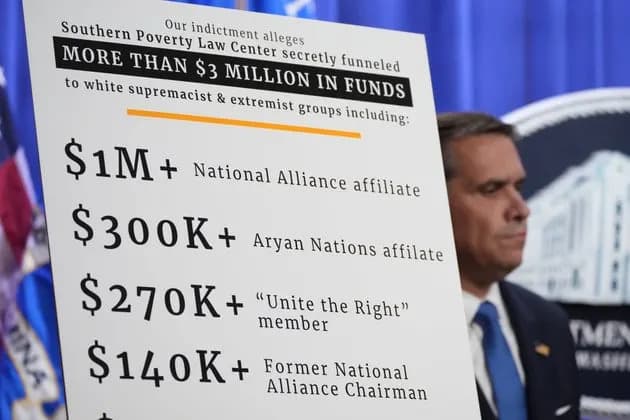
In April 2026 a federal grand jury returned an indictment charging the Southern Poverty Law Center (SPLC) with wire fraud, bank fraud and conspiracy to commit money laundering. Prosecutors allege the civil-rights nonprofit secretly routed more than US$3 million in donated funds to individuals connected with violent extremist organizations, including the Ku Klux Klan and Aryan Nations.
According to U.S. Attorney General Todd Blanche, eight confidential informants received payments from the SPLC between 2014 and 2023. The indictment contends donors were not told those payments were being made. The SPLC denies the allegations, is seeking dismissal of the charges, and its attorneys have described the prosecution as "vindictive." Bryan Fair, the group's interim president, has defended the informant program, saying it "saved lives" and reflected decades of hazardous civil-rights work.
Immediate Reaction Online
Within hours of the Justice Department's announcement, white supremacist influencers and channels on platforms such as Telegram and Gab celebrated the arraignment. They framed the indictment as proof that journalists and civil-rights researchers who document extremist movements are untrustworthy or politically biased. Some conservative advocacy groups and right-leaning outlets also trimmed legal nuance from their messaging, presenting the filing as conclusive evidence that the SPLC manufactured, rather than documented, extremist activity.
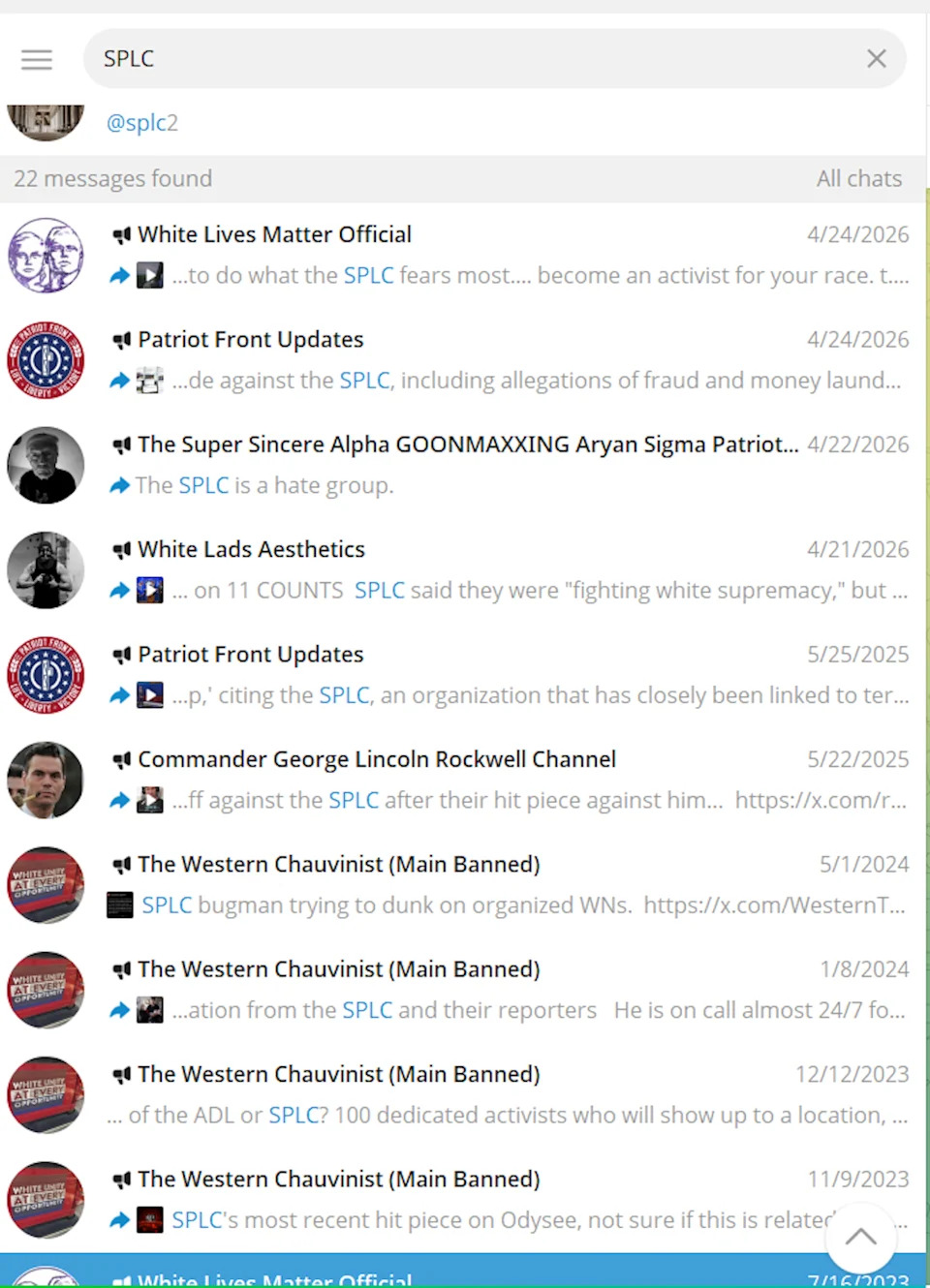
Telegram search results show multiple white nationalist channels discussing the SPLC indictment in April 2026. Art Jipson
Rapid Spread of a Shared Narrative
Searches conducted in early May identified dozens of posts across multiple white nationalist channels that recycled a narrow set of claims. The same frames — that the SPLC was corrupt, that it had manufactured threats, or that it acted on behalf of hidden interests — appeared in many places within a short time window. That rapid, repeated messaging suggests coordinated or networked amplification rather than isolated commentary.
"The SPLC Is A Hate Group," read one blunt message on a channel with white nationalist ties. Other posts urged followers to "become an activist for your race" and to view the indictment as institutional validation of longstanding conspiracy narratives.
How the Indictment Fits Into Broader Conspiracy Frames
Online discussions often connected the indictment to antisemitic conspiracies and the so-called "Great Replacement" theory, which falsely claims elites are orchestrating immigration and demographic change to replace white populations. Within that logic, the indictment is reframed from an isolated legal case into purported evidence of a systemic campaign against white identity.
Scholars have long observed that victimhood narratives are central to white-nationalist recruitment: portraying social change as persecution converts complex social trends into moral grievances that mobilize supporters. Contemporary extremist movements increasingly rely on decentralized digital spaces rather than formal organizations, making narrative circulation and reinforcement faster and more diffuse.
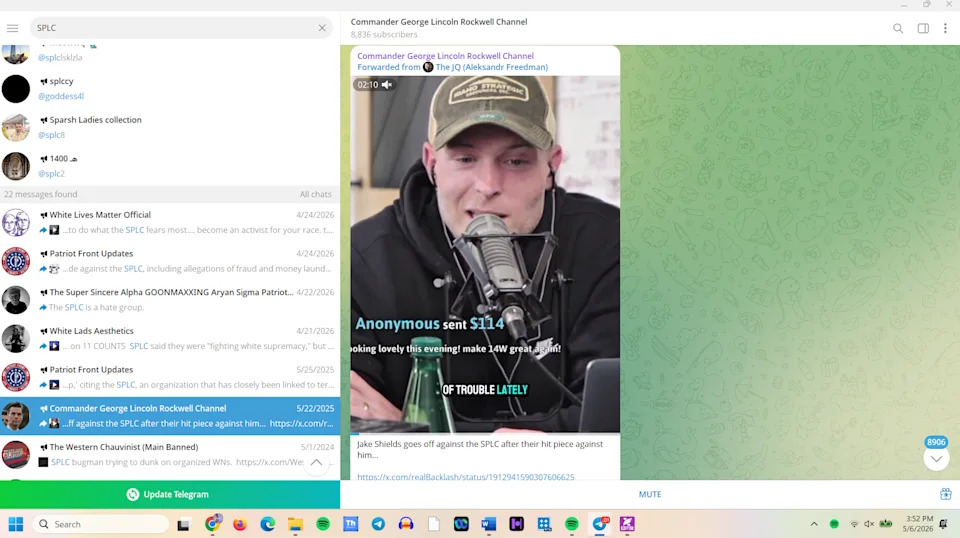
The Commander George Lincoln Rockwell channel on Telegram. Art Jipson
Recruitment, Radicalization, and Historical Parallels
High-profile controversies frequently become recruitment opportunities for extremists. Participants interpret events through preexisting frames of threat and injustice and recast them as proof that their worldview is correct. Historical examples — notably the Waco siege and Ruby Ridge standoff in the 1990s — became foundational persecution narratives for militia and Christian Identity movements, demonstrating how state action can be repurposed into long-running grievance stories.
Policy Context and the Risk of Legitimation
Legal scholars note the indictment arrives amid broader policy choices: the Trump White House's 2026 Counterterrorism Strategy did not explicitly identify violent far-right groups as a domestic terrorism threat. That omission, combined with partisan messaging, has made it easier for extremist audiences to treat the indictment as institutional permission rather than a discrete legal matter.
The immediate danger is not only whether white supremacists conclude the SPLC is guilty; it is that the controversy has already been weaponized to validate narratives that encourage radicalization and, potentially, violence. In a fragmented media environment, symbols and simplified claims travel faster than verified facts, especially when they confirm the beliefs of radicalized communities.
Implications
Policymakers, civil-society organizations and newsrooms face an urgent need to anticipate how high-profile legal actions can be reframed in extremist ecosystems. Clear communication, careful contextualization of legal developments, and investment in counter-messaging and community resilience are essential to reduce the risk that mainstream controversies become recruitment tools for violent movements.
Author: Art Jipson, University of Dayton. Republished from The Conversation. The author discloses no relevant financial ties beyond his academic appointment.
Help us improve.