Across Cuba, everyday ingenuity is filling gaps left by an intensifying energy crisis. Influencers like Dayán Marrero share DIY tutorials — one antenna guide neared 800,000 views — while farmers pasteurize milk over charcoal and use solar panels and batteries to chill dairy. Tourism has dropped 62% Jan–July, hitting local businesses, and solar-assisted electric tricycles are stepping in to serve Havana’s roughly 1.8 million residents. These community-driven fixes illustrate how Cubans are adapting essential services amid persistent blackouts and fuel shortages.
How Cubans Are Turning DIY Ingenuity Into Power: From Solar Tricycles to Charcoal-Pasteurized Milk
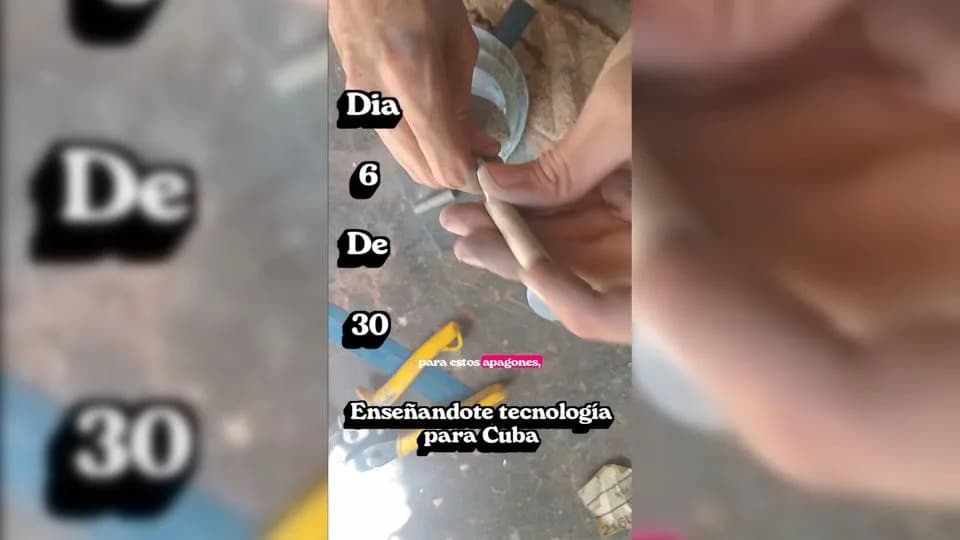
Cuba's social media influencers are sharing content that's indespensible to the country's public: DIY solutions to survivng the rolling electricity blackouts and fuel shortages.- Clipped From Video
Across Cuba, social media creators, farmers and small business owners are turning improvisation into survival as rolling blackouts and fuel shortages intensify. Their practical fixes — shared on Instagram, at neighborhood gatherings and in markets — range from homemade antennas that boost weak mobile signals to solar-charged tricycles that are filling Havana’s transportation gap.
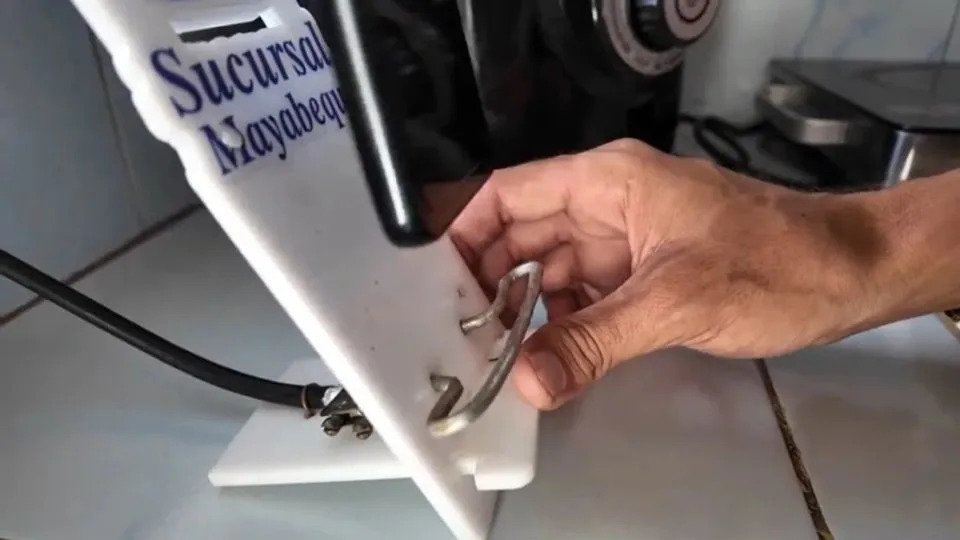
Dayán Marrero shows an improvised cell phone stand. - CNN
Everyday Innovation Meets an Energy Crisis
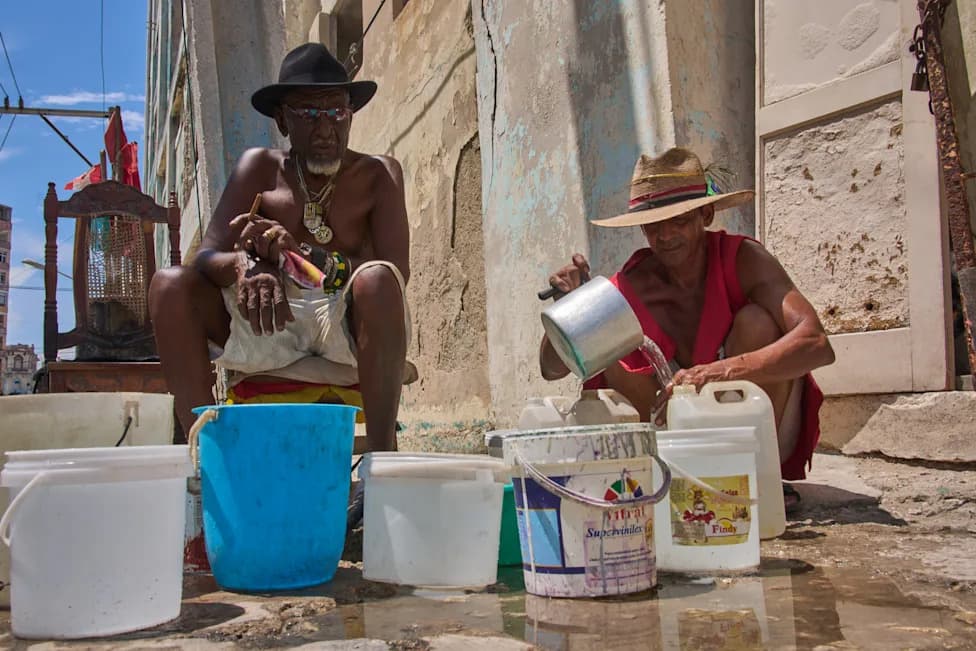
The island’s energy shortfall has deepened amid a U.S.-imposed blockade and the loss of fuel shipments from partners such as Venezuela and Mexico. Cubans accustomed to scarcity are applying decades of resourcefulness to meet everyday needs: conserving cellphone battery power, preserving food without refrigeration, cooling homes without air conditioning and finding ways to generate or store electricity.
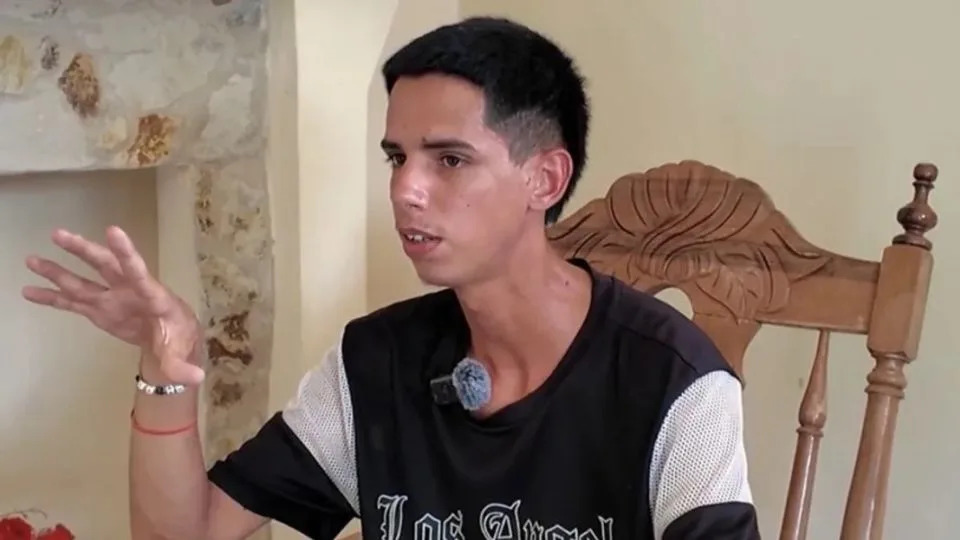
At his home, Cuban Dayán Marrero explains some of the measures he takes to deal with the blackouts on the island. - CNN
Influencers as Practical Lifelines
Dayán Marrero, a third-year computer science student at the Agrarian University of Havana, has become a go-to source for DIY solutions. Filming from his family home in Caraballo, he demonstrates low-cost gadgets and simple repairs — from building phone stands out of spare parts to assembling homemade antennas that can capture weak mobile internet signals. One of his tutorials on improving signal reception has approached 800,000 views.
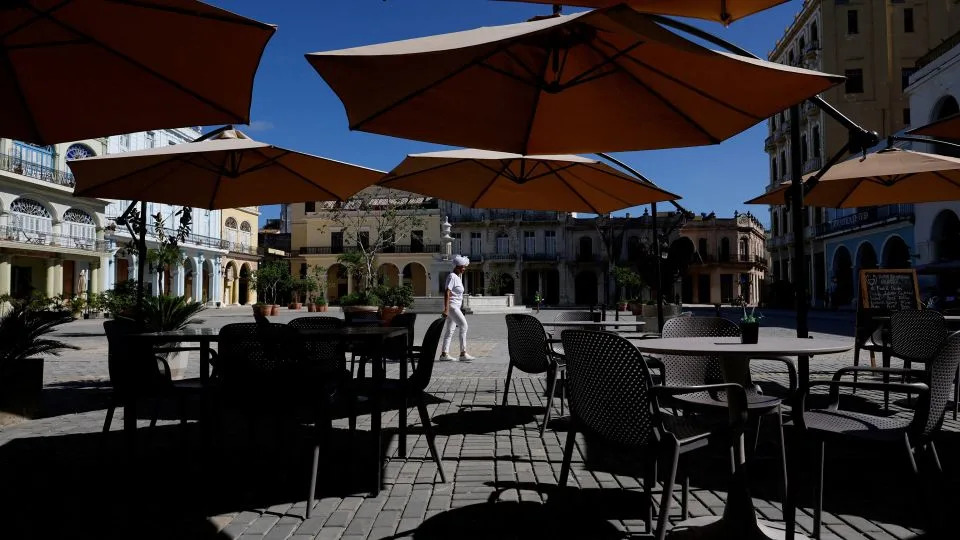
An empty cafe at the Old Square, once one of the most popular tourist spots in Old Havana, as US sanctions have decimated tourism, in Havana, Cuba, on June 8, 2026. - Norlys Perez/Reuters
Tourism, Workarounds and Rural Resilience
Tourism has plunged — official figures show a 62% drop in visitors from January through July compared with the same period last year — squeezing income for guides, hostels and farms. In Viñales, veteran guide Osiris Hernández converts rooms in his home to host the rare visitor, cooks over charcoal, grinds coffee by hand and lends rechargeable light-and-fan units when the grid goes down. He uses an inverter connected to solar panels to keep at least one freezer running during outages.
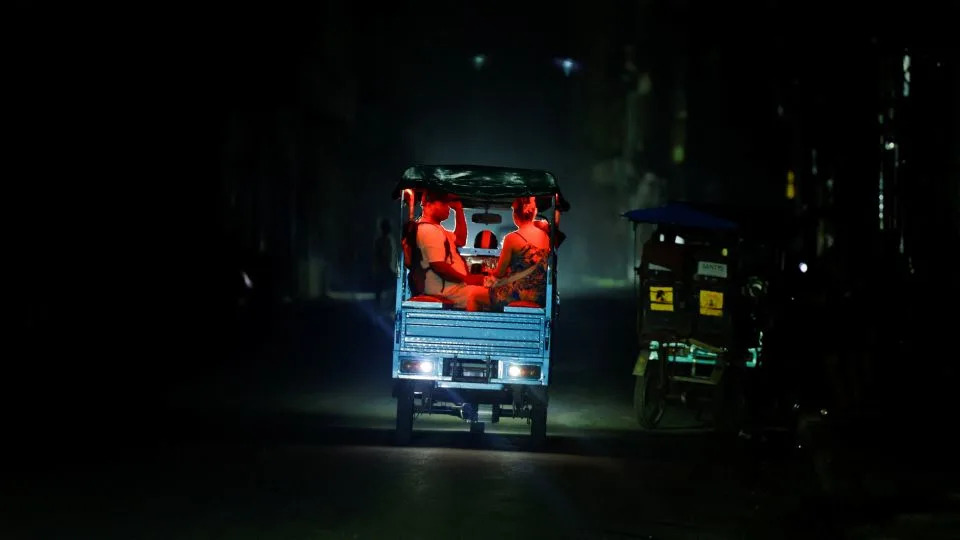
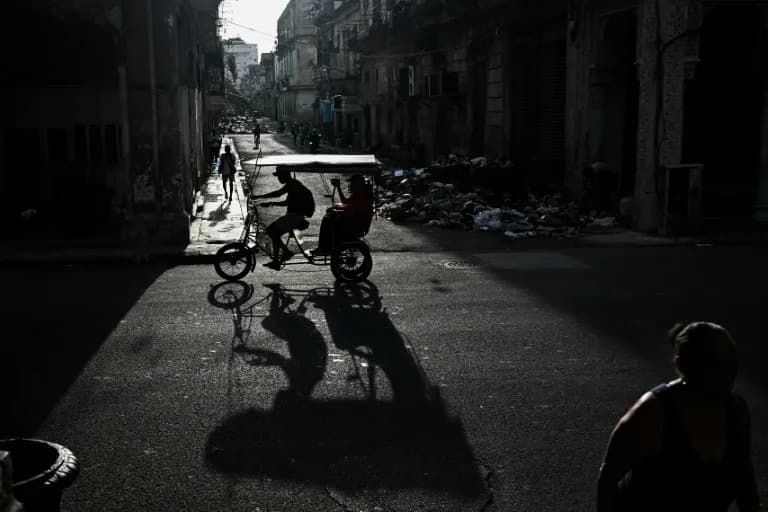
People ride an electric tricycle, one of the few modes of transportation still functioning, in Havana, Cuba, July 14, 2026. - Norlys Perez/Reuters
Farms Adapting: Charcoal, Solar And Small-Scale Industry
At El Olivo agroecological farm, the Corrales family has installed solar panels and battery storage to sustain dairy production despite limited fuel for their industrial generator. During a recent visit they were making yogurt by pasteurizing milk over charcoal and chilling it in vats powered by solar electricity. The farm continues to produce cheese and yogurt for local markets and a shop in Viñales, even as fewer tourists reduce demand.
Solar-Assisted Tricycles Keep Cities Moving
One visible consequence of the fuel shortage is the near disappearance of Havana traffic jams. With buses scarce, privately operated solar-assisted electric tricycles have proliferated. Newer models combine a small combustion engine with multiple rechargeable batteries and a rooftop solar panel. Drivers can plug batteries into the grid when power is available or recharge via sunlight. Operators have mapped routes to match battery range and charging opportunities; tricycles can carry up to six passengers and are typically rented for about 9,000 Cuban pesos (roughly $15) per day.
What This Means Going Forward
From social media tutorials to practical on-the-ground adaptations, Cubans are deploying household and community-scale solutions to cope with an energy crunch that shows few signs of quick relief. The response highlights a long-standing culture of improvisation: practical, low-cost measures that keep essentials running and communities connected even under prolonged strain.
Note: Figures and anecdotes in this report reflect conditions reported in 2026, including tourism declines and documented local initiatives to adapt to extended outages and fuel shortages.
Help us improve.