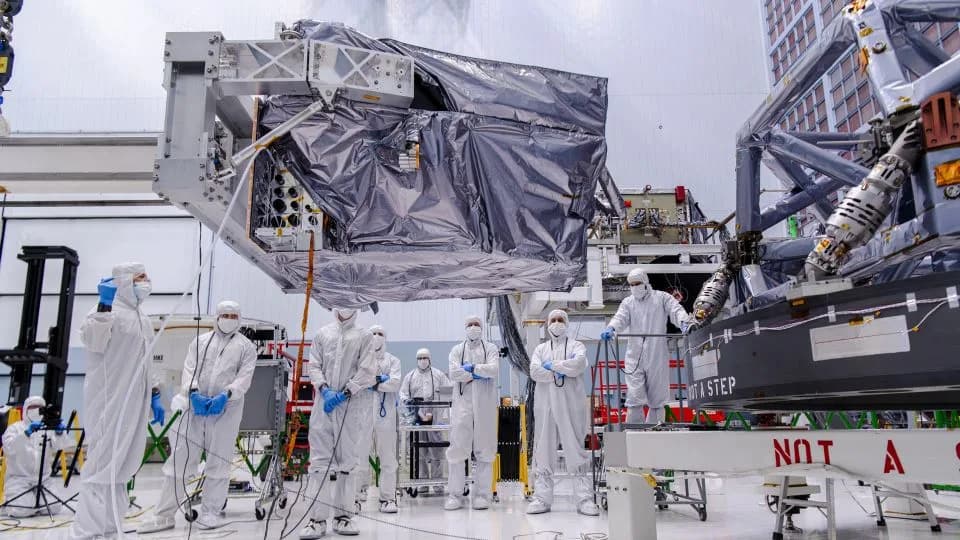
The Nancy Grace Roman Space Telescope will perform a wide survey of the Milky Way to search for exoplanets and their moons. Scientists, led by Professor B. Scott Gaudi, estimate the galaxy may host trillions of exomoons and that Roman could find up to ~200,000 planets, including free-floating worlds. Using transits, microlensing and direct imaging, and with rapid public data release and AI-driven candidate selection, Roman will identify promising nearby targets for atmospheric study and pave the way for future observatories to search for biosignatures.
Could Real-Life 'Pandoras' Exist? Roman Telescope to Hunt the Milky Way for Habitable Exomoons
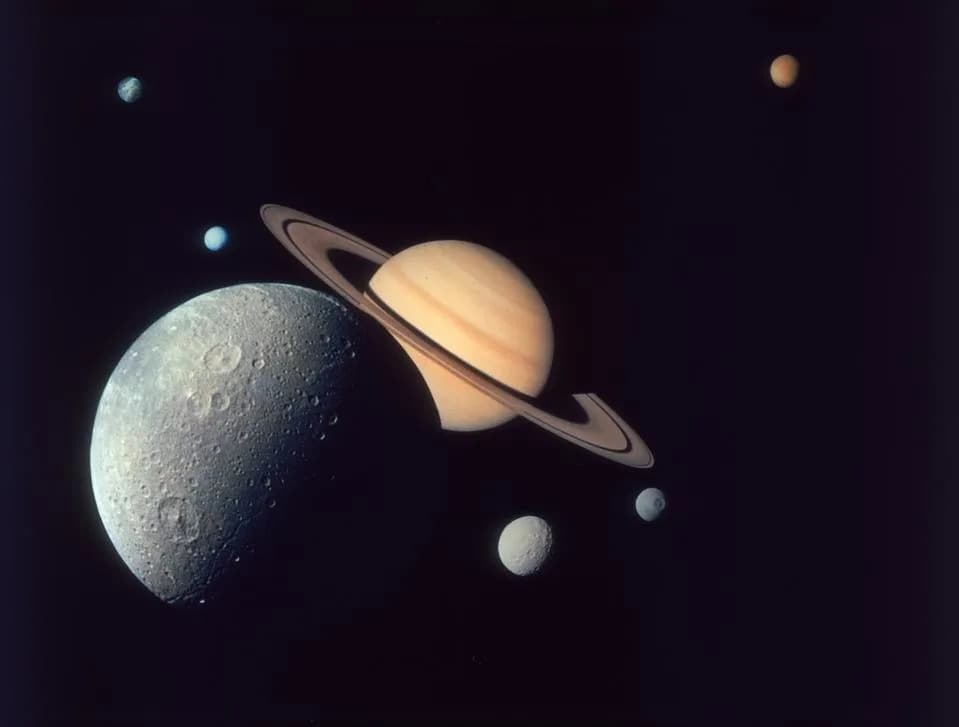
Just as Saturn is ringed by hundreds of globe-shaped moons, giant planets across the Milky Way might be surrounded by exotic exomoons, including some that are habitable, astronomers predict. (Photo by Space Frontiers/Hulton Archive/Getty Images)Getty Images
Giant planets in our Solar System—like Saturn and Jupiter—are orbited by dozens of moons. Astronomers now think giant exoplanets across the Milky Way may host equally rich systems of moons, some of which could lie in temperate zones and even be capable of supporting life. The newly launched Nancy Grace Roman Space Telescope will begin a wide galactic survey that could transform our understanding of exomoons and where life-friendly worlds might hide.
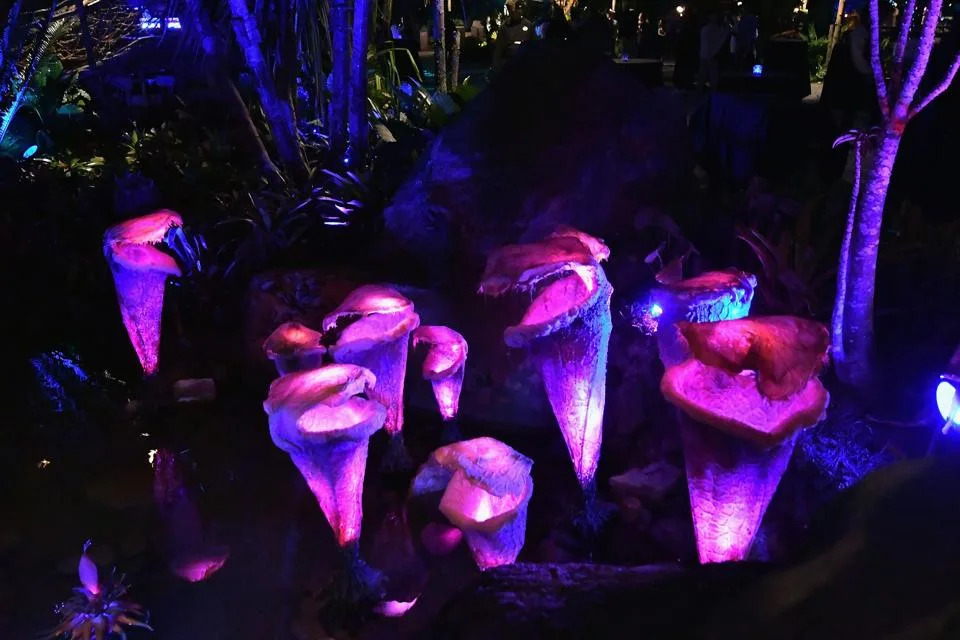
"If Pandora existed, we potentially could detect it and study its atmosphere in the next decade," said astrophysicist Lisa Kaltenegger, director of the Carl Sagan Institute at Cornell University. Shown here is the fantastical moon-world Pandora, from the blockbuster firm Avatar, recreated by Walt Disney World in Florida. (Photo by Gustavo Caballero/Getty Images)
Why Exomoons Matter
Professor B. Scott Gaudi, leader of NASA’s Roman Galactic Exoplanet Survey, says the galaxy could contain trillions of moons. With an estimated ~400 billion star systems in the Milky Way, many giant planets are likely to carry systems of satellites. In a paper co-authored by Gaudi—"Predictions of the Nancy Grace Roman Space Telescope Galactic Exoplanet Survey. III. Detectability of Giant Exomoons of Wide-Separation Giant Planets"—the team argues that exomoons can influence the habitability of their host planets and that some exomoons might be habitable in their own right.
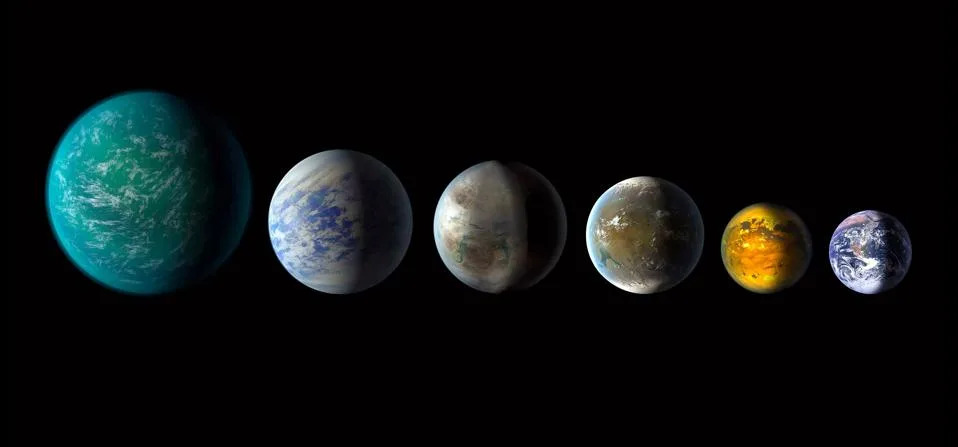
Professor Scott Gaudi says despite the discovery of thousands of exoplanets, comparatively little is known about their companion moons. Shown here is an artist's conception of habitable-zone planets similar to Earth. (Photo by: Universal History Archive/ Universal Images Group via Getty Images)
“In our own Solar System, all of the giant planets have a lot of moons,” Gaudi said. He added that the Earth’s Moon, for example, stabilizes Earth’s axial tilt and thus helps moderate long-term climate.
How Roman Will Search
Roman combines wide-field sensitivity, high-precision photometry and a 300-megapixel camera to survey dense star fields. The mission team expects the survey could discover up to ~200,000 planets, including free-floating planets and objects ejected from their systems. Roman will use several complementary techniques:

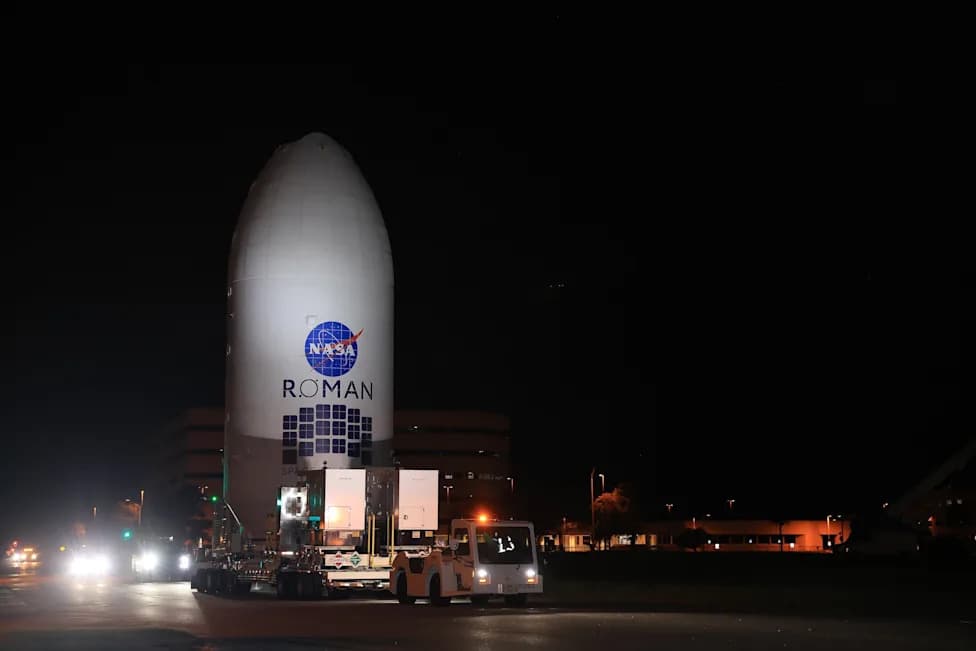
Launch of the Roman Space Telescope aboard a SpaceX Falcon Heavy rocket. (Photo by Joel Kowsky/NASA via Getty Images)
- Transit photometry: Detecting periodic dips in starlight when a planet—or a planet-plus-moon system—passes in front of its star. Close, bright systems found by transit methods can be followed up with spectroscopy to probe atmospheres.
- Gravitational microlensing: Leveraging the gravitational lensing of a foreground star or planet to reveal otherwise invisible companions at wide separations.
- Direct imaging (for nearby targets): Roman’s imaging capabilities may directly detect some wide-orbit giant planets and, with future telescopes, potentially large moons.
Atmospheres and Biosignatures
Detecting an exomoon is only the first step. Astronomers such as Lisa Kaltenegger have emphasized that transmission spectroscopy—measuring starlight filtered through an atmosphere during a transit—could identify gases tied to life (oxygen, ozone, methane, water vapor) if the target is nearby and bright enough. Kaltenegger has even suggested nearby systems like Alpha Centauri as early, high-priority targets for such searches.

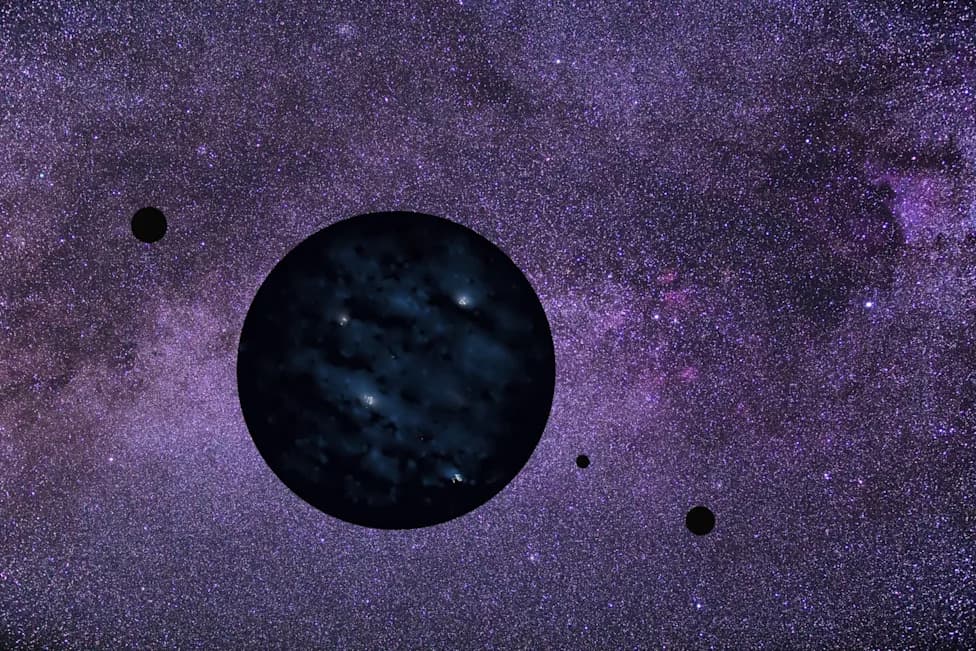
An artist's illustration of a transiting exoplanet and exomoon about to partially eclipse their star. (Photo by Future Publishing via Getty Images)
Open Data, AI, and Follow-Up
One major advantage of Roman is its rapid, open-data policy: images and data will be released to the scientific community in near real time. Gaudi plans to use artificial intelligence and automated pipelines to sift this torrent of data, flagging the most promising planet and moon candidates for follow-up with other observatories.
Looking Ahead: Mission Lifetime and Future Telescopes
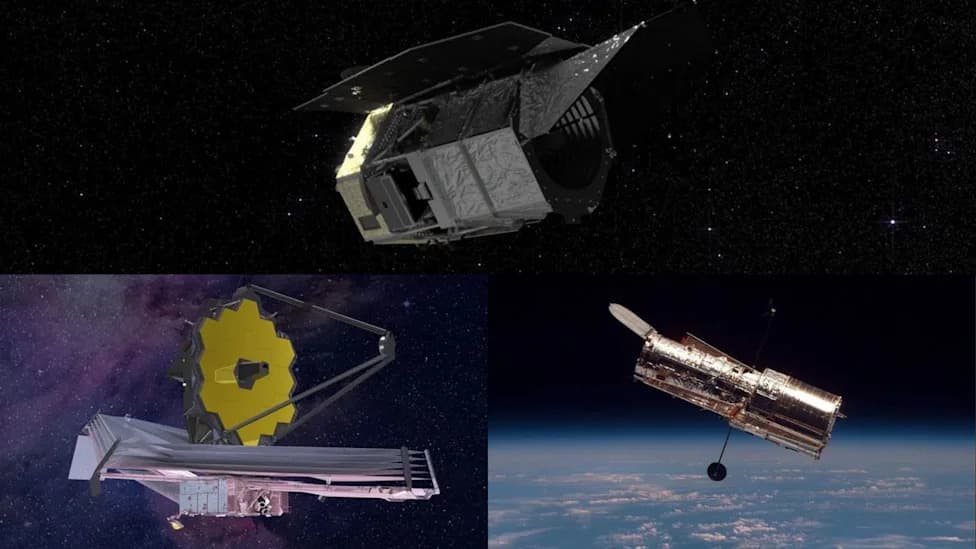
Roman’s baseline mission will produce a wealth of targets for the next generation of space telescopes. If mission life is extended beyond five years—potentially via robotic refueling using the telescope’s docking interface—teams could perform more detailed searches for giant moons around wide-separation planets. The proposed Habitable Worlds Observatory would build on Roman’s discoveries to directly image Earth-like planets and large moons around nearby stars and search their atmospheres for biosignatures and technosignatures.
What This Could Mean
Roman will not single-handedly answer whether life is common in the galaxy, but it can dramatically expand the catalog of planets and potential moon-hosts and prioritize the best nearby targets for detailed atmospheric study. By combining transit spectroscopy, microlensing, direct imaging and modern analysis tools—including AI—the Roman survey promises a step change in where and how astronomers search for habitable worlds in the coming decade.
Help us improve.