TIME profiles 12 leaders advancing longevity research — from Nobel laureate Shinya Yamanaka to funders and policy advocates. Scientists are exploring cellular reprogramming, drug repurposing and rigorous prize-backed research (XPrize Healthspan’s $101M). There’s no proven longevity drug yet; proven steps now include exercise, muscle-strengthening and strong social ties.
TIME’s 12 Longevity Leaders Are Racing to Add Healthy Years to Life
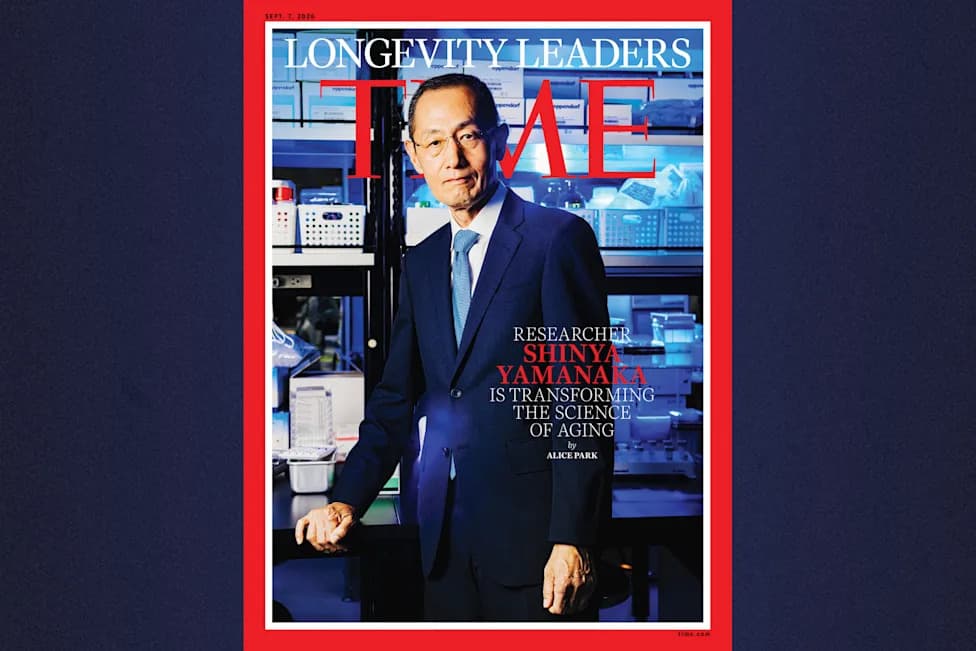
Shinya Yamanaka goes for a run almost every morning — a small detail that gains weight when the runner is a Nobel Prize–winning scientist whose discovery underpins one of the most promising areas of longevity research: reprogramming human cells so they act younger. Habits like that from a figure of his stature attract attention.
Yamanaka had just returned from a run in late July during one of Kyoto’s worst heatwaves when he sat down with TIME senior health correspondent Alice Park to reflect on his career and the influence his work has had on the rapidly growing longevity field, two decades after his landmark discovery. He is one of TIME’s 2026 Longevity Leaders — 12 innovators featured for shaping the pursuit of longer, healthier lives.
Where the Science Stands
The feature highlights several strands of research now producing tangible results. Some pioneering scientists — including Harvard geneticist David Sinclair and Altos Labs’ Juan Carlos Izpisua Belmonte — are building on Yamanaka’s methods, attempting to reverse cellular aging in specific tissues. Others are focused on rigorous validation: Jamie Justice leads XPrize Healthspan, a global competition backed by a $101 million purse to fund the most promising longevity research and weed out unsupported claims.
Policy, Practical Steps and Skepticism
Beyond the lab, leaders such as AARP CEO Myechia Minter-Jordan are steering institutions toward policies that help societies adapt as people live longer. At the same time, researchers like Nir Barzilai are exploring whether existing medications can be repurposed to extend healthy lifespan, but as of now there is no proven drug that reliably increases human longevity.
What You Can Do Now: Regular exercise, strength training to preserve muscle (often called the “organ of longevity”), and sustained social connections remain the clearest, evidence-backed ways to improve healthspan.
TIME’s 12 Longevity Leaders represent a mix of basic scientists, clinical researchers, funders and advocates who together show that medical, physical, and social approaches are all essential to the goal of living longer and better. The field is experiencing rapid growth and growing scientific legitimacy — but it is still early days, and caution and rigorous proof are required before broad claims about life extension can be substantiated.
Help us improve.