Professor Jim Al‑Khalili, who will deliver the 2026 Royal Institution Christmas Lectures, says billionaires' quests for immortality are 'wasting their time' and urges a focus on living well now. The lecture series will explore the nature of time, the 'arrow of time', relativity and why forward time dilation differs from fantasy notions of time travel. Al‑Khalili recommends practical, evidence‑based steps for healthy ageing — such as improving ventilation and reducing exposure to household pollutants — over expensive, unproven anti‑ageing schemes.
Jim Al‑Khalili: Billionaires Chasing Immortality Are 'Wasting Their Time' — Focus On Living Well Now
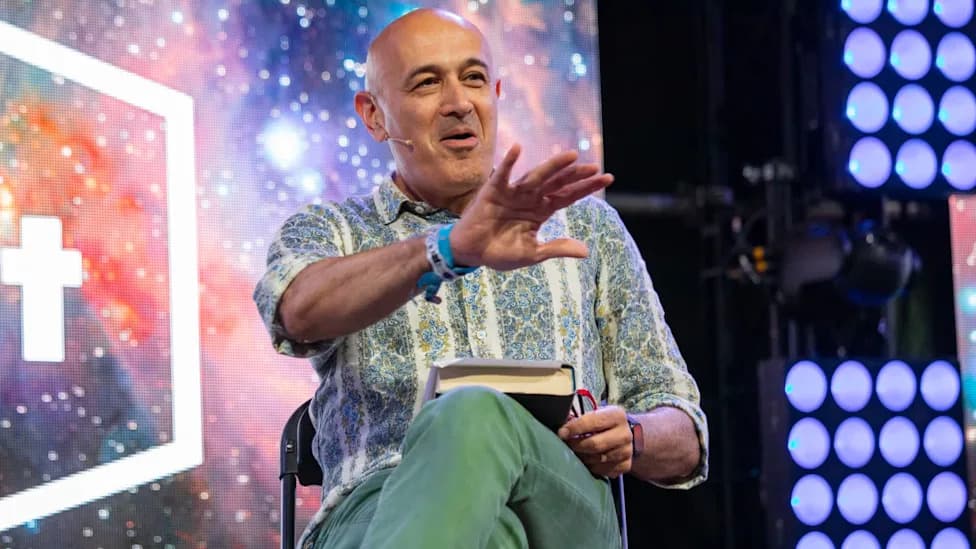
Photo Credit: Getty Images
Professor Jim Al‑Khalili, the physicist scheduled to present the 2026 Royal Institution Christmas Lectures, has warned that ultra‑wealthy attempts to buy extreme life extension may be misplaced priorities. Speaking to The Guardian while previewing a lecture series built around the theme of time, Al‑Khalili said some billionaires are 'quite literally, wasting their time' pursuing immortality instead of concentrating on how to live well today.
Al‑Khalili used high‑profile experiments — including tech entrepreneur Bryan Johnson's reported plasma injections from his teenage son, which Johnson later found offered no clear benefit — to underline both scientific and ethical questions about these ventures. For him, such stories prompt deeper reflection about how people choose to spend their limited time.
'We have a finite interval of time in which we exist in the universe. And the more I study the nature of time, the more I think about it, the more I realise that I just want to make the most of the time that I have,'
Beyond the social critique, the 2026 lectures will also tackle a central physics puzzle: why time appears to flow in a single direction. Al‑Khalili plans to present his take on the 'arrow of time', explain how Einstein showed that observers can experience time differently, and describe how gravity can alter the passage of time. While forward time dilation (effectively 'travelling' into the future) is theoretically possible under relativity, backward time travel remains far beyond scientific plausibility and nowhere near a route to immortality.
Practical Advice Over Panaceas
Al‑Khalili stresses that for most people healthy ageing is shaped less by science‑fiction interventions and more by everyday risks and habits. Many anti‑aging products, supplements and boutique wellness treatments are expensive and offer limited, unproven benefits — sometimes creating financial strain without clear health gains.
Evidence‑based, practical steps typically deliver more reliable results: improving home ventilation, cutting indoor pollution, replacing old gas‑powered appliances where feasible, choosing gentler cleaning products, reading ingredient labels, and investing in well‑supported medical and lifestyle interventions.
Research Highlights
The article also summarises recent findings that relate to ageing and long‑term health: studies suggesting plant‑based diets can increase life expectancy for people with obesity or diabetes; research linking exposure to persistent 'forever chemicals' to increased brain cell death; evidence that PFAS exposure may raise cardiovascular risk in older women; and analyses tying a common plastic chemical to heart disease deaths at a population level.
Al‑Khalili's message blends physics and public‑health pragmatism: while the nature of time is a rich scientific subject, attempts to buy extra decades through radical, unproven procedures are unlikely to be worthwhile for most people. Focusing on proven measures that protect day‑to‑day health often yields the best return on both time and money.
'We're [here for] a blink of an eye compared with the age of the universe,'
'If I spend that blink of an eye trying to extend it to two blinks of an eye, I'm not sure if that is actually a worthwhile thing to be spending my life doing.' — Jim Al‑Khalili
Help us improve.