Researchers measured volatile organic compounds from a 102 m platform on Beijing’s meteorological tower and in a ground lab to trace citywide emissions in real time. They found that isoprene — largely emitted by certain tree species like weeping willow and Chinese white poplar — dominated reactive VOCs and increased sharply with temperature. Between 20°C and 35°C, tree-emitted VOC reactivity rose seven- to eightfold. The authors recommend selective tree planting rather than removing green cover; replacing high-emitting trees on 10% of Beijing’s tree stock could cut isoprene emissions by at least 29%.
Some Urban Trees May Increase Summer Ozone — New Study Urges Selective Planting
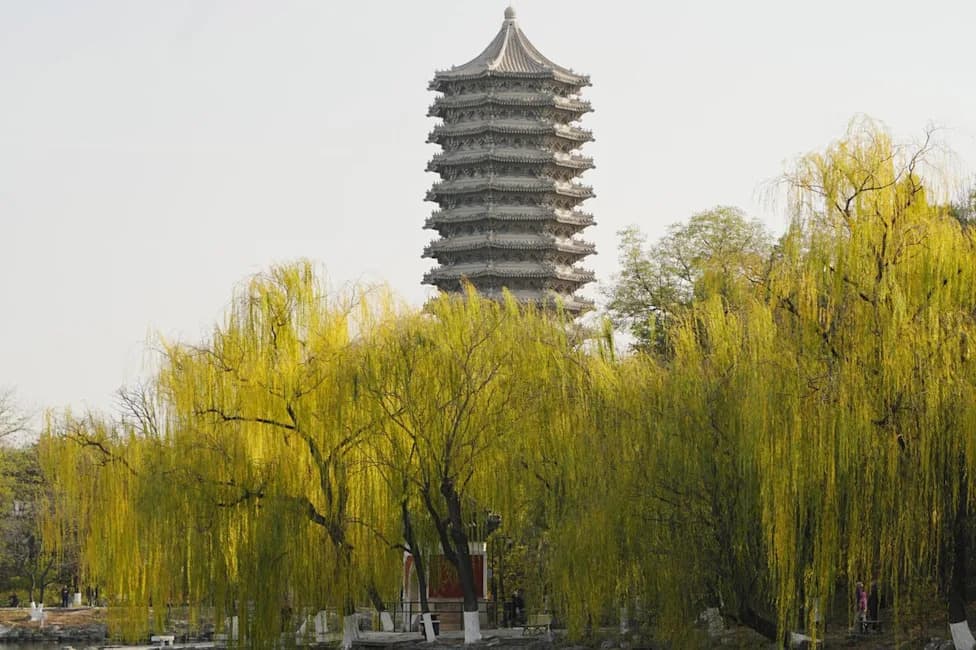
Scientists reveals some trees are actually worsening urban air quality as climate warms
A new study by researchers at Jinan University finds that while urban trees cool cities and remove certain pollutants, some species emit volatile organic compounds (VOCs) — especially isoprene — that can raise ground-level ozone as temperatures climb.
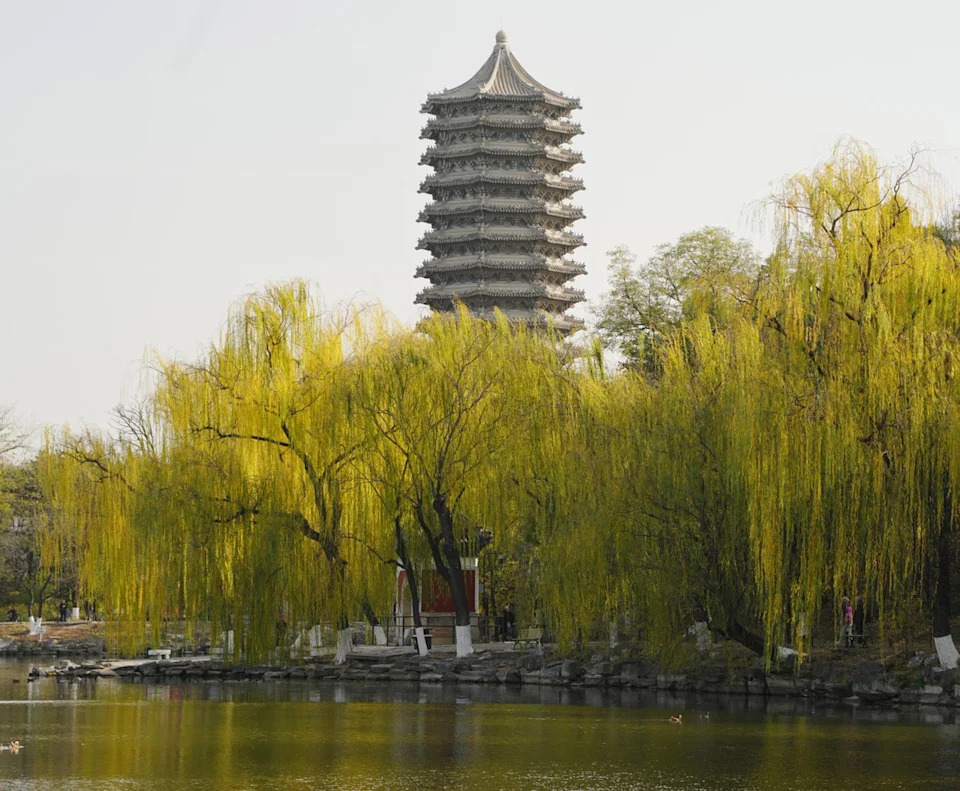
High isoprene levels found in Beijing, attributable to the tree species present (Xianjun He)
How The Study Was Done
The team installed a direct-emission monitoring system on a 102 m (335 ft) platform on Beijing's meteorological tower and ran parallel measurements in a laboratory at the tower base. Instruments sampled the city's atmosphere several times per second, allowing scientists to trace reactive chemicals back to sources such as trees, traffic, cooking and household products.
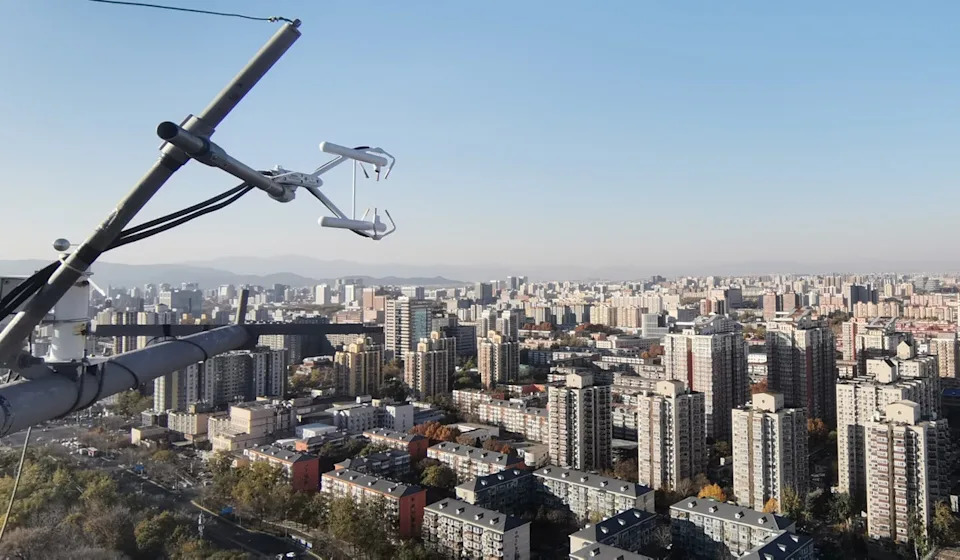
Direct emission measurement system set up on a platform 102 meters high on Beijing's meteorological tower (Xianjun He)
Key Findings
- Isoprene from Trees Dominates — Isoprene, a highly reactive hydrocarbon also found in natural rubber, was a major VOC measured in Beijing and most of it originated from urban trees rather than traffic or consumer products.
- Temperature Amplifies Emissions — Between 20°C and 35°C the chemical reactivity of tree-emitted VOCs rose approximately seven- to eightfold, meaning hotter weather greatly increases ozone-forming potential.
- Species Matter — Beijing’s high isoprene levels approach those found in temperate forests and are largely attributable to commonly planted species such as the weeping willow (Salix babylonica) and Chinese white poplar (Populus tomentosa).
Implications For Cities
The researchers emphasize that these results are not a reason to remove urban trees. Instead, they recommend targeted species selection for urban greening programs. In Beijing, replacing high-VOC-emitting trees on just 10% of the city's tree population with low-emitting species could cut isoprene emissions by at least 29%.
Broader Context
Other northern Chinese cities with extensive willow and poplar plantings — such as Harbin and Changchun — may face similar or larger emission potentials. Many cities in Asia and Oceania could also experience comparable pressures. By contrast, many native European trees emit more monoterpenes than isoprene; monoterpenes can also form ozone but are generally released in smaller quantities.
"Our findings underscore the critical need for selective urban planning in greening programs to counteract a warming climate," the authors write, urging policymakers to consider species-specific VOC profiles when planning urban forests.
Takeaway
Urban trees remain vital for cooling and pollution removal, but species selection should be guided by emission profiles to avoid unintentionally worsening ground-level ozone as the climate warms.
Help us improve.