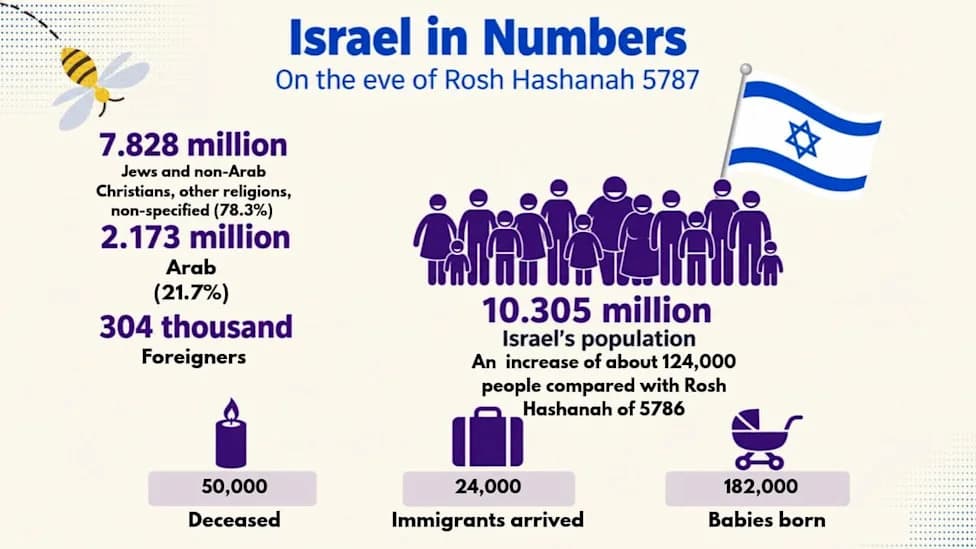
Experts warn that a rising wave of emigration is reshaping Israel’s demographic and political landscape. Studies from the Israeli Tax Authority and Tel Aviv University estimate nearly 270,000 departures over three years, with a marked increase among higher-income, highly educated groups. Researchers link the trend to judicial reforms, political polarisation and the prolonged conflicts since October 2023, and warn that losing skilled workers could weaken Israel’s innovation-driven economy.
“Tsunami” Of Emigration From Israel: Experts Warn Of Talent Loss And Political Consequences

Israeli protesters attend a right-wing demonstration in support of Israel's nationalist coalition government and its judicial overhaul, in Tel Aviv, Israel, March 30, 2023 [Nir Elias/Reuters]
A growing exodus of Israelis heading abroad ahead of this year’s pivotal elections is reversing a migration pattern that has supported the country for decades. Recent analyses from the Israeli Tax Authority and Tel Aviv University, drawing on Central Bureau of Statistics data, show a sustained rise in departures and a shift in the profile of emigrants toward higher earners and better-educated citizens.
Key Findings
The Israeli Tax Authority reported higher-than-usual emigration in 2023 and 2024, concentrated among higher tax brackets. A Tel Aviv University analysis estimated nearly 270,000 Israelis left over three years: more than 86,500 in 2023, about 91,500 in 2024 and a similar figure in 2025. Opposition figures have warned the government is not addressing what they call a "tsunami" of departures.
Political and Social Drivers
Many liberal Israelis say Prime Minister Benjamin Netanyahu’s government has shifted the country rightward, eroding secular norms and weakening independent institutions — particularly the judiciary. Efforts in 2023 to curtail judicial review triggered mass protests, with tens of thousands taking to the streets to defend what they view as the nation’s democratic character.
Concerns intensified after the Hamas-led attack of October 7, 2023, and the state’s subsequent military campaigns. Some observers and human-rights groups have described the Gaza offensive in terms of extreme civilian harm, with reported Palestinian fatalities numbering in the tens of thousands. The scale and open-ended nature of regional hostilities, combined with perceived political polarisation, have fuelled anxiety among many citizens.
Who Is Leaving — And Why It Matters
Researchers and demographers say the recent wave is distinct: increasingly made up of highly educated, high-achieving young families and professionals who often move to the United States and other destinations. Lilach Lev Ari, an immigration and demography professor at Oranim College, characterises the profile as skewed toward those with skills critical to Israel’s innovation economy.
Demographer Sergio Della Pergola told reporters the pattern is unusual for Israel in its duration and scale, and not easily explained by economic cycles alone. He and others cite a mix of motivations: career opportunities abroad, insecurity about the country’s long-term political direction, and concern over public safety and institutions.
"Make no mistake, these are all players in an orchestra conducted by Netanyahu," said Della Pergola, referring to the prominence of figures regarded by critics as extremists in the current government.
Broader Implications
Experts warn that losing large numbers of young, skilled and innovative workers could hamper Israel’s research-and-development base and long-term growth. Michael Ben-Gad, a professor at City St George’s, University of London, and other economists have long stressed that Israel’s future depends on its capacity to attract and retain talent.
Political economist Shir Hever emphasises that the conversation should not focus only on elite professionals: departures of essential workers such as nurses and technical staff could also produce acute gaps in public services. Social stigma around emigration — with terms like aliyah (ascent) for immigration and yordim (descenders) for those who leave — continues to shape public attitudes and debate.
Responses And Outlook
Opposition MP Gilad Kariv, who chairs the Knesset’s Immigration, Absorption and Diaspora Affairs Committee, has described the phenomenon as a national emergency that requires policy action. The government has pushed back against alarmist accounts but has not announced a comprehensive plan to reverse the trend.
As departures continue, analysts say policymakers will need to address the mix of political, security and economic concerns driving emigration if Israel hopes to stabilise its demographic and innovation base.
Help us improve.