Zvezdelina Stankova, a UC Berkeley mathematics professor, admitted using AI to help edit a 2,000-word op-ed arguing many students are underprepared for college-level math and blaming test-blind admissions. Student reporters used Pangram and flagged about 33% of the article as AI-assisted; Stankova said AI was used mainly to find documents and that the piece reflects hundreds of human-hours of analysis. The disclosure set off debate over academics' use of AI as the UC Academic Senate reviews whether to reinstate standardized testing (changes would not take effect before fall 2028).
Berkeley Math Professor Admits Using AI to Edit Op-Ed, Sparking Debate Over Students’ Math Preparedness
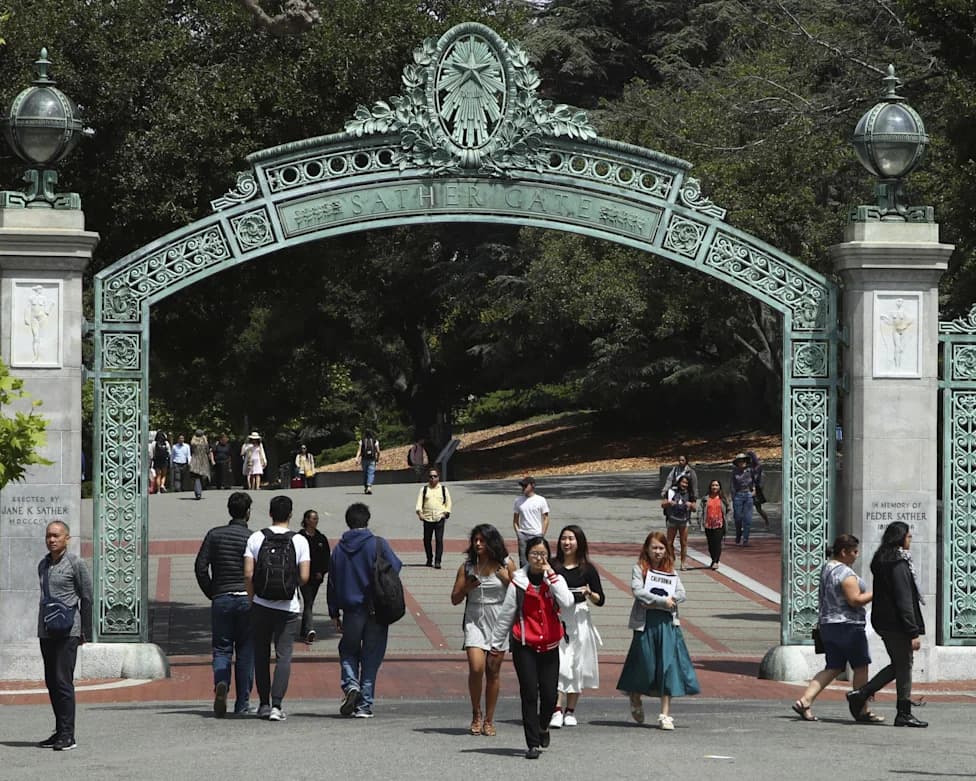
The University of California at Berkeley, on 10 May 2018.Photograph: Ben Margot/AP
A University of California, Berkeley mathematics professor has acknowledged using artificial intelligence to help edit a 2,000-word op-ed that criticized what she described as a "severe" deficit in incoming students' math skills.
What Happened
Zvezdelina Stankova's column, published in the San Francisco Standard, argued that some students are "five to eight years" behind in math and lack a "middle school" grasp of fractions and basic algebra. Stankova attributed part of the problem to the UC system's move to test-blind admissions, saying that without long-standing benchmarks such as the SAT, underprepared students were being admitted to Berkeley's rigorous mathematics program.
AI Detection and Admission
Reporters at UC Berkeley's student newspaper, the Daily Californian, ran the article through Pangram, an AI-detection tool, which reported that roughly 33% of the piece appeared to be AI-generated or AI-assisted. After the student outlet published its findings, Stankova responded that she had used AI software to "help edit the piece," while emphasizing that the op-ed was "the result of several hundred person-hours of intensive human work, of which about 80 hours are my own." She said she used AI primarily to locate related documents and articles and that "all analysis is the result of the team members."
"The issue of how AI was used … is orthogonal to and a distraction from the thousands of hours our team has put into the initiative," Stankova wrote, referring to efforts to reinstate standardized testing in UC admissions.
Publisher And Institutional Responses
The San Francisco Standard told the Daily Californian: "While AI may assist, our expectation is that humans are behind every article we publish and take responsibility for every word. Our understanding in working with the author of this op ed was – and continues to be – that this piece reflects her and her colleagues' extensive original analysis, research and expertise."
The disclosure ignited a wider online debate. Critics called it ironic that a piece criticizing students' preparedness relied on AI editing, arguing an op-ed should be entirely original. Defenders said using AI for editing is a common tool that does not negate the underlying research or argument.
Data And Policy Context
In the column, Stankova presented data from a team analysis suggesting the number of students with a "severe deficit" in readiness for Calculus I has tripled since test-blind admissions were adopted. Before publishing the op-ed, she joined more than 3,000 UC faculty who signed a June letter urging the reinstatement of standardized testing; she acknowledged using AI for editing in that effort as well.
In late July, the UC Academic Senate said it would begin a review to determine whether standardized tests should be required again; any change would not affect admissions before fall 2028 at the earliest.
AI Governance And Detection Reliability
The UC system has an "AI council" to develop AI initiatives and resources. Council member Camille Crittenden said she was unaware of specific faculty guidance on using AI for personal research or opinion pieces and warned that "most AI detection tools are still quite unreliable and lack nuance," specifically noting concerns about Pangram's limitations.
On its website, Pangram claims it correctly identifies AI-generated documents 99.66% of the time and estimates roughly one false positive per 24,000 documents scanned. That claim has been cited in coverage but remains disputed by some academics and journalists who question detection tools' sensitivity and specificity.
Why It Matters
The episode highlights two overlapping debates: how universities assess college readiness after dropping standardized tests, and how academics and news organizations ought to use and disclose AI tools. The incident has prompted renewed discussion about transparency, editorial standards, and the role of automated tools in scholarly and journalistic work.
Help us improve.