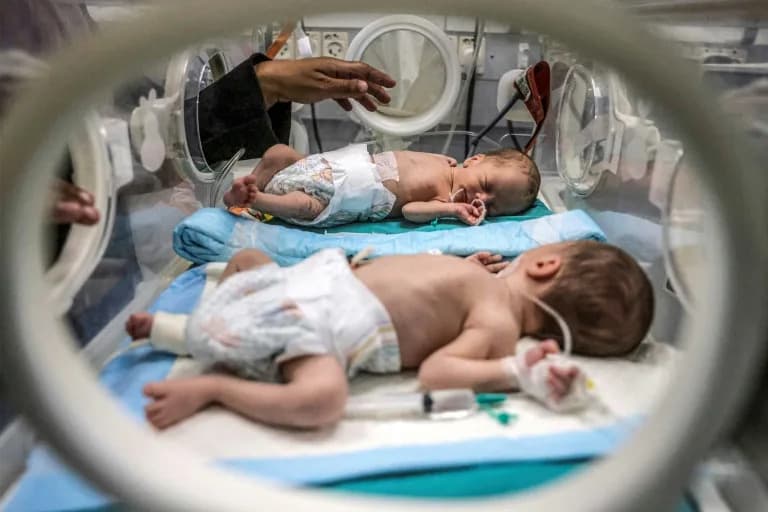
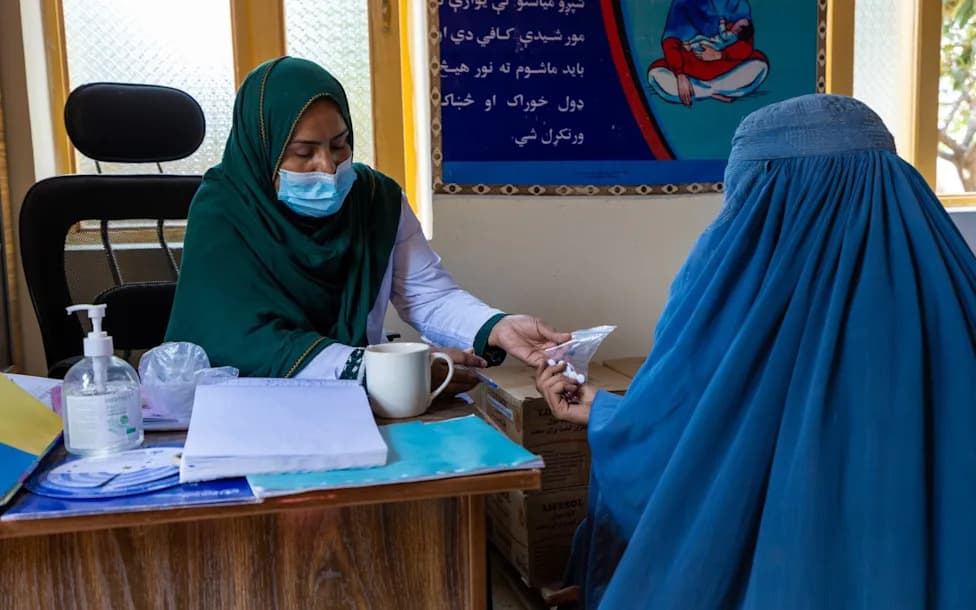
The Mother and Child Corner in Deir el-Balah is offering practical breastfeeding, nutrition and mental health support to displaced mothers in Gaza, helping about 400–500 women each month. Staff teach breastfeeding techniques, suggest affordable nutrition options and involve family members to create a stronger support network. Personal stories from mothers like Eman and Hiba illustrate how targeted clinical and psychosocial support can improve infant health even amid displacement, crowded tents and scarce resources.
Breastfeeding Under Siege: How a Gaza Health Centre Helps Displaced Mothers Feed Their Babies
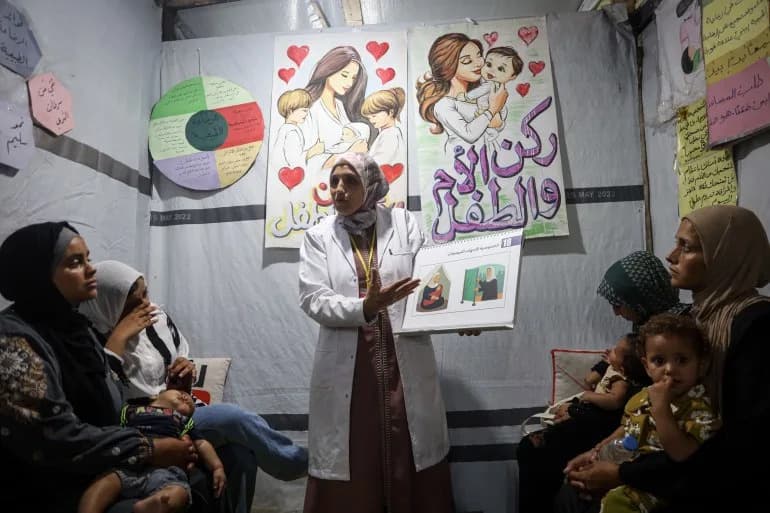
Iman Abu Ouda, a breastfeeding specialist, supports displaced mothers in Gaza facing the challenges of breastfeeding during the war [Abdelhakim Abu Riash/Al Jazeera]
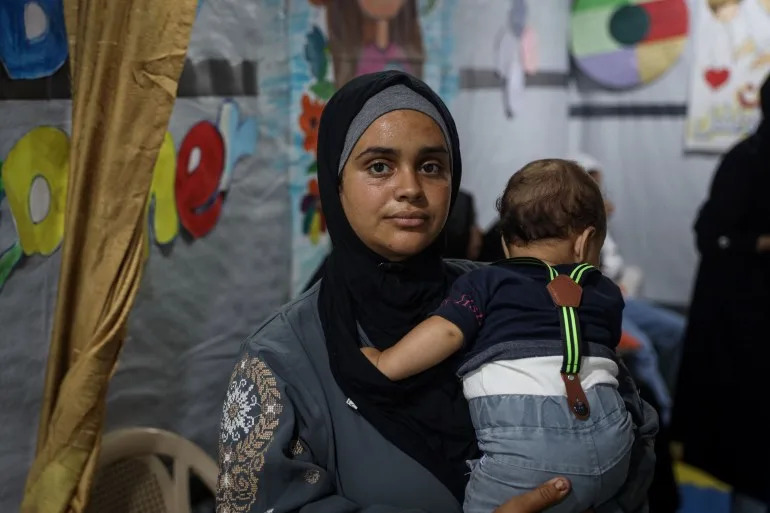
Deir el-Balah, Gaza Strip — Early each morning, 38-year-old Eman Huneidq leaves her tent in western Deir el-Balah with her nine-month-old daughter, Ward, and walks to the Mother and Child Corner at Hikr al-Jame' Health Centre. She attends twice weekly breastfeeding sessions for advice and practical support after a difficult pregnancy and early months of motherhood during the ongoing war.
Practical Support Amid Crisis
Eman, a mother of three with diabetes and a blood-clotting disorder, says the pregnancy was especially hard. She did not realise she was pregnant until five months in and was displaced from northern Gaza to Deir el-Balah. Poor nutrition and limited access to healthcare contributed to a premature birth; Ward spent 10 days in hospital.
After delivery, Eman struggled to breastfeed because of painful cracked nipples and for a time relied on formula—an expensive option in Gaza that also requires reliable access to clean water. "Dealing with the cracks made breastfeeding very difficult for me. I struggled to cope with my condition and couldn't find the right support or suitable medical creams," she says, noting that restrictions on imports have made some medical supplies hard to obtain.
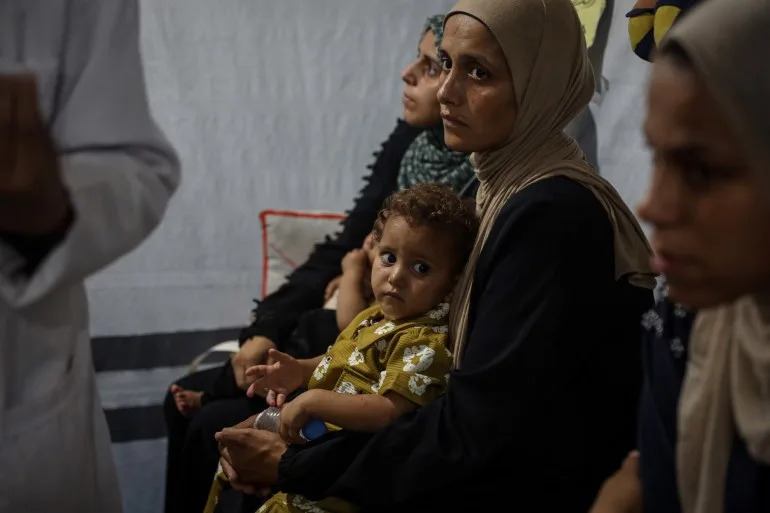
Displaced mothers in Gaza face breastfeeding challenges amid displacement, psychological stress and poor nutrition [Abdelhakim Abu Riash/Al Jazeera]
How the Mother and Child Corner Helps
At the clinic, Eman is welcomed by Sabreen al-Buhaisi, the centre's nursing manager and a breastfeeding specialist. The Mother and Child Corner offers guidance to pregnant women and new mothers on breastfeeding techniques, maternal nutrition and practical care. Al-Buhaisi says the centre supports roughly 400–500 women each month.
"Displacement, loss, death and the economic conditions women are going through have all affected breastfeeding," al-Buhaisi explains. "They have also affected women's understanding and beliefs about breastfeeding." To address these challenges, the centre includes partners and other family members in counselling sessions so families can better support breastfeeding mothers.
"We do not limit the service to counselling the woman. We work with the whole family," al-Buhaisi says.
Nutrition, Hygiene and Mental Health
The clinic provides practical nutrition advice tailored to what is available locally—suggesting cheaper protein and energy sources such as lentils, beans and chickpeas—and offers nutritional supplements when possible. Staff also coordinate with mental health teams to support mothers coping with grief, loss, or psychological strain.
Hiba al-Masri, a displaced mother of four, breastfeeds her three-month-old son while caring for her other children in a crowded tent [Abdelhakim Abu Riash/Al Jazeera]
Breastfeeding specialist Iman Abu Ouda notes several obstacles: scarce and costly transportation, overcrowded tents that give mothers little privacy, and severe food shortages that make families doubt their ability to breastfeed. "Some women tell us, 'Because of my psychological state and because I am not eating enough, I cannot breastfeed,'" she says. The team works to reassure mothers that many can continue breastfeeding even in difficult circumstances, while acknowledging the very real challenges they face.
Personal Stories
Hiba al-Masri, 23, has endured heavy losses during the conflict. The mother of four lost an infant daughter in the early months of the war while displaced in northern Gaza. The family remains displaced and now lives in central Gaza in a tent shared with extended family—15 people in total. Hiba says crowded conditions limit her privacy and add pressure, but the clinic's support has helped her breastfeed her three-month-old son, Yusuf. "Breastfeeding is a million times better than formula," she says.
For Eman, the clinic's help has made a measurable difference: she has established a breastfeeding routine, learned how to manage her diabetes while nursing, and discovered practical dietary options she can afford. Still, conditions outside the clinic remain dire—water must be carried, dirt and sand cover living spaces, and insects and rodents are constant concerns. "The most important thing for kids is hygiene and clean space, but we do not have that at all in the tents," she says.
Why It Matters
In emergency settings, breastfeeding is often the safest, most reliable way to feed infants. It protects against infection and provides essential nutrients when formula is scarce, expensive or impossible to prepare safely. The Mother and Child Corner's combined approach—practical lactation support, nutrition guidance, family inclusion and mental health referrals—helps many mothers sustain breastfeeding despite enormous obstacles.
"We mothers can endure these circumstances, but what is the fault of our children?" Eman asks. The clinic's work aims to help mothers answer that question by protecting infant health and supporting maternal resilience in a constrained and dangerous environment.
Help us improve.