B'Tselem says 47 Palestinian families in the northern Jordan Valley face possible displacement after water cuts and damage to irrigation systems affecting about 300 people. The IDF says many of the homes were built illegally in Area C and that current digging to extend barriers is a security measure permitted by court rulings. B'Tselem alleges the damage aims to displace communities and facilitate settlement expansion; the military says cases are proceeding through the legal system and that infrastructure damage is an unintended effect of security works.
47 Palestinian Families Face Eviction Risk in Northern Jordan Valley After Water Cuts; IDF Points to Illegal Building, Security Works
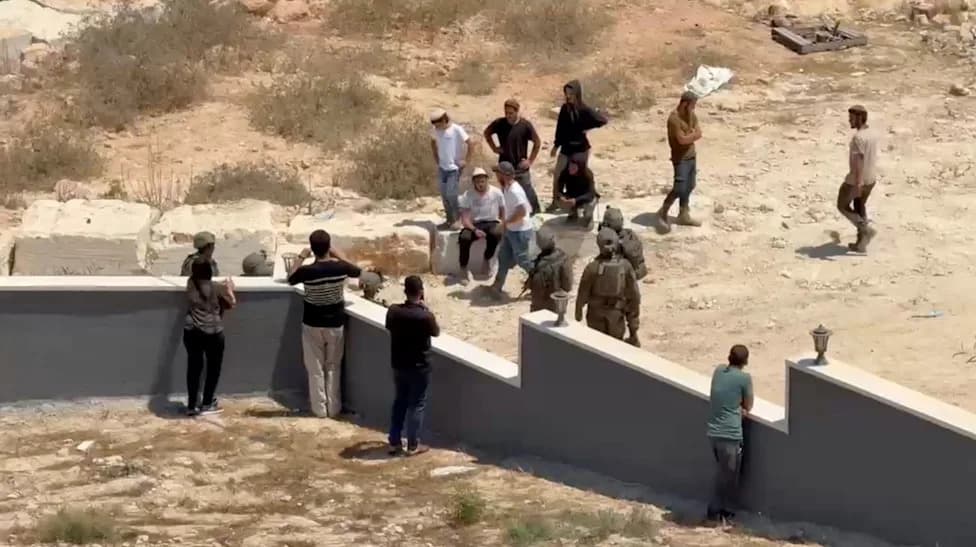
Palestinians use their phones as Israeli settlers and military personnel stand outside a Palestinian home in Qusra, in the West Bank, August 15, 2026, in this screen grab obtained from a video. (photo credit: VOBR/via REUTERS)
Israeli rights group B'Tselem says 47 Palestinian families in the northern Jordan Valley risk displacement after water cuts and damage to local irrigation systems that it says are preventing them from continuing their agricultural livelihoods.
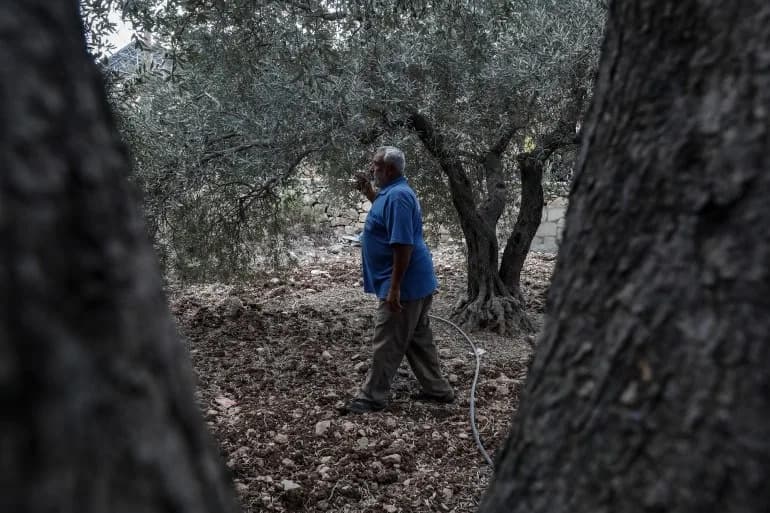
B'Tselem's Claim: The organization reported that the water supply to roughly 300 people in Ras al-Ahmar, At-Tha'ala and areas east of Atuf has been interrupted. B'Tselem alleges settler extremists, together with actions by or at least related to Israeli military works in the area, have damaged water infrastructure, uprooted olive trees, destroyed crops and greenhouses, and severed kilometers of irrigation lines — threatening thousands of dunams of farmland and the livelihoods of local families.
IDF Response: The Israel Defense Forces told The Jerusalem Post that the situation varies by household and that many — and by some accounts all — of the affected homes were built illegally in Area C of the West Bank. The military said each case is being processed through the legal system and that current works in the area are security measures meant to prevent weapons smuggling and terrorist attacks.
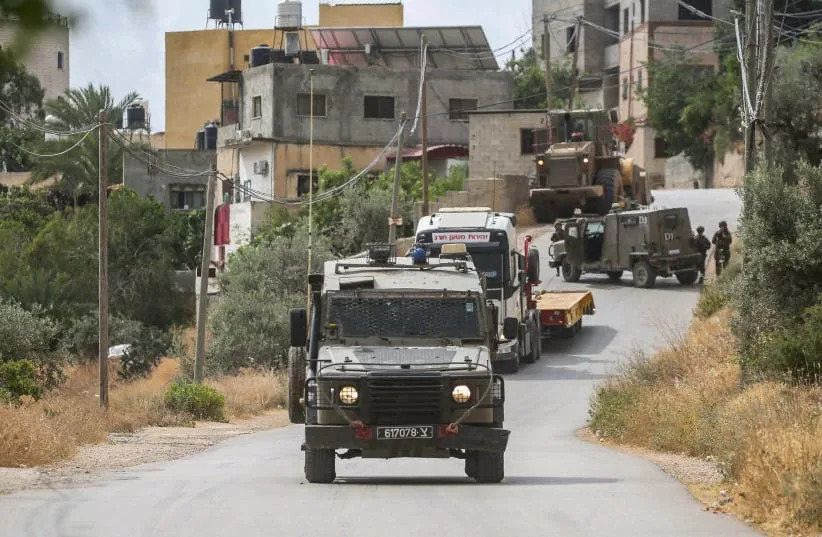
ISRAELI SECURITY forces raid a building in the town of Tammun, in the northern Jordan Valley, in the West Bank, May 9, 2025. (credit: NASSER ISHTAYEH/FLASH90)
The IDF explained it is undertaking digging and barrier-extension works after a dividing wall installed about three years ago did not eliminate security incidents in the sector. Military spokespeople acknowledged that expanding barriers and associated digging could cause some damage to water infrastructure, but emphasized that the works are being carried out under the latest court rulings and with restrictions, particularly concerning demolition of buildings.
Impact on Local Communities: B'Tselem warned that damaged water and irrigation systems are making it difficult for families who rely primarily on farming and shepherding to remain in the area. The group framed the infrastructure damage as part of a broader effort that de facto facilitates the expansion of nearby settlements and the dispossession of Palestinian-held land.
The organization said the announced route of the barrier stretches roughly 22 kilometers from Ein Shibli to the Tyasir checkpoint area and passes through lands belonging to Khirbet Atuf, Ras al-Ahmar, Khirbet Yarza and other communities.
Context and Ongoing Dispute: The military cited a history of violent incidents in the region, including shootings that have caused fatalities among soldiers and civilians, and referenced two high-profile cases involving the Deutsch and Dee families as part of the security rationale. Both sides dispute the cause and intent of the damage to water infrastructure: B'Tselem says it is deliberate displacement; the IDF says the harm is an unintended consequence of court-authorized security works and that legal processes are underway for each dwelling.
At present, independent verification of the precise causes of the water cuts has not been publicly confirmed by either side. The situation remains contested and is being processed through legal and military channels.
Help us improve.