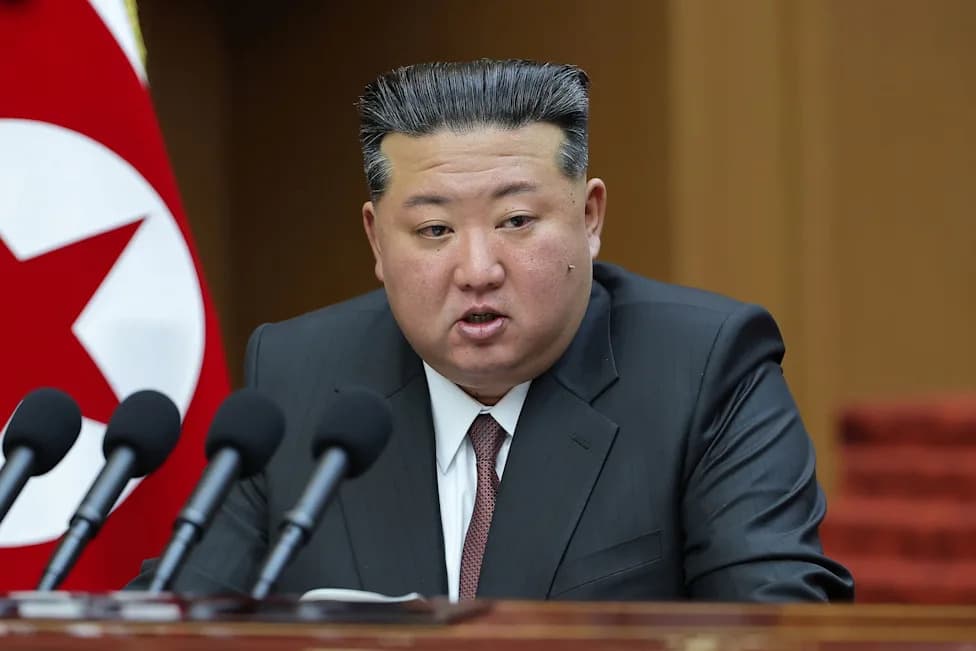
President Trump said Monday that North Korean leader Kim Jong Un has responded to his request for talks, after Trump ordered a substantial reduction in joint U.S.-South Korea military exercises. The move, Trump said, stems from a personal rapport with Kim and aims to encourage diplomacy, while Seoul said it was closely monitoring developments. The Pentagon is working to implement the directive even as Democrats warn cuts could undermine readiness; analysts view the step as a bid to draw Pyongyang back to negotiations.
Trump Says Kim Jong Un Has Responded After He Orders Cuts To Joint U.S.-South Korea Drills
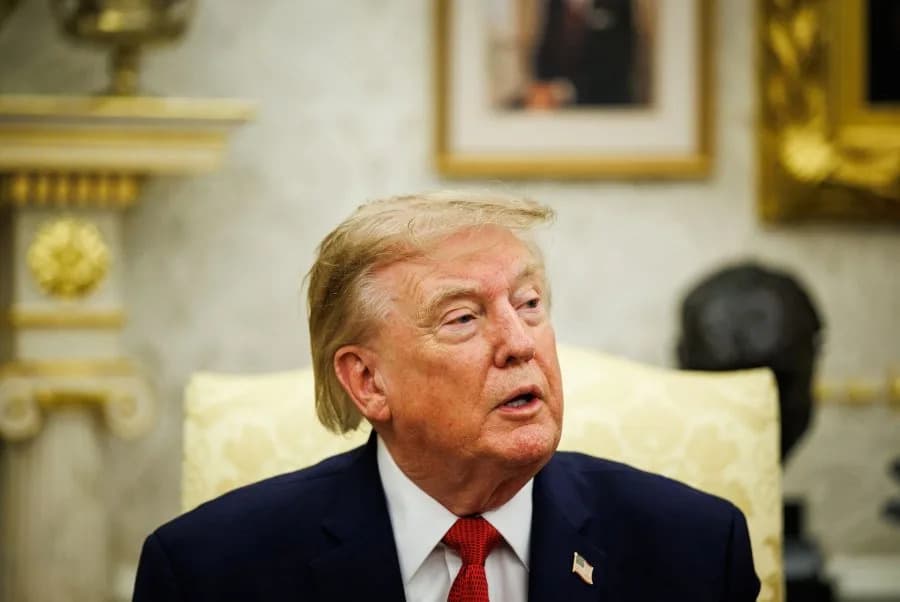
President Donald Trump on Monday said that North Korean leader Kim Jong Un had responded to his request for talks. Trump, seen here during a press availability in the Oval Office Monday, made the comments one day after ordering a reduction in U.S.-South Korea military drills. Photo by Samuel Corum/UPI
SEOUL, Aug. 18 (UPI) — President Donald Trump told reporters Monday that North Korean leader Kim Jong Un has answered his outreach for talks, remarks that followed Trump’s directive to substantially scale back joint U.S.-South Korea military exercises. Trump framed the move as part of a diplomatic push based on a personal rapport with Kim.
Speaking in the Oval Office, Trump suggested that his outreach had been answered but declined to provide details, describing developments as "very positive." When asked why Kim had not publicly replied to previous requests, Trump retorted, "How do you know he hasn't responded?" and later said simply, "He has."
"I understand him. He understands me," Trump said, adding that Kim had "always treated me with great respect."
In a Truth Social post on Sunday, Trump criticized the Ulchi Freedom Shield exercises — which began Monday — calling them costly and "totally inappropriate and hostile" to North Korea. He wrote that Pyongyang "has been unthreatening and respectful" during his time in office and said South Korea had refused a request to assist with operations related to Iran. In that post he wrote: "Therefore, and based on the fact that it is too late to cancel, I have instructed Secretary of War, Pete Hegseth, to substantially reduce the Joint Military Exercises!"
An official from Seoul's Joint Chiefs of Staff told reporters by text message that the Ulchi Freedom Shield drills had started as planned. The Blue House (South Korea's presidential office) said it was "paying close attention" to the U.S. comments and expressed hope that warmer ties with Pyongyang could lead to meaningful peace talks, adding that Seoul would remain closely coordinated with Washington.
The Pentagon, according to a Yonhap report, said it "is actively working on executing the Commander-in-Chief's directive," but as of Tuesday had not detailed which elements of the drills would be scaled back.
Political Reaction And Analysis
Democrats in Congress criticized the decision, warning that reducing exercises could weaken readiness and undercut confidence in U.S. security commitments. Sen. Jack Reed, ranking member of the Senate Armed Services Committee, said cutting exercises to "flatter a dictator" or to punish an ally would send a dangerous signal about the reliability of U.S. commitments.
Policy analysts offered varied interpretations. Peter Lee of the Asan Institute for Policy Studies called the order a reminder of Trump's transactional approach to alliances and suggested Seoul should work to counter the "unfaithful ally" narrative. Victor Cha of the Center for Strategic and International Studies said the move appears to be a concrete attempt to entice Kim Jong Un back to the negotiating table, using the timing of the exercises as leverage.
Pyongyang had not publicly responded to the announcement by Tuesday. Cha said the North Koreans would likely "bide their time" rather than respond immediately.
Trump has pursued reductions or suspensions of joint U.S.-South Korea drills before while engaging in direct diplomacy with Kim, including during his first term. After the 2018 Singapore summit, the president announced a halt to what he called "provocative" drills, and some subsequent exercises were canceled or reduced in scale.
Trump also criticized Seoul for declining to assist with operations related to Iran, framing the refusal as unfair given the U.S. military presence in South Korea. He cited a figure of "39,000 soldiers" guarding South Korea from North Korea; the Pentagon's publicly reported figure for U.S. forces in South Korea is roughly 28,500.
Later Monday, Trump posted a meme on Truth Social showing Kim Jong Un speaking into a telephone, captioned: "Hey Donald, we cool ... right?"
What Happens Next
Details about the scope of any reductions to Ulchi Freedom Shield were not yet available. The Pentagon said it was implementing the president's directive while Seoul emphasized continued coordination with Washington. Observers say the move could be intended to create diplomatic space for talks with Pyongyang, but many analysts and lawmakers cautioned about potential costs to readiness and alliance trust.
Help us improve.