After President Trump said Kim Jong Un replied to his overtures, analysts highlighted North Korea’s growing international stature. Pyongyang has strengthened ties with Russia and China, gained battlefield experience in Ukraine, and seen economic growth—reported at more than 3% for a third straight year in 2025. Meanwhile, North Korea continues missile testing and rejects South Korean engagement, declaring itself an irreversible nuclear state.
Trump Says Kim Responded — Inside North Korea’s Rising Global Standing
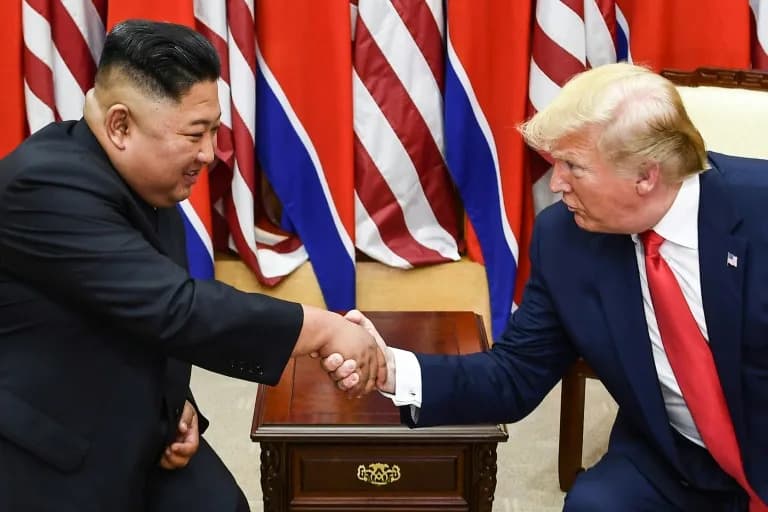
Kim Jong Un and Donald Trump shake hands during a meeting on the south side of the Military Demarcation Line that divides North and South Korea at Panmunjom in June 2019 (Brendan Smialowski)
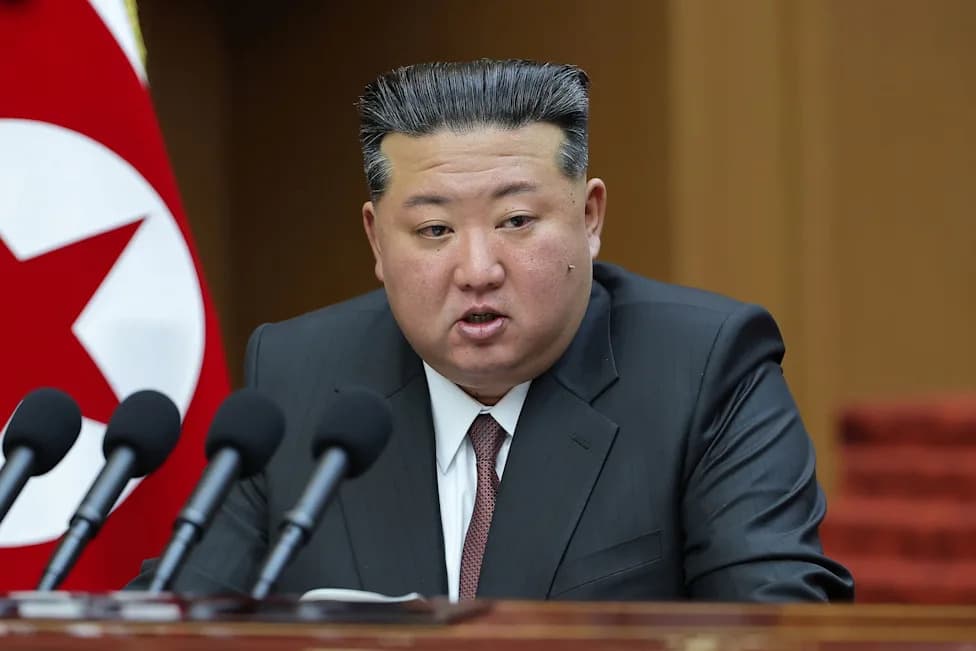
US President Donald Trump said Kim Jong Un responded to his recent overtures, remarks that came a day after Washington scaled back joint military drills with South Korea. Analysts say North Korea has strengthened its international position—buoyed by closer ties with Russia and China, a recovering economy, and combat experience gained from backing Moscow.
Ties With Russia
North Korea has become more visibly active in international conflict by backing Russia in its invasion of Ukraine. Analysts argue that Pyongyang’s involvement has brought both economic benefits and military experience. Hong Min, a senior researcher at the Korea Institute for National Unification, said North Korea has gained "practical experience across virtually every aspect of modern warfare," including land, air and sea operations and drone tactics.
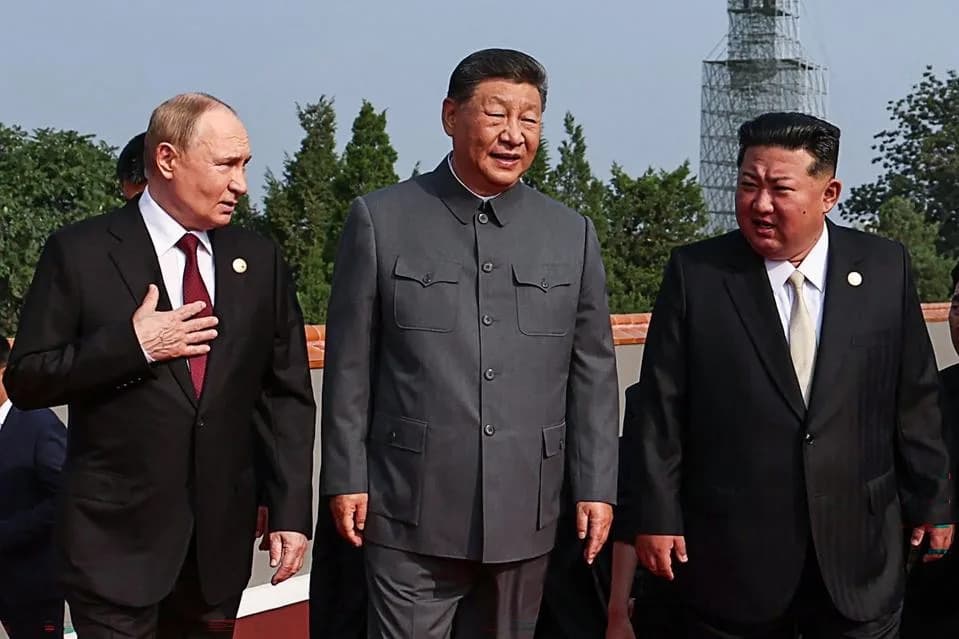
US-South Korea military officials have warned that Pyongyang’s forces could be "battle-hardened" by combat exposure in Europe. Kim’s elevated diplomatic visibility was underscored when he appeared alongside China’s Xi Jinping and Russia’s Vladimir Putin at a Beijing military parade last year.
Past Overtures And Current Incentives
Donald Trump met Kim three times during his first term in high-profile summits aimed at denuclearisation, with little tangible progress. Trump once remarked they were "in love" and later described North Korea as "sort of a nuclear power," saying he remained open to further talks. Those offers have not produced a new dialogue.
Analysts note that with Russia’s strategic backing and growing self-sufficiency, Kim has less incentive to seek legitimacy from US engagement alone. As Seong-Hyon Lee, a visiting scholar at the Harvard University Asia Center, told AFP: "He no longer needs the legitimacy of a handshake; he needs guaranteed, irreversible sanctions relief before he even walks into the room."
Missile Tests And Regional Drills
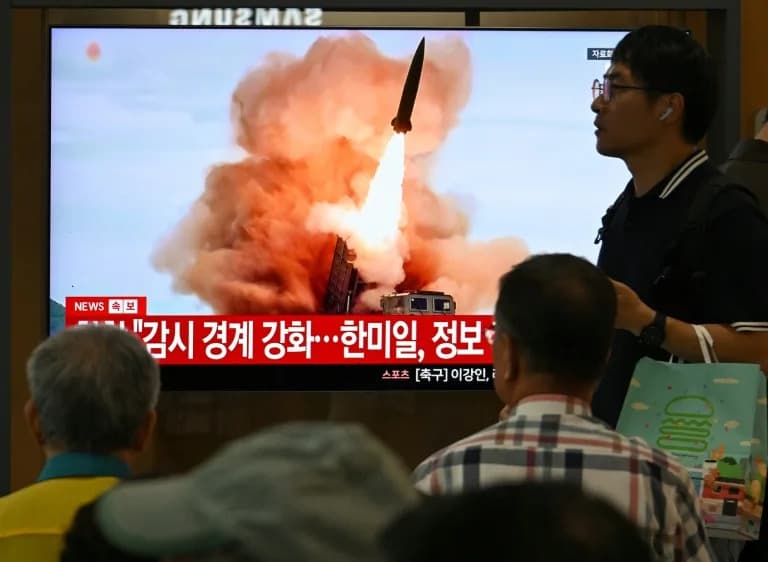
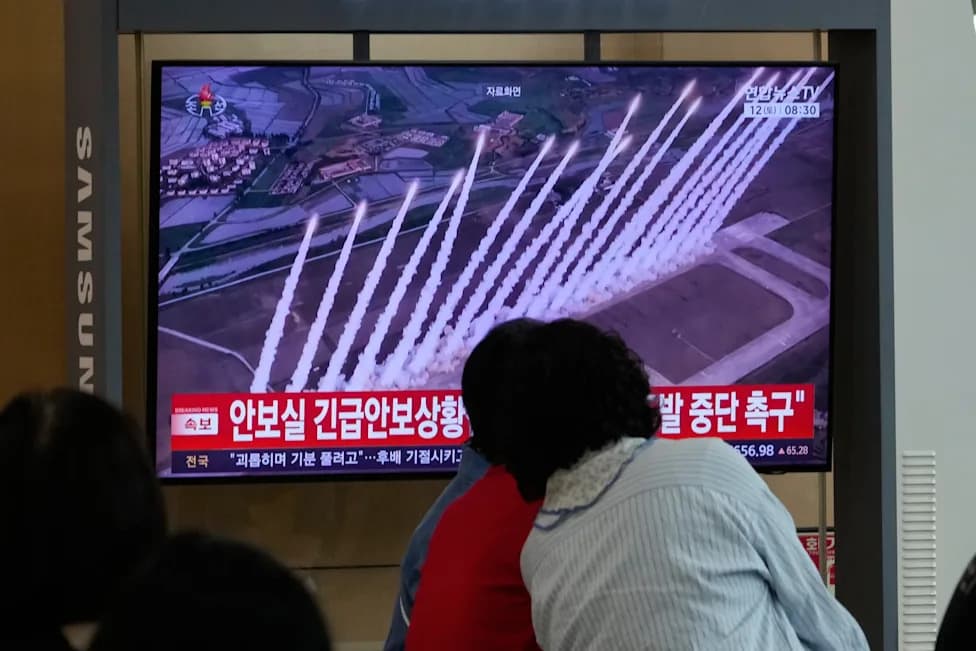
Pyongyang has responded sharply to regional military shifts. It fired ballistic missiles following Japan’s plans to strengthen its defenses and routinely times launches around annual US–South Korea joint exercises, which it calls rehearsals for invasion. After Trump’s 2018 summit with Kim, Washington suspended some large-scale exercises it had called "provocative." The United States still stations roughly 28,500 troops in South Korea, a legacy of the 1950–53 Korean War armistice.
Economic Shifts
South Korea’s central bank estimated that North Korea’s economy grew by more than 3% for a third consecutive year in 2025, in part due to expanded cooperation with Russia. Increased weapons-related manufacturing tied to Moscow, more Russian visitors, and enhanced transport links have supported construction and services.
China remains Pyongyang’s largest trade partner and key source of diplomatic and economic support despite sanctions. Bilateral trade has reportedly recovered to nearly $3 billion annually, with exports that include labor- and assembly-based goods such as wigs.
Relations With Seoul
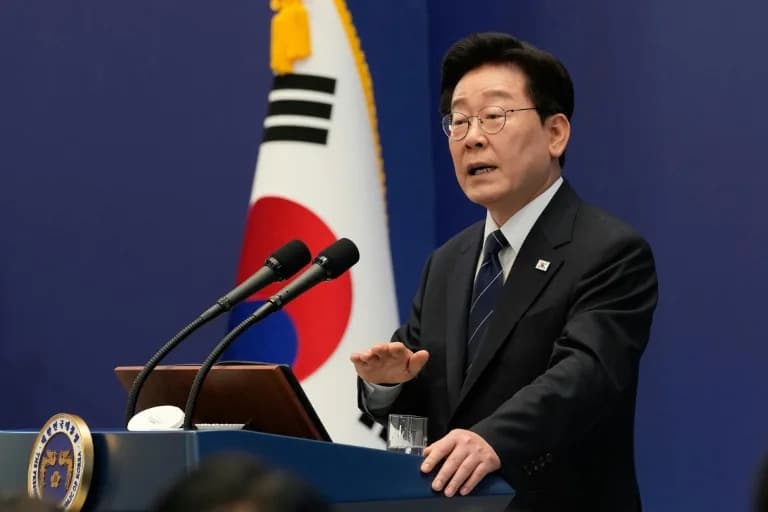
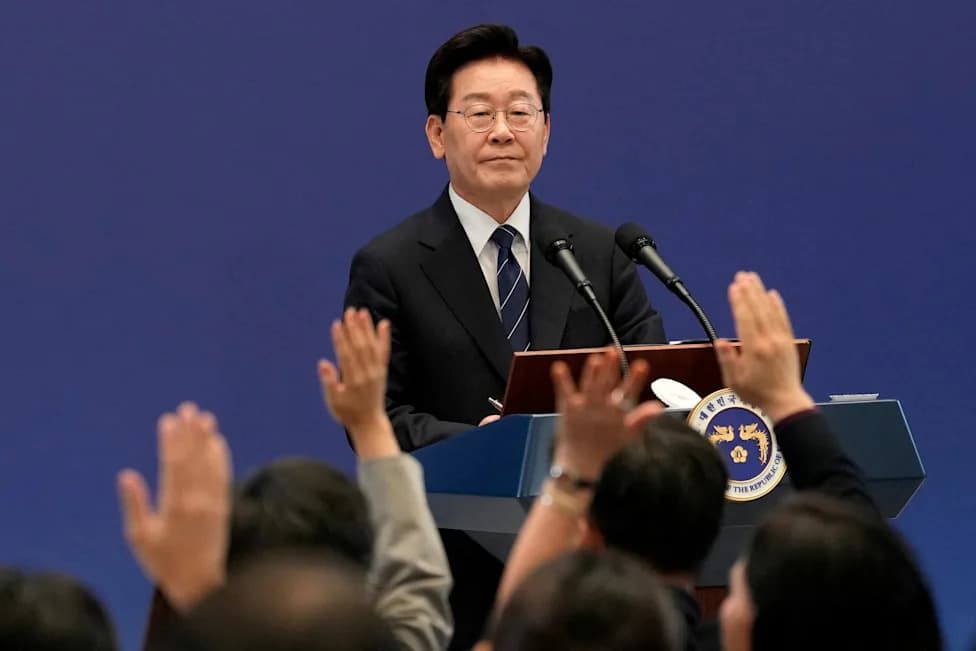
Since taking office in June 2025, South Korea’s President Lee Jae Myung has pursued engagement with the North, departing from the harder line of his predecessor. Pyongyang has rejected overtures, styling Seoul its "most hostile" enemy and declaring itself an "irreversible" nuclear state.
Seoul says it has shifted priorities from full denuclearisation to halting the expansion of Pyongyang’s nuclear activities. Lee has proposed talks to formally end the Korean War and stressed that joint US–South Korea drills do not signal an intention to attack North Korea. South Korean experts suggest Seoul could still play a constructive supporting role if US–North Korea negotiations resume, but they also warn that Pyongyang may increasingly "bypass" Seoul in favour of direct engagement with other powers.
Bottom line: North Korea appears more confident and connected internationally than in recent years, fortified by ties with Russia and China, modest economic recovery, and military experience—factors that complicate diplomatic options for the United States and South Korea.
Help us improve.