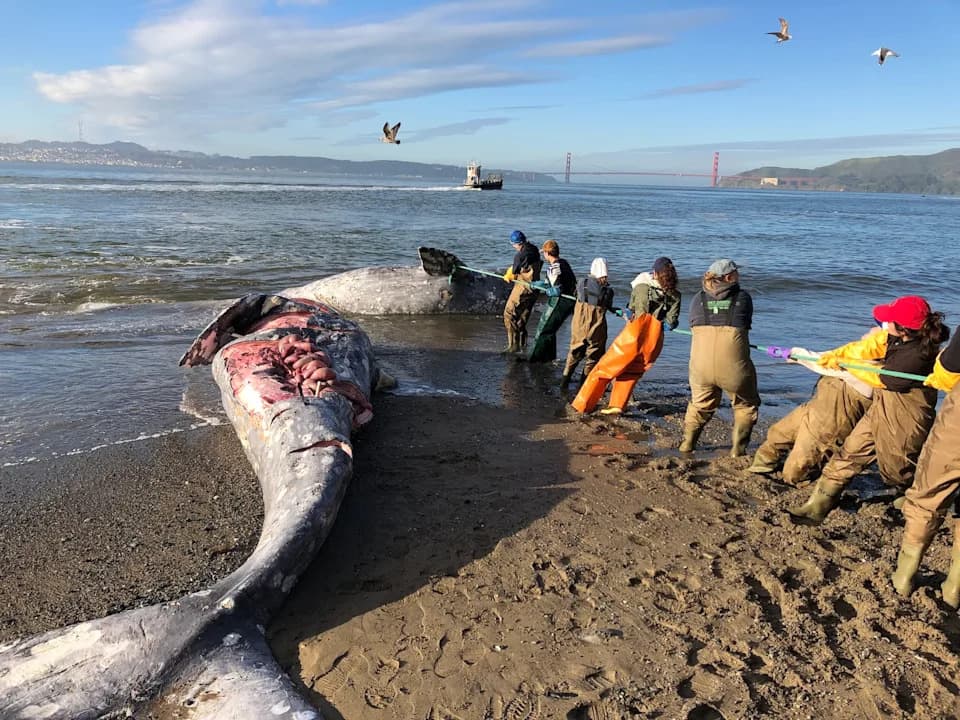
Humpback whales are increasingly common off New York, driven by legal protections, cleaner waters and a rebound in prey such as Atlantic menhaden. Climate-driven shifts in bait-fish distribution have encouraged whales to linger in the New York Bight, and Gotham Whale has documented 80–100 unique whales annually and recently recorded its 500th individual since 2012. Heavy vessel traffic, however, raises the risk of strikes and entanglements; a 2017 NOAA “Unusual Mortality Event” for humpbacks remains in effect. New York's Whale Awareness Act now requires boater education to help reduce collisions.
Whales Return to New York: Thrilling Sightings — and Rising Risks from Busy Boat Traffic
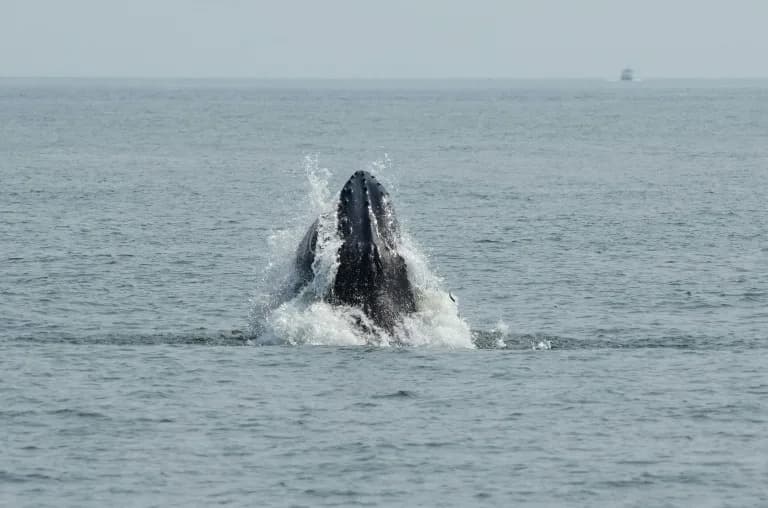
A humpback whale surfaces in the Atlantic Ocean off the coast of New York City on August 13, 2026 (TIMOTHY A. CLARY)
WHALE AT ONE O'CLOCK! Eager cruise passengers circling New York's southern shores rush to the starboard bow when a humpback surfaces for air, a dramatic sight framed by Manhattan's skyline. Once rare, these encounters are now frequent enough to delight locals and visitors alike while prompting new efforts to protect whales in one of the nation’s busiest marine corridors.
Why Whales Are Back
Humpback whales were hunted to the brink of extinction, and their recovery is widely regarded as a major conservation success. Protections such as the Endangered Species Act, improved water and air quality, and better fisheries management have helped populations rebound. At the same time, the resurgence of Atlantic menhaden — an oily bait fish used in commercial fisheries and supplements — has created abundant food for whales, dolphins and seabirds.
Climate change is also reshaping where bait fish congregate, nudging whales to change long-standing migration routes and remain closer to the New York Bight. Humpbacks can reach the size of a large city bus and may consume roughly 3,000 pounds (1,360 kilograms) of fish a day, which helps explain why many juveniles are now spending extended time off New York and Long Island.
Local Monitoring And Memorable Encounters
Organizations such as Gotham Whale have documented the change. When formal monitoring began in 2012, Gotham cataloged just five whales; today it documents about 80 to 100 unique individuals each year and recently identified its 500th whale in the New York City area. Individual animals — like NYC0318 — put on spectacular lunge-feeding displays and occasional breaches that thrill whale-watchers.
Researchers identify whales using distinctive patterns on the undersides of their tails called fluke prints, much like human fingerprints. Many animals also bear scars from previous encounters with vessels or fishing gear, a visible reminder of the hazards they face living in a busy harbor.
Maritime Traffic: A Growing Danger
New York's waters now offer abundant feeding opportunities but also heavy maritime traffic from tankers, cargo and cruise ships, as well as fishing and recreational vessels. Vessel strikes and entanglements are leading causes of whale injury and death worldwide. In 2016 humpbacks in the region were removed from the endangered species list, yet in 2017 the US National Oceanic and Atmospheric Administration (NOAA) declared an Unusual Mortality Event for humpbacks along the Atlantic coast — a designation that remains in effect and triggers investigations into unexpected die-offs.
What Is Being Done
To reduce collisions and protect both whales and boaters, New York recently passed the Whale Awareness Act. The law requires marine mammal protection and education to be integrated into state boater safety courses and vessel registration materials. Conservationists and educators — such as Carl LoBue, New York Oceans Director at The Nature Conservancy — have developed training and online courses that teach boaters to recognize whale behavior, report sightings and take practical steps to avoid collisions.
“Even the most seasoned fishermen didn't grow up driving boats around whales because they didn't used to be here,” LoBue says. “We're all needing to learn some new skills. Nobody wants to hit a whale.”
Looking Ahead
The return of whales to New York waters is a conservation triumph that brings wonder and responsibility. Ongoing monitoring, boater education, targeted regulations and public awareness will be essential to ensure these animals can thrive amid growing human activity. Sightings offer an accessible marine safari for city residents — but the safety of whales now depends on how quickly boaters and policymakers adapt.
Help us improve.