Reform UK claims it can cut over £50bn a year from welfare by 2030, mainly by reforming disability payments (including reassessing about 2.89m PIP claimants) and restricting benefits for many foreign nationals. The party attributes roughly £21bn of savings to disability changes and about £20bn to curbing foreign-national entitlements. Analysts including the IFS say the plan lacks detail and faces legal, administrative and political hurdles, particularly around EU settlement rights and the cost of implementing new schemes.
Can Reform UK Deliver £50bn In Welfare Cuts By 2030? A Reality Check

[BBC]
Reform UK says it could cut more than £50bn a year from the welfare bill by 2030 if it formed a government. The party argues most of the savings would come from tightening entitlement for many foreign nationals and overhauling disability payments — while insisting the most severely disabled would be protected.
Where The Numbers Come From
The government is forecast to spend about £353bn on welfare benefits this year, with just under half going on the state pension. That leaves roughly £207bn of non-pension welfare spending. Cutting about £50bn would therefore require removing roughly a quarter of non-pension welfare outlays, a highly ambitious target.
Disability Benefits: Big Potential Savings, Big Uncertainty
Reform says around £21bn of its proposed savings would come from changes to health and disability benefits, including Personal Independence Payment (PIP). PIP supports working-age people with the additional costs of a disability; claimants in England and Wales have risen from about 2.4 million before the pandemic to roughly 4 million this year.
The party proposes reassessing roughly 2.89 million PIP recipients over time, replacing the current system with a new "Disability Needs Assessment" and modifying or withdrawing some awards. Analysts — notably the Institute for Fiscal Studies (IFS) — warn that the figures rely on sparse detail about how assessments would change, how many awards would be reduced or removed, and what administrative costs or legal challenges might follow.
[BBC]
Foreign Nationals And EU Settlement Rights
Another central plank is restricting benefit entitlements for many foreign nationals. Reform estimates about £20bn could be saved by removing access to benefits such as Universal Credit for people born overseas. More than a million Universal Credit claimants were born abroad, including roughly 700,000 EU citizens with pre-Brexit arrival rights.
But removing or limiting benefits for EU citizens is legally and politically complex. Around 4.5 million EU nationals have long-term UK settlement rights that underpin benefit eligibility; about 1 million UK citizens in the EU hold reciprocal rights. Attempts to revoke entitlement could provoke legal challenges and reciprocal measures from EU states, and Reform’s suggested route — renegotiating post-Brexit arrangements — would mean reopening agreements widely treated as settled.
Other Proposals And Practical Questions
Reform also proposes indexing benefit increases to a less generous inflation measure (a claimed saving of about £4.8bn) and investing in anti-fraud measures it predicts could save up to £2.8bn a year. Past governments have had mixed results with fraud-reduction drives, and projected savings often depend on sustained investment and realistic assumptions.
The party wants long-term claimants judged fit for work to undertake 20 hours a week of council-run community work. How this would produce substantial net savings is unclear: councils would need funding to run and supervise schemes, and there may be transitional costs and legal hurdles to enforce participation.
Political And Local Risks
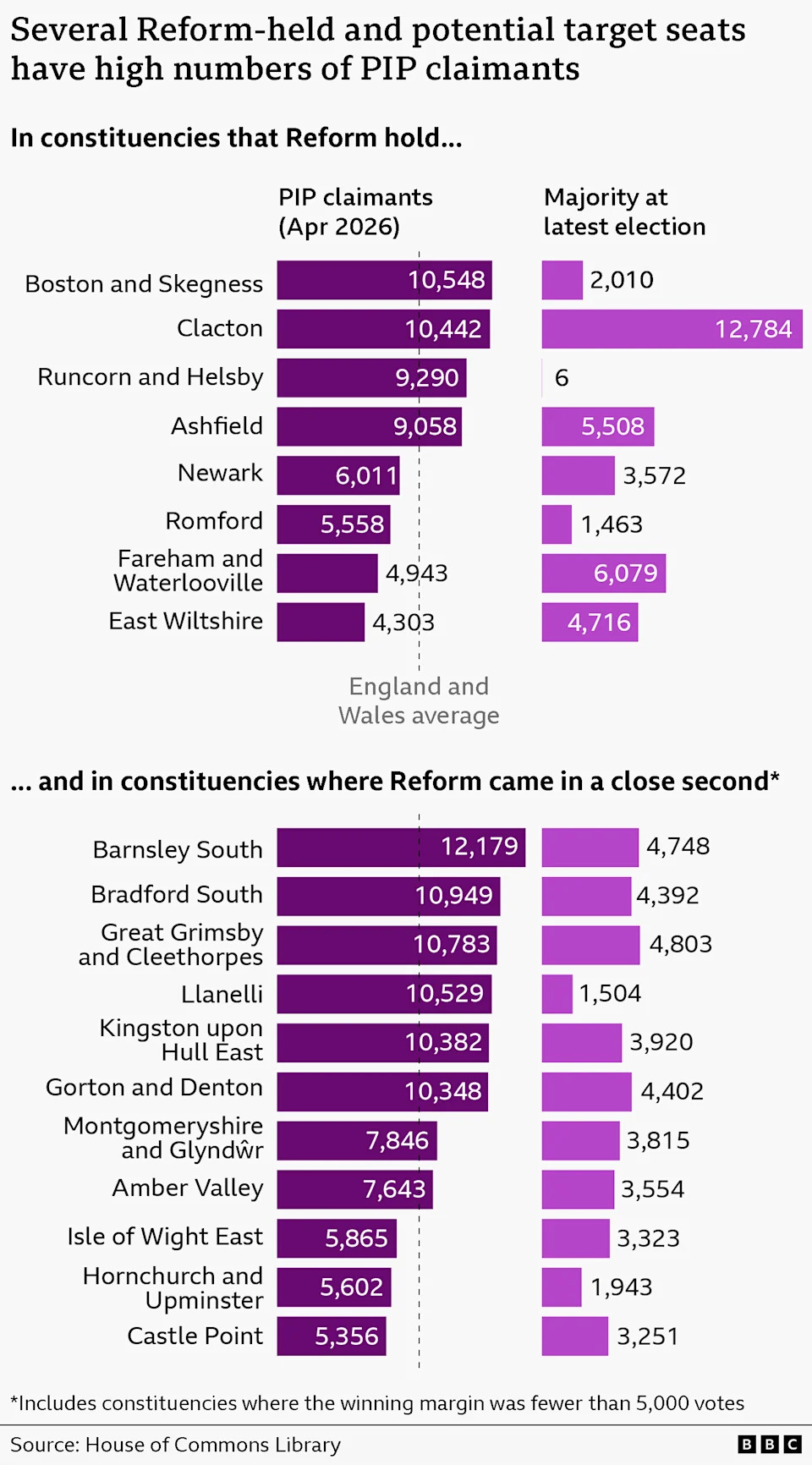
Reform is not alone in calling for welfare reform: recent reviews, including one of PIP by Labour minister Sir Stephen Timms, concluded parts of the system are "not fit for purpose." Still, delivering large-scale savings is challenging and politically risky. In constituencies held or targeted by prominent Reform MPs — including Boston & Skegness and Ashfield — PIP claimant numbers are higher than the national average, sometimes exceeding MPs' majorities. That suggests Reform is prepared to accept electoral risks in pursuit of its agenda.
Sources: BBC Verify reporting; Institute for Fiscal Studies analysis; Reform UK policy statements.
Help us improve.