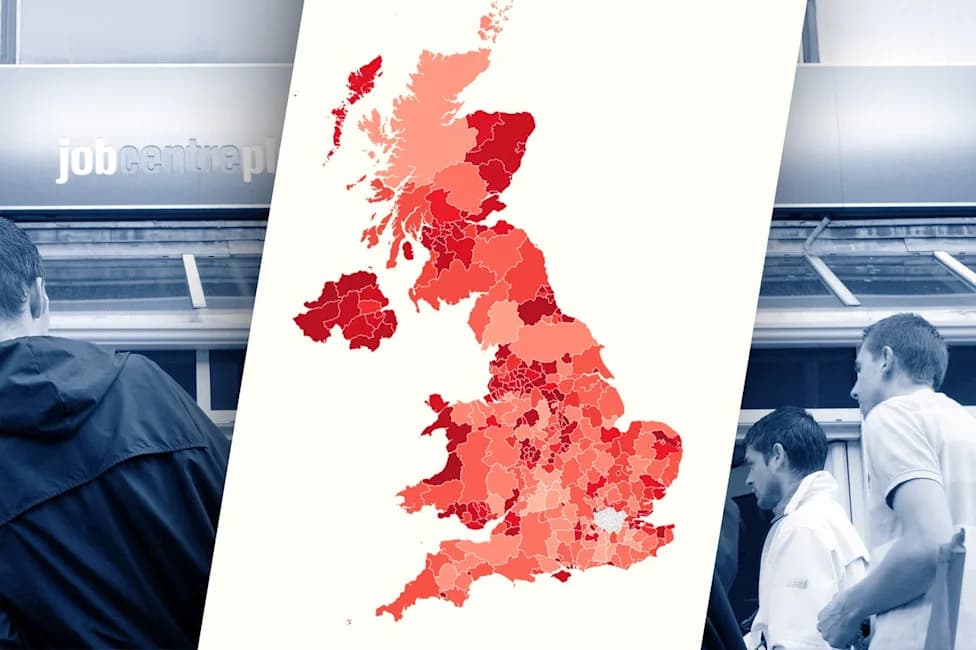
Apprenticeships in Britain are attracting more middle‑class young people, reversing a previous trend in which the poorest areas supplied the most under‑25 starts. DWP data show 3,370 more under‑25 apprentices came from the wealthiest postcodes than the poorest in 2024–25, driven largely by gains in white‑collar sectors. Degree apprenticeships that combine a funded university place with a job are increasingly competitive, but available places for under‑25s have roughly halved since 2021. Government reforms and a £2.5bn youth package aim to broaden access, while local proposals seek further incentives for technical routes.
The Return of the Middle‑Class Apprentice: How Degree Routes Are Reshaping Young Careers

Fred McConnell Smith was surprised to discover how many other middle-class young Britons are choosing an apprenticeship over university - Paul Grover for The Telegraph
Fred McConnell Smith credits his double‑barrelled surname and middle‑class upbringing to a family of graduates — a lecturer and a teacher. Yet when he left school he chose an apprenticeship over the university route. At first he imagined himself a "trailblazer," but meeting fellow trainees soon showed he was far from alone: "I must admit, I was surprised by how many went to private and grammar schools," he says.
Policy efforts in recent decades to tackle youth unemployment in post‑industrial Britain have emphasised technical training and apprenticeships, often framed as opportunities chiefly for disadvantaged young people. The reality is more complex and historically rooted. As Prof Patrick Wallis of the London School of Economics explains, apprenticeships were a preferred route for aspirational middle‑class families from the 18th century until higher education became widespread in the 20th.
Middle‑Class Uptake Is Rising
With rising graduate debt and a competitive job market, apprenticeships that combine work and a funded degree are again attractive to middle‑class families. Department for Work and Pensions (DWP) data show that after a period in which the poorest postcodes supplied the largest share of under‑25 apprenticeship starts, that trend began to reverse around the end of the 2010s. Since about 2022, the proportion of young apprentices from the wealthiest postcodes has overtaken — and pulled ahead of — those from the most deprived areas.
In 2024–25 there were 3,370 more apprentices under 25 from the richest postcodes than from the poorest on record. Much of this shift is concentrated in white‑collar sectors: business, law and administration. Starts in those sectors by young people from the wealthiest areas rose by 600 (a 6.6% increase) in 2024–25, while starts from the poorest areas fell by 430 (a 6% decrease).
Demand Outstrips Supply
Degree apprenticeships — which pair a funded university place with on‑the‑job training — are especially prized by students anxious about tuition fees, student debt and a changing graduate labour market shaped by automation and AI. Candidates such as Isha Patel and Anna Welch say these apprenticeships offered a secure path into professional careers without the financial burden of a traditional degree pathway.
But demand is outpacing supply. Government figures show total apprenticeship vacancies have fluctuated recently and have declined each year for four years; the number of places available last year was roughly half what it was in 2021. At the same time, degree‑level apprenticeships are becoming ever more competitive: some applicants compare selection processes to those for elite universities.
Policy Responses
Earlier this year the government led by Prime Minister Sir Keir Starmer reduced the financial incentive for employers to hire older apprentices in an effort to steer more opportunities toward younger candidates. It remains unclear whether that change alone will produce a significant increase in vacancies for under‑25s.
"Every young person deserves the chance to earn or learn, no matter their background. We are reforming the apprenticeships system so more young people from every postcode can take them up and our wider £2.5bn youth employment support package includes financial support for care leavers and a new apprenticeship bursary for families on Universal Credit," a DWP spokesman said.
Separately, regional leader Andy Burnham has pledged measures to boost technical routes and reduce NEET (not in education, employment or training) numbers among 18‑ to 24‑year‑olds. He has proposed giving 14‑year‑olds clearer access to technical training and offering parents on benefits up to £4,500 a year to offset lost Universal Credit if their child starts an apprenticeship.
As opportunities evolve, apprenticeships are once again drawing middle‑class attention. Whether supply can be increased to match rising demand — particularly for degree apprenticeships in professional sectors — will be a decisive factor in who benefits from this renewed interest.
Help us improve.