Summary: The wildfires devastating parts of France and Spain have caused major displacement and loss, but global satellite data show the world's burned area is about 42% below the 2012–2025 average as of 12 August 2026. Most continents are burning at or below recent norms, and long-term trends show a marked decline in burned area since the early 1900s. Immediate solutions are local and practical — prescribed burns, fuel clearance, stronger building codes and more firefighting capacity — while emissions reductions have limited impact on near-term fire risk.
Global Wildfires Are Down — Local Infernos in France and Spain Demand Better Fire Policy
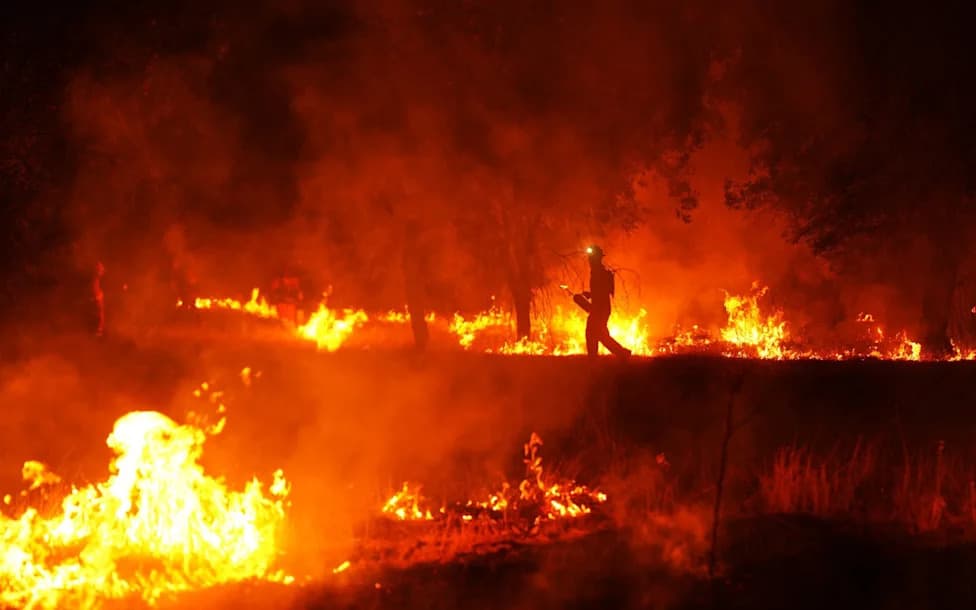
Firefighters use controlled burning to halt a wildfire in Spain - Manu Fernandez/AP Photo
The recent wildfires in parts of France and Spain have inflicted real human costs: more than 220,000 people fled flames west of Bordeaux, and nearly 90,000 residents were forced from communities around Madrid. Those who lost homes and livelihoods deserve sympathy — and urgently improved local fire management.
But the story is more complex than a single narrative that links every blaze directly to global emissions. Satellite records show that, as of 12 August 2026, the world's burned area is roughly 42% below the 2012–2025 average for that date — on course to be one of the quietest global fire seasons in recent years.
Why local disasters don't equal a global inferno
Pointing to catastrophic fires in one region while ignoring a large, measurable reduction in burned area worldwide is a form of selective reporting. Regional headlines focus on dramatic images and urgent human stories — rightly so — but that coverage can obscure the broader data trend.
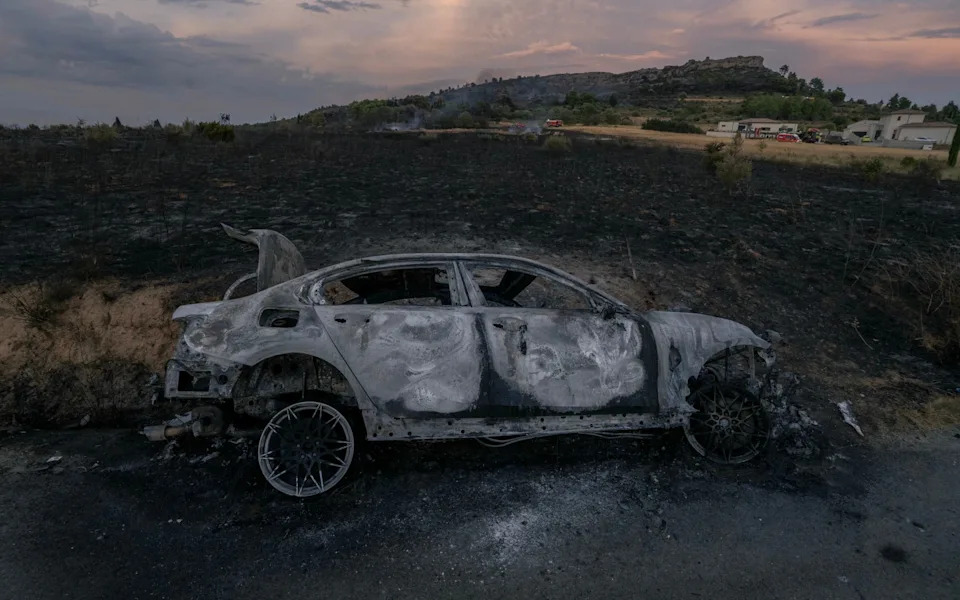
The wreck of a car on the side of the road during a wildfire in the Corbieres Massif near Montseret, Aug 6, 2026 - IDRISS BIGOU-GILLES/AFP
Part of the confusion comes from how regional statistics are compiled. For example, datasets categorized as "Europe" typically include all of Russia; a quiet Siberian season can therefore pull down continental totals. Excluding Russia, Europe had burned only about two-thirds of its 2012–2025 average by 12 August 2026, and ten of the last 14 years recorded more area burned by mid-August. France and Spain, however, are experiencing severe seasons.
Continental patterns and long-term trends
The same pattern appears across other continents. Canada and the United States are both having below-average fire years; North and South America are at all-time satellite lows for burned area. Africa — historically the most burned continent — is approximately 44% below its normal value for this time of year. Oceania (largely Australia) is about 15% below typical levels, and Asia is near record lows. In short, virtually every continent is burning at or below its recent average.
This quiet in 2026 is not an isolated blip. In the early 1900s nearly 4% of the planet's land burned annually — roughly double today's rate. A century of improved agriculture, land management and firefighting has steadily reduced burned area worldwide.
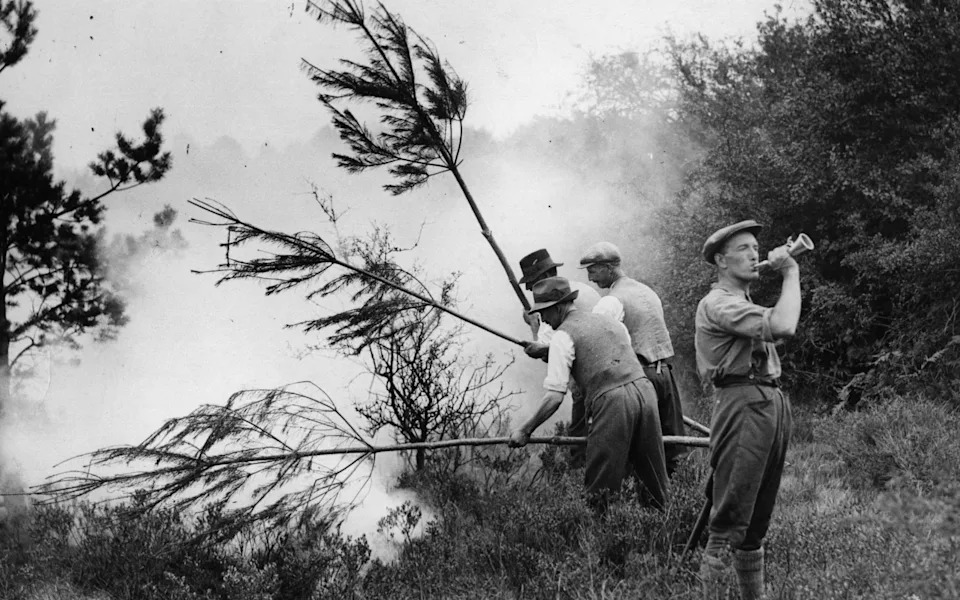
A forest fire-fighter blows a bugle for more help at Lyndhurst in New Forest, Aug 3, 1934 - William Vanderson
What this means for policy and response
None of these global statistics excuse the acute threats facing communities in France, Spain and elsewhere. A record June heatwave, long-term fuel accumulation and local land-use patterns combined to create highly combustible conditions. The practical, proven responses are local and operational: prescribed burns, strategic fuel clearing, fire-resistant building standards, zoning that reduces exposure, and expanded firefighting capacity.
Spain's prime minister called the blazes a "painful expression" of climate change — a statement that reflects public alarm. Policymakers should respond to both the immediate humanitarian crisis and the data that guide long-term strategy.
Prescribing net-zero emissions as a frontline, short-term remedy for today's fires misframes the problem. Even if wealthy nations reached net zero by mid-century, the change in near-term fire risk would be limited; reducing present-day losses depends far more on improved land management and emergency preparedness than on emissions trajectories alone.
Bottom line: Recognize the human toll of local infernos while using global data to shape proportionate policy. Better local fire management, planning and resources — not only climate rhetoric — are essential to protect communities and reduce future fire losses.
Help us improve.