The article recounts the Ridglan Farms campaign — where activists first freed 22 beagles and later pressured the company to release about 2,000 dogs — and explains how conservative figures and parts of the Trump administration embraced the outcome. Federal moves to reduce animal testing and bipartisan public concern have given right-leaning actors an opening that the left has often left unclaimed. The piece warns that conservatives’ adoption of animal-welfare rhetoric carries both opportunities for vulnerable animals and risks of political co-optation, and urges progressives to make animal protection a core part of a broader anti-corporate, pro-justice agenda.
How MAGA Co-Opted Animal Rights: The Ridglan Rescue and a Political Vacuum
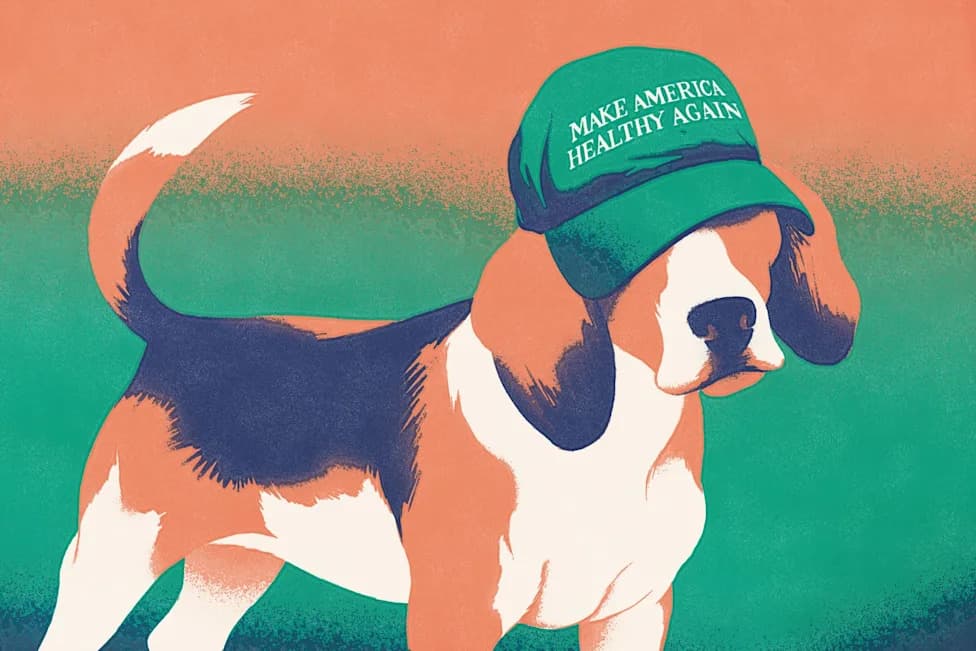
How MAGA Stole Animal Rights from the Left
In March, about 50 activists entered Ridglan Farms — a commercial dog-breeding and animal-research facility — and freed 22 beagles, a breed commonly used in labs for its docile, eager-to-please temperament. Ridglan had already been the subject of a multiyear animal-rights campaign: a state investigation had found evidence of felony animal abuse, including unsanitary confinement, eye procedures performed without anesthesia, and unnecessary euthanasia. To avoid criminal prosecution, the company had planned to surrender its breeding license on July 1.
From Small Liberation to Mass Confrontation
Not satisfied with the license surrender alone, many campaigners wanted Ridglan to relinquish every animal in its custody so the dogs wouldn’t be killed or sold into future experiments. On a clear April morning, an unexpectedly bipartisan crowd of roughly 1,000 activists converged on Blue Mounds, Wisconsin, aiming to conduct a mass “open rescue” of more than 2,000 beagles still held at the site.
Where the March action met little resistance, Ridglan had prepared for the April mobilization: perimeters were blocked, trenches were dug and filled with manure, and private security and police patrolled the site, prepared to repel demonstrators with tear gas and rubber bullets. Some protesters wore hazmat suits and carried tools to open cages; most, however, dressed like ordinary Americans by design. Organizer-lawyer Wayne Hsiung emphasized nonviolence and a message that could draw people across the ideological spectrum — anti-capitalist vegans shoulder-to-shoulder with dog-loving conservatives, parents and seniors watching from the sidelines.
Shortly after the action began, poet and bookseller Gretchen Primack — who had traveled roughly 1,000 miles from New York’s Hudson Valley — crouched coughing with burning eyes after pepper spray was deployed. Facing pepper spray and rubber bullets, activists were forced back. After four tense hours the crowd withdrew: 27 people were arrested and several were injured; one demonstrator reportedly lost multiple teeth. Primack described feeling "totally demoralized" as she rushed an injured friend to the ER.
A Bipartisan Turnaround
In an abrupt turn, the campaign ultimately succeeded. Hsiung called the result "the greatest turnaround in animal rights history." The breakthrough came in part because of conservative allies: conservative podcaster Tomi Lahren had interviewed Hsiung and praised the activists’ courage, and Lara Trump — a prominent conservative who owns a beagle — publicly urged Ridglan to strike a deal and sell the animals. Reportedly, well-connected intermediaries and major pro-Trump donors helped secure the release of roughly 2,000 dogs under undisclosed terms.
That outcome sits uneasily with the history of how direct-action animal campaigns have been treated. For decades, law enforcement often equated such actions with domestic terrorism. Yet in this case, Trump-aligned figures and parts of the administration seized credit for the favorable resolution: Health Secretary Robert F. Kennedy Jr. and Secretary of Agriculture Brooke Rollins released a joint statement celebrating a "major win for animal welfare," while EPA Administrator Lee Zeldin posted a photo with a beagle and reiterated commitments to reduce animal testing.
Policy Moves and Political Risks
The right’s embrace of select animal-welfare measures has gone beyond optics. The Trump administration announced a "strike force" targeting puppy mills and dogfighting, and federal agencies have signaled concrete shifts: the National Institutes of Health (NIH) committed about $87 million to develop animal-free research methods, and the Food and Drug Administration published a strategic roadmap to reduce or phase out some animal testing. RFK Jr. reportedly met with PETA to discuss converting NIH-backed primate research centers into sanctuaries — an option NIH has since explored.
At the same time, the administration continues to pursue broadly pro-corporate and deregulatory policies — including rollbacks to environmental protections — that harm animals, workers, and communities. This mix of selective compassion and pro-corporate governance creates both opportunities to win protections for vulnerable animals and risks that animal-welfare rhetoric will be used to advance illiberal or unequal politics.
Why the Left Has Been Slow to Respond
Many progressives have been slow to take animal protection seriously as a core political issue, a neglect that left a vacuum the right has moved to fill. Observers including Justin Marceau, faculty director of the Animal Law Program at Sturm College of Law, argue that Democrats have taken animal advocates for granted and misread the size and importance of this constituency.
Right-leaning groups such as the White Coat Waste Project, led by former Republican operative Anthony Bellotti, have connected animal-testing critiques to conservative issues like federal spending and culture-war grievances, broadening appeal in certain segments of the electorate. Conservative animal-rights organizations such as the Wilberforce Institute (founded by Liam Gray) frame the fight as "people versus special interests," attempting to position animal protection against big agriculture and taxpayer-funded laboratory experiments.
Co-Optation, Nationalism, and a Path Forward
Co-optation is not inherently benevolent. As Daniel Engber has warned, a strain of right-wing animal politics — "Animal Nationalism" — risks elevating certain companion or iconic species while ignoring or even exacerbating harm to others, and pairing animal compassion with xenophobic or exclusionary political rhetoric. In extreme cases, animal-protection language could be deployed selectively to serve hierarchical or nationalistic agendas.
Left activists warn that compassion for animals should not become another instrument of hierarchical politics. They argue the left can articulate an inclusive moral vision that opposes violence against both humans and nonhumans, linking animal protection to fights against corporate power, worker exploitation, environmental destruction and systemic injustice.
“The best-case scenario is that this movement on the right awakens the left to the idea that animal welfare and animal protection ought to matter,” said Justin Marceau. “That alignment actually makes sense.”
Allowing MAGA-aligned actors to claim the mantle of animal compassion would be both a moral and strategic mistake for progressives. There remains time for the left to integrate robust animal-protection policies into a broader anti-corporate, pro-justice platform — protecting vulnerable animals while resisting co-optation by illiberal forces.
Help us improve.