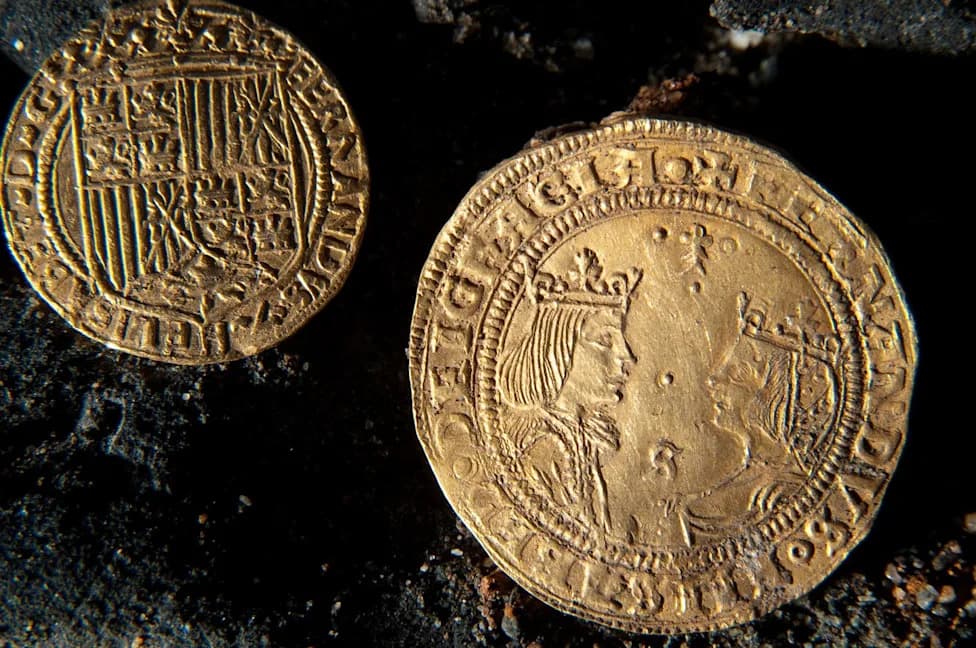
A silver real de a ocho placed by Pedro Sarmiento de Gamboa on March 25, 1584, has been excavated from the foundation stone of a church at Ciudad del Rey Don Felipe, confirming the settlement's precise location. The short-lived Spanish colony at the Strait of Magellan survived less than three years and most of its roughly 350 settlers perished, later earning the name Puerto del Hambre. Using high-precision geolocation and metal detection, archaeologists found the coin where Sarmiento described; the find strengthens the link between historical records and archaeological evidence and will help map other structures shown on a 16th-century map.
440-Year-Old 'Founding Coin' Pinpoints Lost 1584 Spanish Colony
Archaeologists Found a Coin From a Doomed ColonyАлик Фатхутдинов - Getty Images
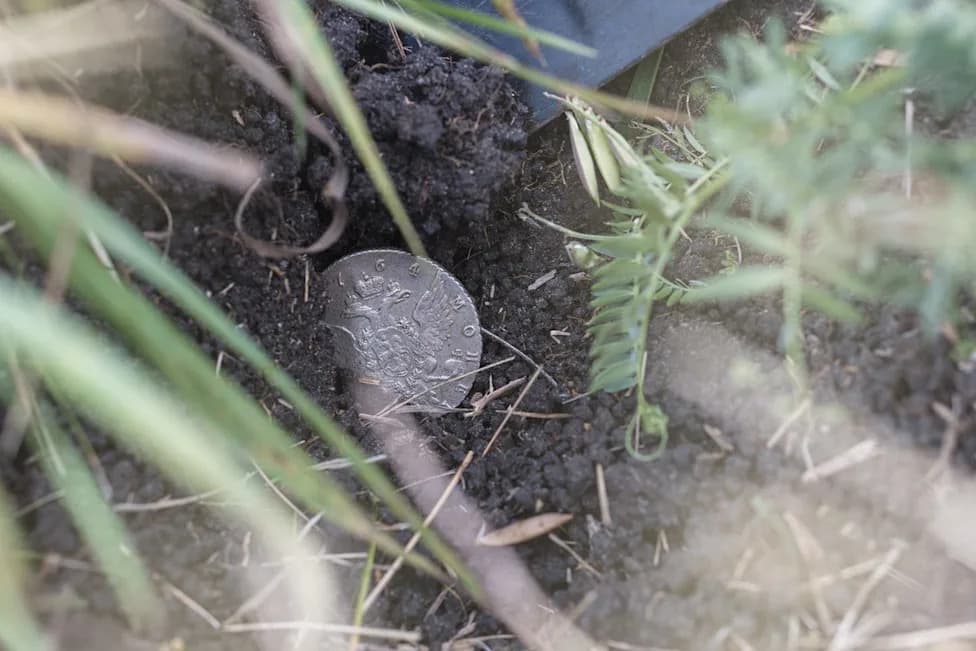
Tucked beneath the cornerstone of a tiny church, archaeologists have unearthed a ceremonial silver coin placed on March 25, 1584, by Pedro Sarmiento de Gamboa at the founding of Ciudad del Rey Don Felipe. The coin — a silver real de a ocho minted in Potosí — lay undisturbed for 440 years, exactly where historical accounts said it would be.
The short-lived Spanish settlement was established at the Strait of Magellan to secure a strategic passage around South America. Harsh weather, isolation and supply failures decimated the outpost: of roughly 350 colonists, most died within a few years, and English navigator Thomas Cavendish later dubbed the site Puerto del Hambre — "Port of Famine."
Archaeology Meets Archives
A research team combined high-precision geolocation with advanced metal-detection surveys to map promising locations and guide excavations. One targeted area yielded the silver coin exactly as Sarmiento had described in his account of the strait: resting on the surface of a stone inside the small church.
"Most impressively, it was uncovered in the exact location and position described by Sarmiento in his writing on the Strait of Magellan," read a joint translated statement from Chile's Center for Historical Studies and Humanities and the Austral University of Chile.
The real de a ocho bears a Jerusalem cross on one face and the coat of arms of King Philip II on the other. As one of the first truly global coins, it circulated across Europe, the Americas and Asia. Researchers previously used Sarmiento's descriptions to locate two bronze cannons at the site in 2019; this ceremonial coin further corroborates the written record.
Why the Find Matters
Soledad Gonzalez Diaz, lead researcher and historian at Bernardo O'Higgins University in Santiago, told Live Science that the discovery creates "a rare and powerful point of convergence between written sources and archaeological evidence." The coin provides a fixed reference for mapping the settlement's layout and testing details shown on a surviving 16th-century map, from houses to storage areas.
Beyond its symbolic value, the in-situ survival of the coin gives archaeologists a precise anchor to reconstruct how the colony was planned, provisioned and ultimately overwhelmed by the severe environment and isolation around the Strait of Magellan.
Help us improve.