Jeremy Clarkson has criticised the DHSC's withdrawal of guidance that allowed men aged 50+ to request a free PSA test, calling the move inexplicable after his own prostate cancer diagnosis and remission. The change removes an explicit entitlement that existed since 2002 and leaves GPs to decide case-by-case who should be offered testing. Ministers favour a narrow pilot for men with a specific BRCA2 variant rather than broader screening, while campaigners call for expanded targeted testing for at-risk groups.
Jeremy Clarkson Criticises DHSC Decision To Remove Free PSA Test Entitlement For Men Over 50
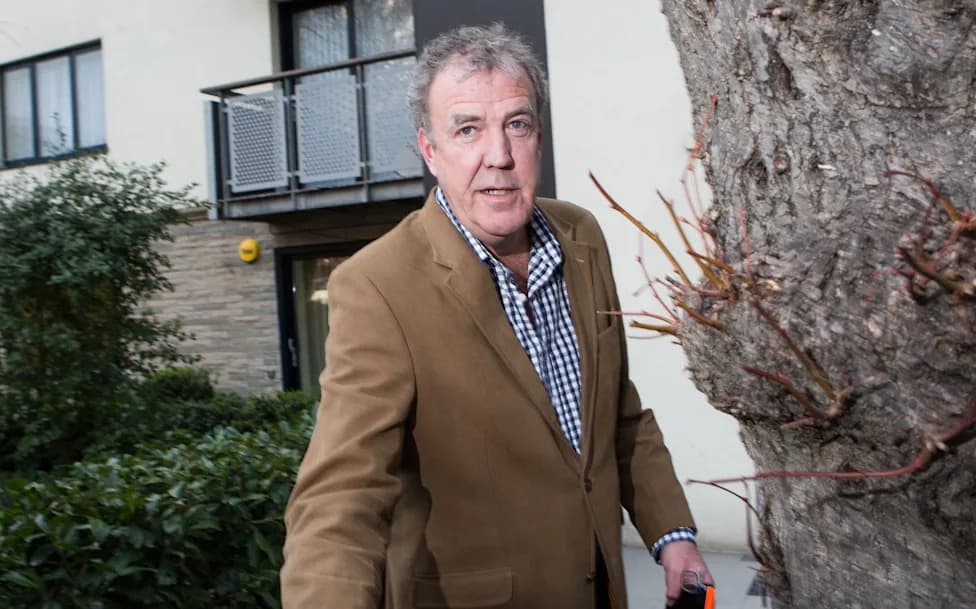
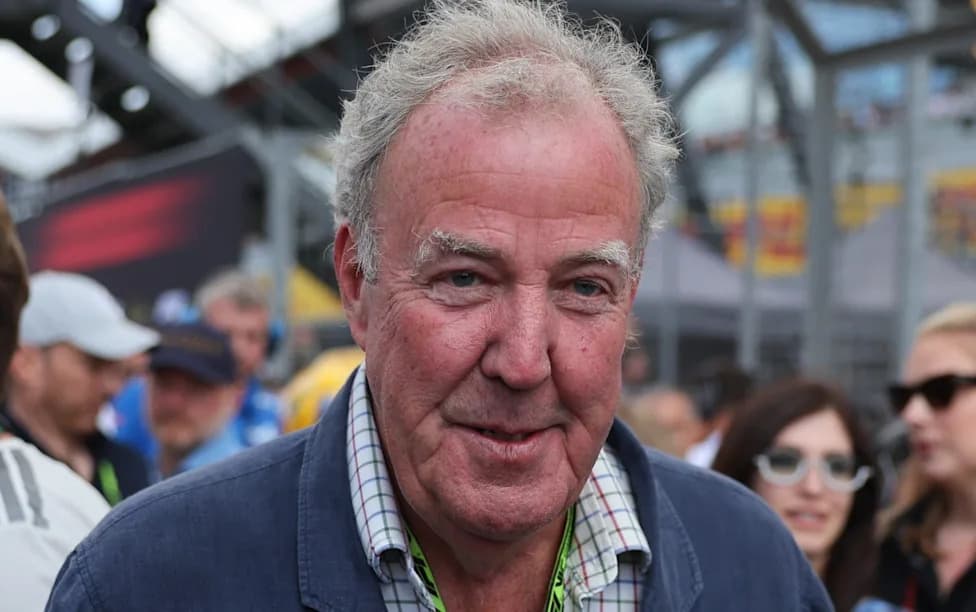
Jeremy Clarkson said he could not understand the Government's decision to change its guidance - Daniel Leal-Olivas
Jeremy Clarkson has strongly criticised the Department of Health and Social Care's decision to withdraw long-standing guidance that allowed men aged 50 and over to request a free prostate-specific antigen (PSA) blood test. The former Top Gear presenter, who was diagnosed with an aggressive form of prostate cancer and later announced he was in remission, said he could not understand the reasoning behind the change first reported by The Telegraph.
What Has Changed?
Since 2002, official guidance made clear that any man aged 50 or above could request a free PSA test to help identify prostate cancer even if he had no symptoms. A recent DHSC letter to health organisations states that the "prostate cancer risk management programme guidance has been withdrawn." The removal ends that explicit entitlement and places responsibility on GPs to decide, on a case-by-case basis, whether to offer a PSA test.
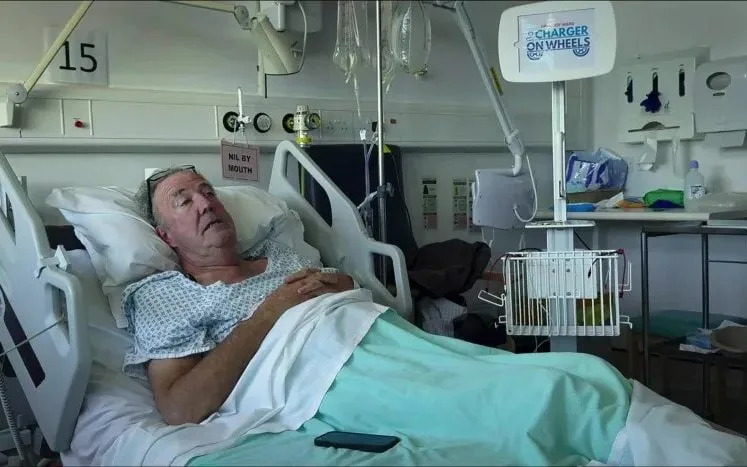
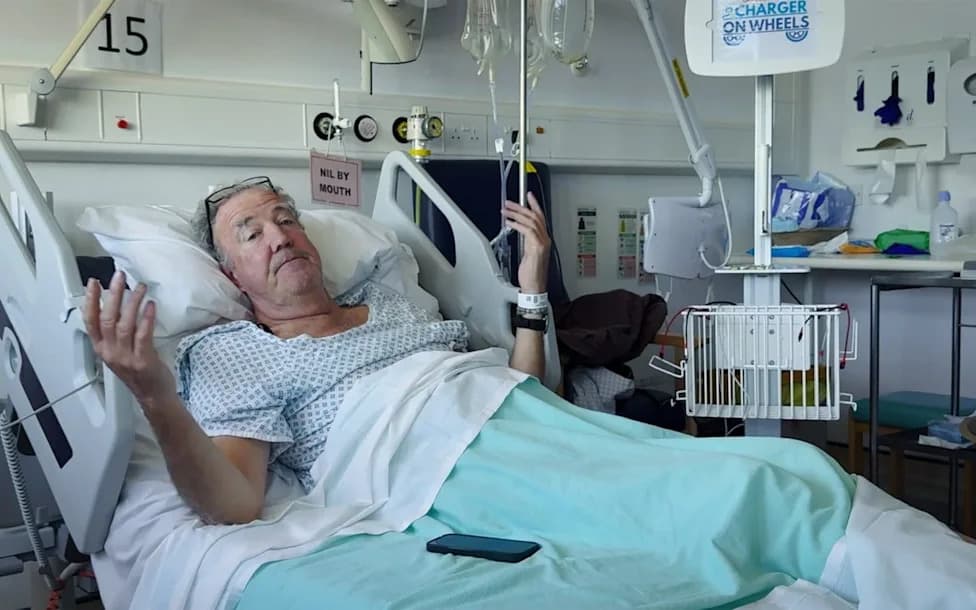
Jeremy Clarkson in hospital for surgery after discovering he has prostate cancer
Government Position And Pilot Programme
The DHSC says there is no change to the referral pathway for men with possible prostate cancer symptoms — symptomatic patients should still be referred for PSA testing. Ministers have also confirmed they are not introducing universal screening; instead, they are pursuing a narrow pilot targeted at a small group of genetically high-risk men, specifically those who carry a particular BRCA2 variant and have a relevant family history.
Responding on X, Clarkson wrote: "Until last week, men over 50 were entitled to a free PSA prostate cancer check. But the government has now decided to withdraw that right. I cannot for the life of me work out what their reasoning might be."
Reactions From Campaigners
The Telegraph has been campaigning for broader targeted screening for additional high-risk groups, including Black men and those with a family history of prostate cancer. Prominent figures who credit PSA testing with early diagnosis include Lord Cameron and Sir Chris Hoy, both of whom have publicly called for wider, simpler screening for at-risk men.
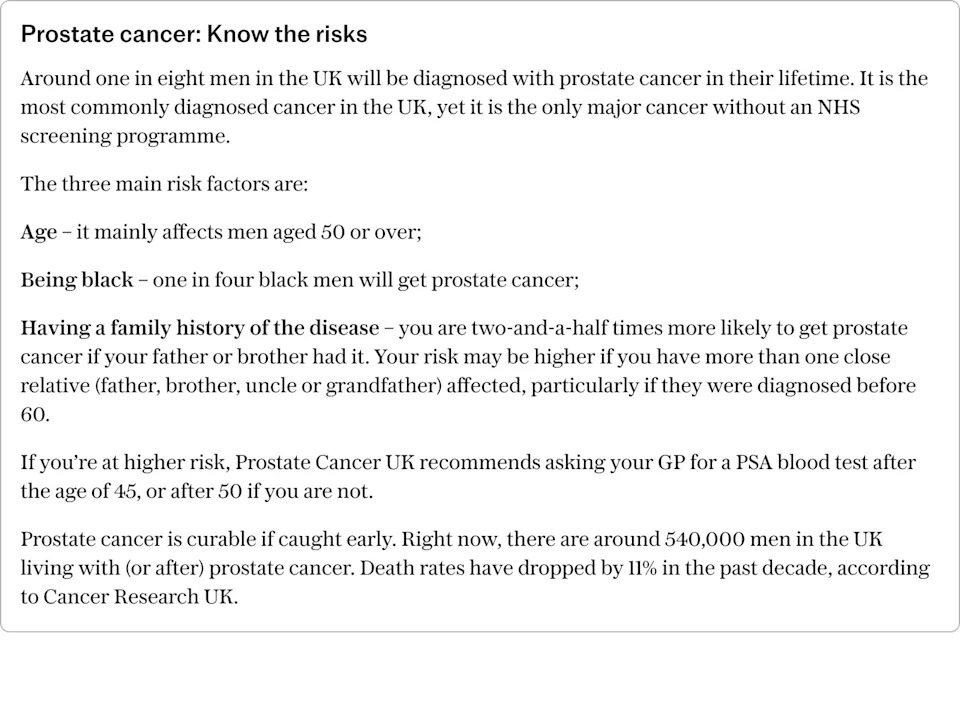
Prostate Cancer: Know the risks
DHSC Explanation And Practical Impact
A DHSC spokesman told The Telegraph that the earlier guidance had been "retired" because it was ambiguous and that the final decision about offering a PSA test has always been intended to rest with GPs. The department emphasises that every man can still ask a GP for a PSA test, but under the new approach the GP will assess an individual's risk and explain the pros and cons before deciding whether testing is appropriate. Reporting indicates the withdrawal was made without public consultation.
Context And Statistics
Prostate cancer is the most commonly diagnosed cancer in men in the UK, with roughly 63,000 diagnoses and about 12,000 deaths each year. Unlike breast, bowel and cervical cancers, there is no national screening programme for prostate cancer, and debate continues over the balance of benefits and harms from widespread PSA testing.
What Men Should Know: Men worried about prostate cancer can still speak to their GP about PSA testing. Those with symptoms should continue to be referred. Men with a family history or other risk factors should discuss personalised risk and testing options with their clinician.
Help us improve.