The New England Aquarium’s Sea Turtle Hospital and a broad network of volunteers rescue hundreds of endangered turtles that become "cold‑stunned" on Cape Cod after summertime migrations. Last winter 473 animals were found; arrivals require staged warming, exams, antibiotics and sometimes surgery, and for those admitted alive the survival rate is about 85%. Because the hospital can care long‑term for roughly 65 turtles, partners across the East Coast and beyond take recovering animals for release. Lucky (sea turtle #471) recovered from pneumonia and a repaired flipper and was cleared for release with a satellite tracker.
How Cape Cod’s ‘Amazing Network’ Rescues Hundreds of Cold‑Stunned Sea Turtles Each Year
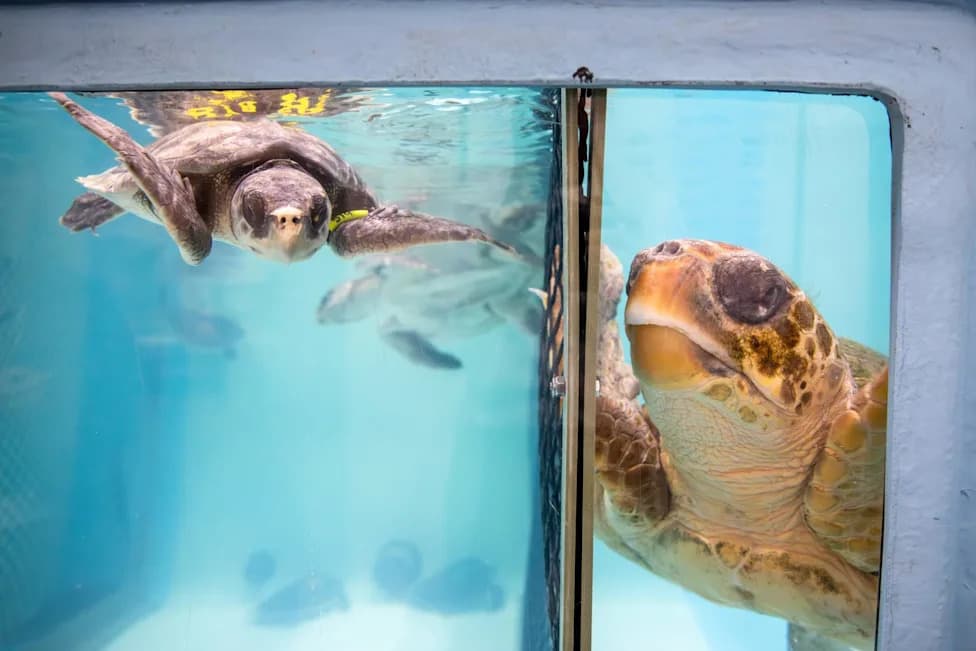
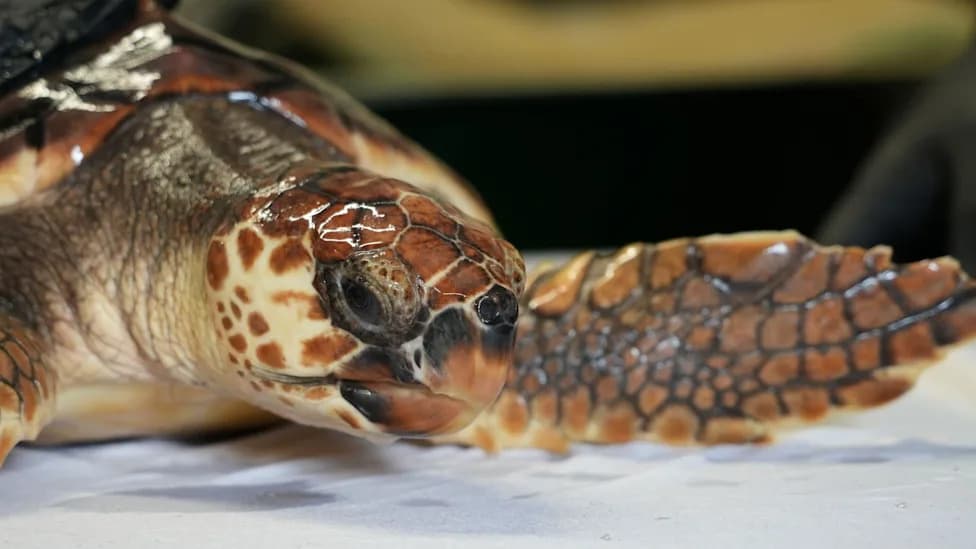
Rescued sea turtles at the New England Aquarium's Sea Turtle Hospital on 18 December 2025.Photograph: Vanessa Kahn/New England Aquarium
Sea turtle #471—affectionately called Lucky—gasped as veterinarian Kathy Tuxbury palpated a healed surgical scar on the animal's left flipper. Lucky is one of the last patients of the season at the New England Aquarium’s Sea Turtle Hospital, now preparing to return to the ocean after months of care.
Each summer, endangered sea turtles migrate into the warmer waters around Cape Cod. When ocean temperatures plunge in November and December, many turtles become “cold‑stunned”: slowed, hypothermic and sometimes stranded on the shore. Since the early 2000s, the number of turtles found incapacitated on Cape Cod beaches has risen roughly tenfold, a trend scientists link at least partly to warming in the Gulf of Maine.
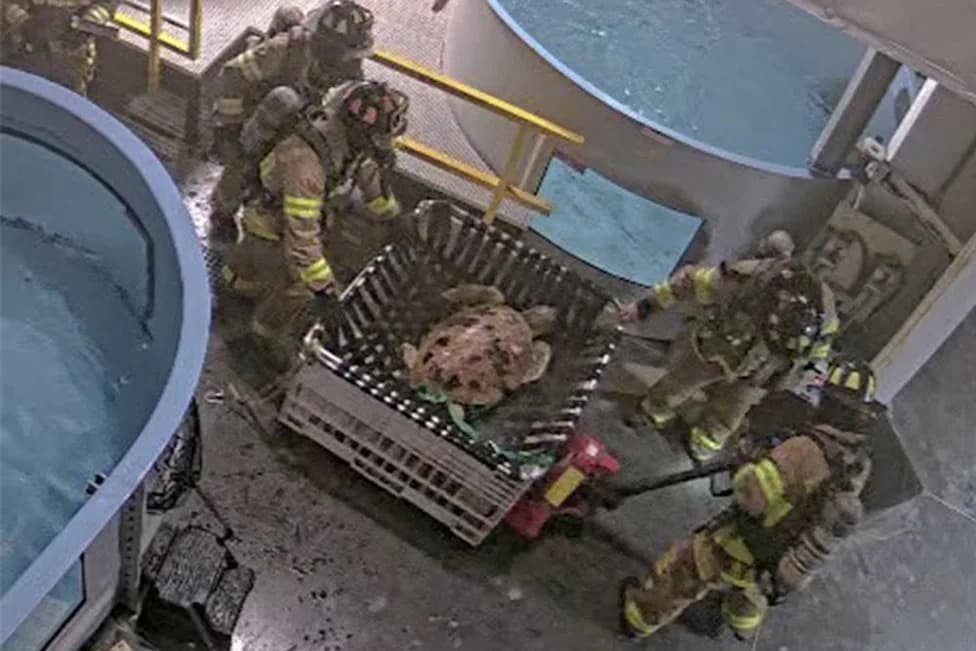
Last winter, responders recorded 473 cold‑stunned turtles on Cape Cod. Most arrive in dire condition—weak, dehydrated, underweight and often suffering from pneumonia or infections. Many are boxed in "banana boxes" by trained volunteers and transported to the New England Aquarium, where staff and volunteers perform emergency triage.
Triage, Treatment and Transfer
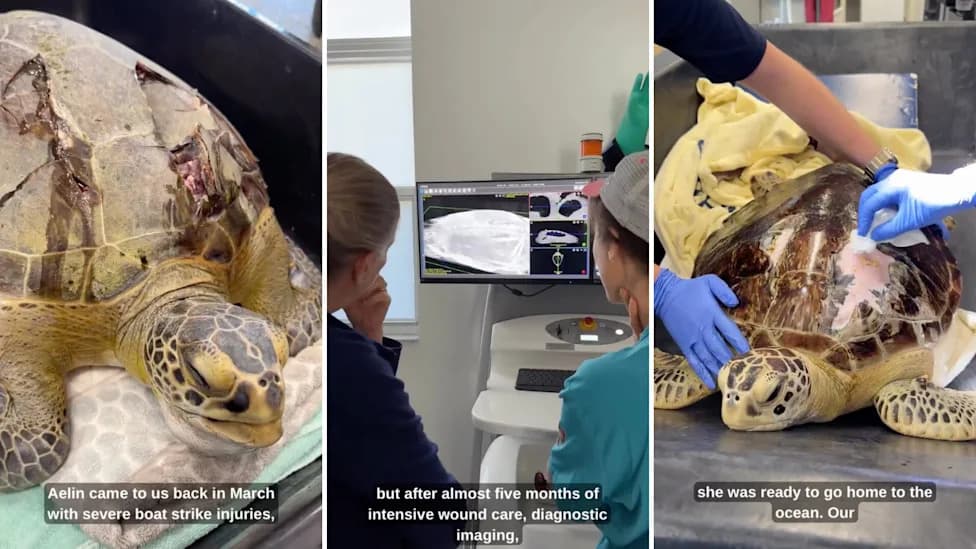
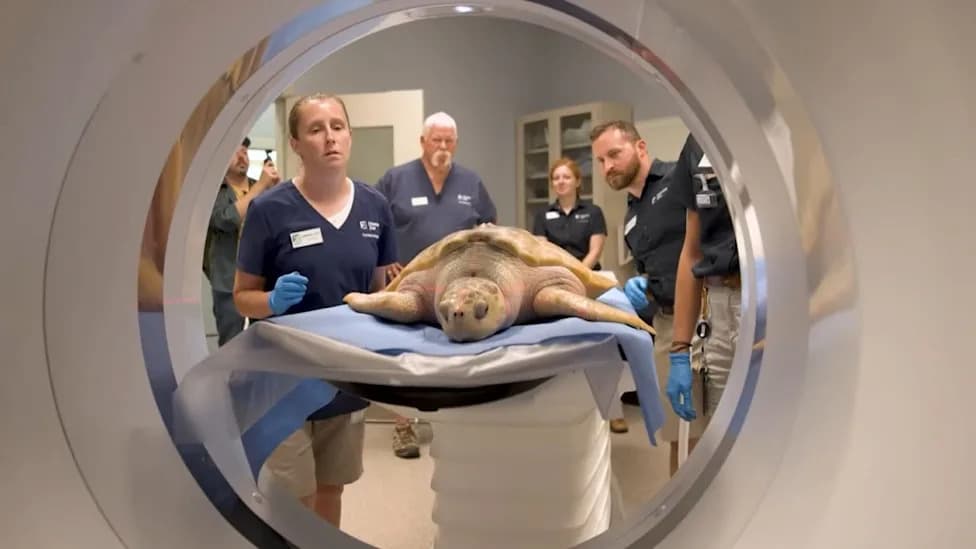
"Think of us as the emergency room and ICU wrapped into one," said Adam Kennedy, director of the Sea Turtle Hospital. Each turtle receives a careful, staged warming protocol, radiographs and physical exams. Intravenous fluids, antibiotics and, when necessary, surgery are provided. The hospital’s long‑term capacity is about 65 turtles; to manage surges, the aquarium partners with NOAA and rehabilitation centers along the East Coast and as far west as Missouri to redistribute recovering animals.
"It's an amazing network of sea turtle people," Kennedy said—volunteer drivers, private pilots, veterinary surgeons and hundreds of beach patrol volunteers all working toward one goal: returning turtles to the wild.
Volunteers from groups like the Massachusetts Audubon Wellfleet Bay Wildlife Sanctuary patrol beaches through the winter—sometimes at night and in freezing winds—to locate turtles that may appear lifeless but can still be saved. Rescuers keep vehicles cool for transport, maintain clinical conditions en route and deliver patients quickly to the aquarium for immediate care.
A Case Study: Lucky (Sea Turtle #471)
Lucky, an 18‑inch Kemp’s ridley, arrived severely hypothermic in a banana box on December 1. The turtle required prolonged treatment for pneumonia and later surgery for an infected joint—a common consequence of prolonged cold stress and stranding. A board‑certified orthopedic veterinary surgeon volunteers time to repair such injuries. After months of rehabilitation, Lucky was medically cleared for release and fitted with a satellite tracker so researchers and the public can follow its migration.
Outcomes, Research and Public Engagement
For turtles rescued while still alive, survival rates are high—about 85%. Some animals transferred to southern rehab centers can be released by midwinter; others return to Cape Cod or nearby coasts for summer or fall releases. A subset of rehabilitated turtles receive satellite tags that reveal long migrations—from nesting beaches in Mexico to feeding grounds as far north as Canadian waters—information valuable to conservation planning.
Interns and biologists track every detail of a rescued turtle’s recovery, from grams of food consumed to medical progress, while taking care to minimize human imprinting. For many early‑career volunteers, the hands‑on experience is transformative. As one intern said, throwing squid to reluctant turtles was not what she expected—but it became a meaningful part of helping animals survive.
With warming seas and changing currents, Cape Cod remains a geographic hotspot for mass strandings. The combined efforts of volunteers, veterinarians, researchers and agencies form a resilient rescue network that saves hundreds of turtles each year and yields important data to protect these endangered species.
Help us improve.