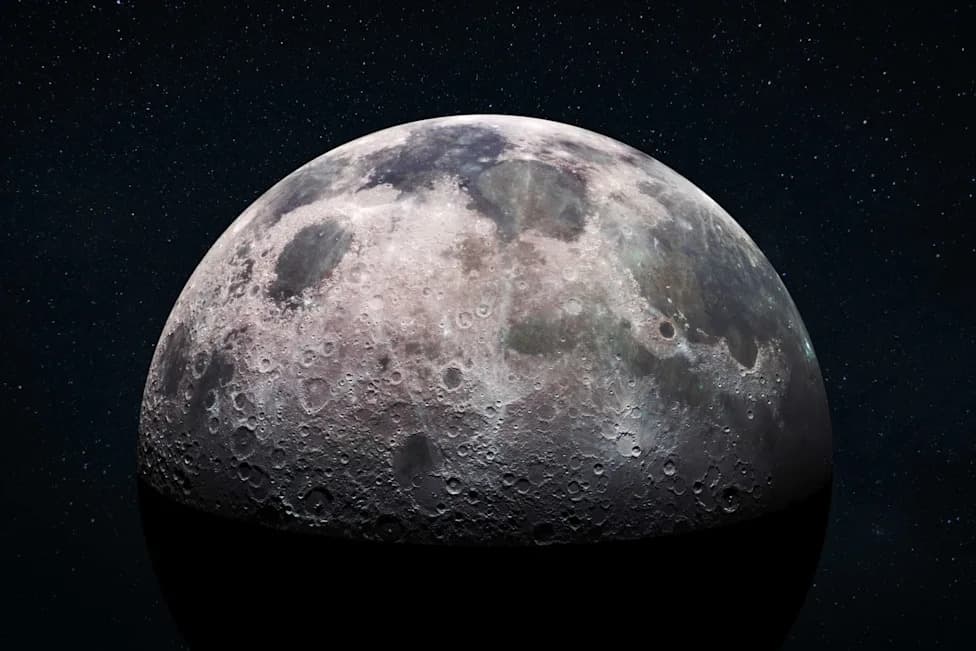
Aug. 5, 2026: A Falcon 9 upper stage impacted the Moon, kicking up a dust plume visible from Earth and drawing attention to roughly 3,000 human-made objects and about 200 tons of material already on the lunar surface. Experts warn that vague rules under the 1967 Outer Space Treaty leave the Moon vulnerable to contamination, damage to scientific sites and future bases, and unpredictable impacts from debris. Many call for clearer disposal norms, no-go zones, and better international coordination before lunar activity grows further.
Is the Moon Becoming a Dumping Ground? Falcon 9 Impact Sparks Calls for Better Lunar Rules
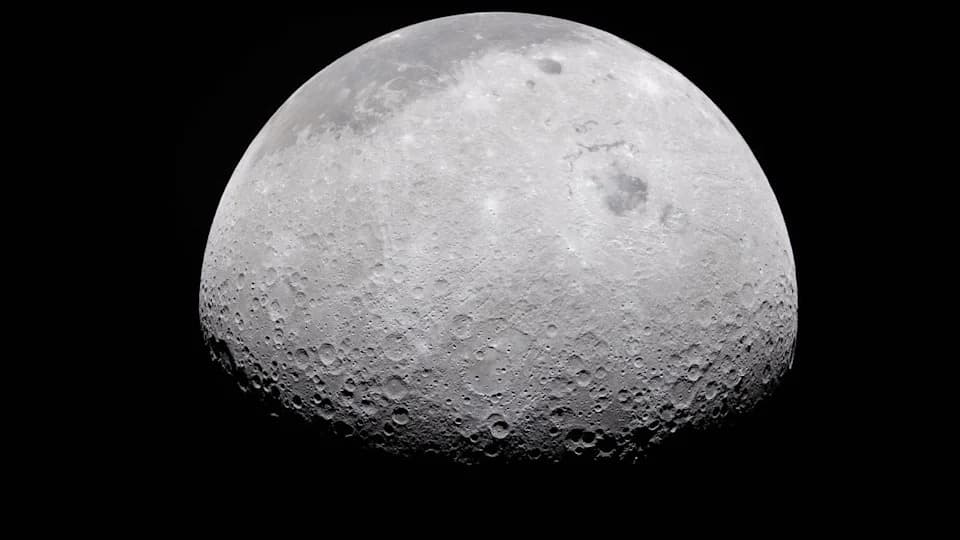
National space agencies and private companies are increasingly eyeing the moon these days. | Credit: NASA
Aug. 5, 2026: An 8,800-pound (4,000 kg) Falcon 9 upper stage slammed into the Moon, producing a plume of dust visible from Earth and reigniting debate over how humans are treating our nearest neighbor.
Why This Matters
That single impact joined roughly 3,000 human-made items already scattered across the lunar surface and highlighted a growing problem: as national space agencies and commercial companies ramp up lunar activity, the Moon risks becoming cluttered with debris — intentional and accidental — that could harm science and future exploration.
How Much Have We Left Behind?
Since the start of the space age, around 200 tons of material from Earth have been deliberately left on or have crashed into the Moon. Notable artifacts include the descent modules from all six Apollo landings, the Soviet Lunokhod rovers from the 1970s, and China's Yutu 1 and 2 rovers from the 2010s. But many other rocket stages and pieces of hardware were not meant to end up on the surface.
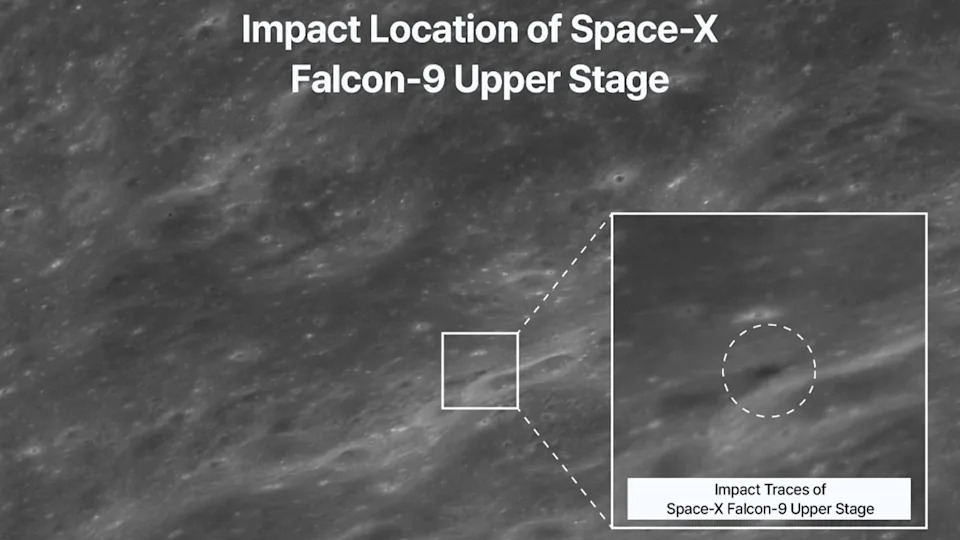
South Korea's Danuri moon probe captured this photo of the spot where a SpaceX Falcon 9 upper stage hit the moon on Aug. 5, 2026. | Credit: KARI
Governance Lags Behind Activity
Human activity on the Moon is governed in broad terms by the 1967 United Nations Outer Space Treaty. Article IX requires states to avoid "harmful contamination," but the treaty does not define what that means in practice — there are no numerical waste limits, designated disposal sites, or mandatory removal rules. Experts say this legal vagueness is increasingly problematic as more countries and commercial actors go lunar.
Scientific and Operational Risks
The Moon's low gravity (about 17% of Earth's) means dust kicked up by impacts travels far and settles slowly. Astronomer and historian Jonathan McDowell warns that large plumes are not merely local disturbances: they can blanket distant sites, contaminate instruments, and obscure geological records that scientists rely on to study meteoroid impacts and lunar history. Heavy impacts can also obliterate pristine areas of scientific interest.
"We're in a transitional moment... governance has not kept up with this," McDowell told Space.com.
Past incidents underline the risk. In March 2022, imagery from NASA's Lunar Reconnaissance Orbiter showed a Chinese Long March 3C rocket body had created a double crater roughly 95 feet (29 meters) across after impacting the Moon's far side. Parts of the Falcon 9 stage involved in the Aug. 5, 2026 impact had been left in high-altitude Earth orbit in January 2025 after supporting missions for Firefly Aerospace and ispace; repeated lunar gravity perturbations eventually pulled it onto a collision course.
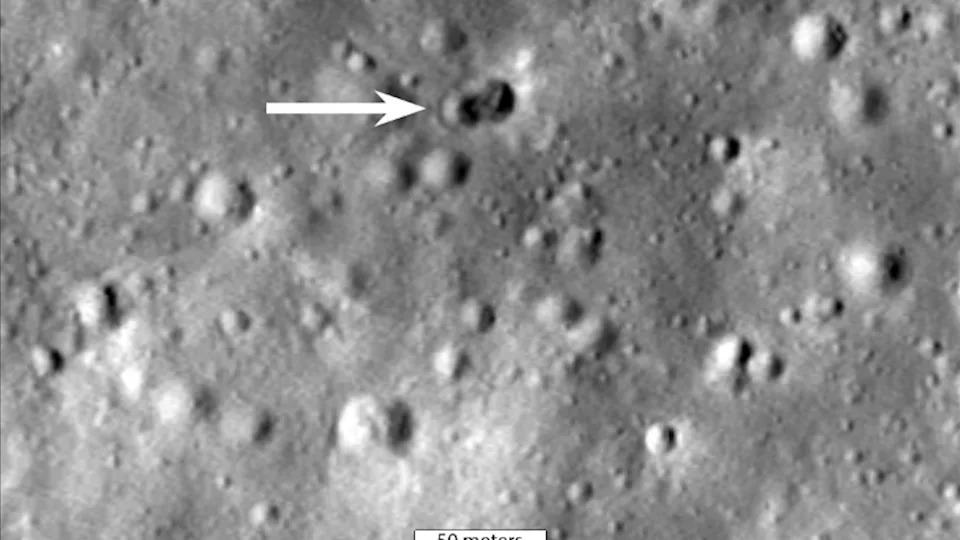
A Chinese rocket body impacted the moon on March 4, 2022, creating a double crater roughly 95 feet (29 meters), as seen in this photo taken by NASA's Lunar Reconnaissance Orbiter. | Credit: NASA/GSFC/Arizona State University
What Experts Recommend
Legal and policy experts — and some in industry — are calling for clearer norms and practical disposal strategies. Proposed measures include agreed-upon disposal orbits (for example, sending spent stages into solar orbit), designated no-go zones around historic and scientifically valuable sites, improved coordination and notification procedures among operators, and clearer rules on liability and remediation.
Gregory Radisic, a space law expert at Bond University, cautions that the industry may only take stronger precautions after tangible losses occur. Others hope the Falcon 9 incident will prompt safer, standardized practices before more infrastructure and human lives are at risk.
Looking Ahead
As lunar exploration accelerates, many researchers and policymakers argue that now is the right moment to develop international agreements and technical standards that prevent the Moon from becoming an unintended dumping ground — protecting both scientific value and future operations.
Help us improve.