U.S. District Judge Lynn Winmill ruled that Idaho's near-total abortion ban is unconstitutional to the extent it bars abortions necessary to preserve a pregnant person's health, citing the 14th Amendment. The 81-page decision enjoins parts of two state statutes that prevent doctors from treating serious physical and mental-health conditions tied to pregnancy. The ruling is the first federal decision since the 2022 overturning of Roe v. Wade to recognize a limited constitutional right to health-preserving abortion; Idaho's attorney general says he will appeal.
Federal Judge Rules Idaho Must Allow Abortions To Protect Pregnant People’s Health
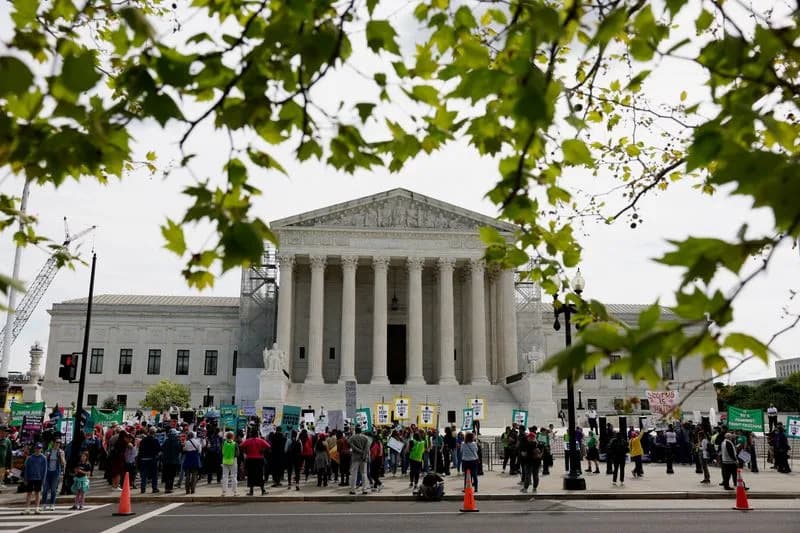
People gather during a protest in support of reproductive rights and emergency abortion care , on the day the Supreme Court justices hear oral arguments over the legality of Idaho's Republican-backed, near-total abortion ban in medical-emergency situations, in Washington, U.S., April 24, 2024. REUTERS/Evelyn Hockstein
Aug 14 (Reuters) - A federal judge in Boise has ruled that Idaho's near-total abortion ban is unconstitutional because it fails to permit abortions needed to preserve a pregnant person's broader health, not just narrowly defined life-saving situations.
Court Ruling
U.S. District Judge Lynn Winmill issued an 81-page opinion late Thursday finding that the 14th Amendment's guarantees of due process and equal protection secure a right to health-preserving abortion care in certain circumstances. Winmill, an appointee of President Bill Clinton, concluded that Idaho's statutes are unconstitutional to the extent they bar doctors from treating serious medical conditions related to pregnancy.
Scope Of The Decision
The order enjoins enforcement of two Idaho laws insofar as they prevent physicians from providing abortion care to patients with significant physical or mental-health conditions, including disorders that raise risks of self-harm or suicide. The judge declined, however, to enjoin a separate prohibition on abortion for fetuses with life-limiting conditions unless the fetal condition poses a serious threat to the mother's health.
"A pregnant woman's health is not a state resource to be allocated at the legislature's whim," Winmill wrote, adding that states have long recognized that abortion can be necessary to prevent serious and lasting harm.
Legal Context
The ruling is the first by a federal judge since the U.S. Supreme Court overturned Roe v. Wade in 2022 to recognize a limited constitutional right to abortion when necessary to preserve health, according to lawyers for the Idaho doctor who brought the suit. After the high court's decision, Idaho and roughly a dozen other states enacted near-total bans or severe restrictions on abortion.
In 2024 the Supreme Court reinstated an order requiring Idaho to permit abortions in true medical emergencies, but left unsettled the broader legal issues now addressed by Winmill's opinion.
Reactions
Idaho Attorney General Raul Labrador, a Republican, said his office will appeal and expressed confidence the ruling would be overturned, accusing the judge of creating a new constitutional right from the bench.
Plaintiff Dr. Stacy Seyb, a maternal-fetal medicine specialist, is represented by Legal Voice and the Lawyering Project. Stephanie Toti, executive director of the Lawyering Project, said the decision "reduces the risk that pregnant people in Idaho will die or suffer serious injury from preventable causes."
The Idaho Family Policy Center, a conservative group opposed to abortion that was not a party in the case, noted that much of the state's ban remains in effect and pointed to a civil-liability provision that allows relatives of a fetus to sue providers under Idaho law.
What Comes Next
The state has indicated it will appeal. The case is likely to wind through the federal appeals process, and could ultimately return to higher courts for review, meaning the legal landscape for abortion access in Idaho may continue to change.
Reporting: Daniel Wiessner in Albany, New York. Editing: Alexia Garamfalvi and Rod Nickel.
Help us improve.