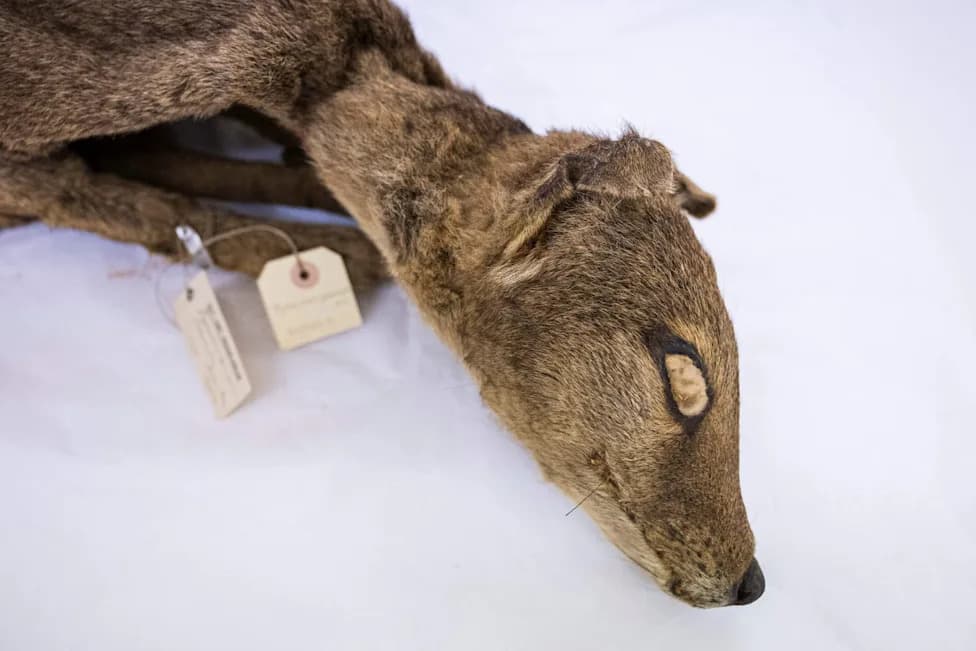
The mounted head, first mistaken for a fox, sold for £60,000 after being identified as one of only 101 known taxidermy thylacines. Bought for £50 at an antiques market, the rare specimen attracted intense bidding at Auctioneum in Bristol. The thylacine was declared extinct in the 1930s, with the last known individual dying in 1936. Buyer James Cranfield plans to make the piece available to researchers and academic institutions.
Mounted Thylacine Head Sells for £60,000 After Being Mistaken for a Fox
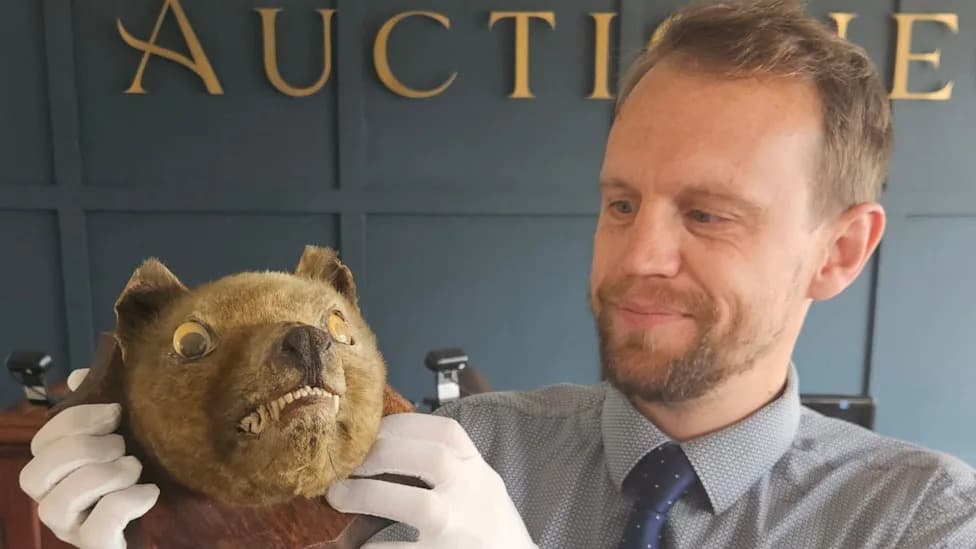
The original buyer purchased the item for just £50 at an antiques market [Auctioneum]
An item originally thought to be an antique taxidermy fox sold for £60,000 at Auctioneum in Bristol after experts identified it as the mounted head of an extinct thylacine, commonly known as the Tasmanian tiger.
From a £50 Bargain to a Rare Discovery
The piece had been purchased for just £50 at an antiques market before its true nature was recognised. The specimen is one of only 101 known taxidermy examples of the thylacine and drew intense interest when it went under the hammer.
"Bids quickly jumped into the tens of thousands, and simply kept on going up. The room went silent, everyone crowded in to watch. It was an amazing moment to witness," said auctioneer Andrew Stowe.
About the Thylacine
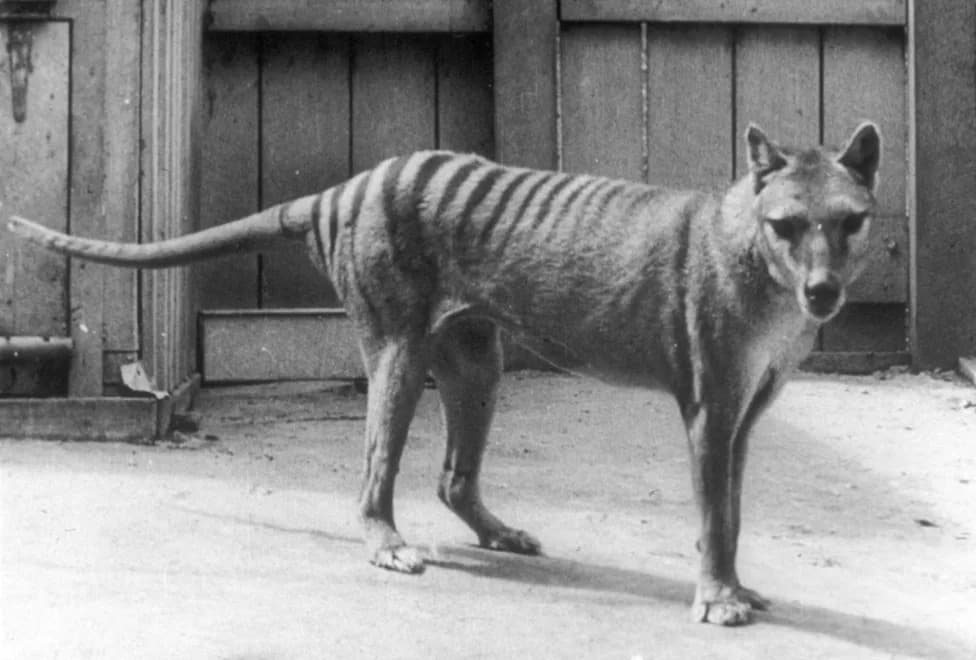
The thylacine was a carnivorous marsupial with dog-like features that was native to New Guinea, mainland Australia and Tasmania. While most mainland populations disappeared around 2,000 years ago, a remnant population survived on Tasmania into the 20th century. Hunting, disease and habitat loss led to its extinction; the last known individual died in Hobart Zoo in 1936 and the species was declared extinct in the 1930s.
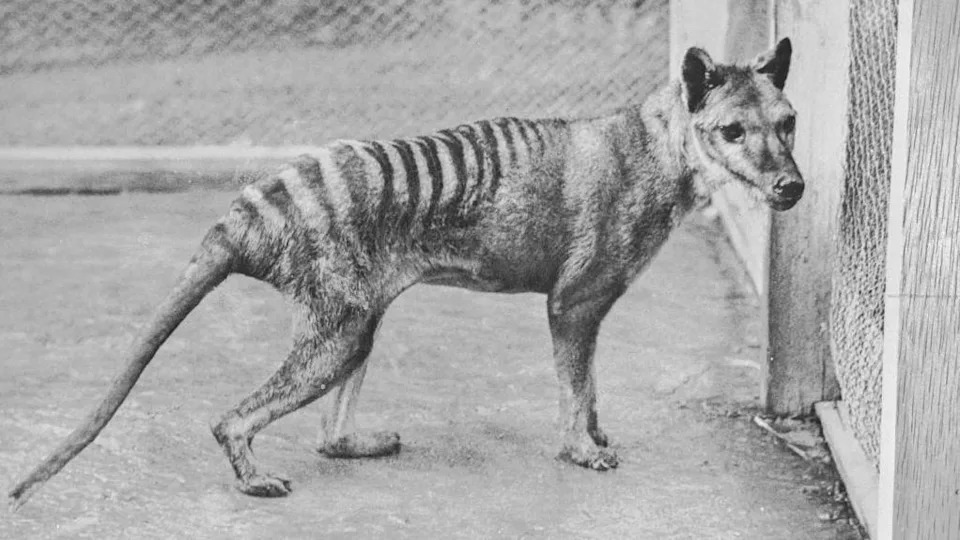
The thylacine was declared extinct in the 1930s [Getty Images]
Taxidermy specimens, pelts, bones and other thylacine material are now highly prized by zoologists, museums, collectors and researchers. Complete mounted heads are particularly rare outside of major institutions, making this discovery especially notable in the UK.
Buyer and Future Plans
The head was purchased by taxidermy and natural history collector James Cranfield, who described the acquisition as "the find of a lifetime." Cranfield said he intends to ensure the specimen is accessible to academic and scientific communities for study.
Auctioneer Andrew Stowe said the vendor had originally bought the piece as a novelty—attracted by small googly eyes attached to it—and was stunned when experts confirmed its identity. The sale highlights both the cultural and scientific value attached to rare extinct-species specimens, as well as the occasional surprises that turn up at antiques markets.
Help us improve.