The author responds to a June Campaign Zero report showing sharp racial disparities in Cincinnati police stops. The analysis of nearly 500,000 stops finds Black residents are about three times more likely to be stopped and face higher rates of searches, force, and arrests, with extreme disparities in majority-White neighborhoods. The writer uses body-camera examples and officer-level data to argue the city must replace defensiveness with transparent public review, measurable reforms, and accountable oversight.
Cincinnati Police Stop Data Demand Answers — Confront Racial Disparities, Not Defensiveness
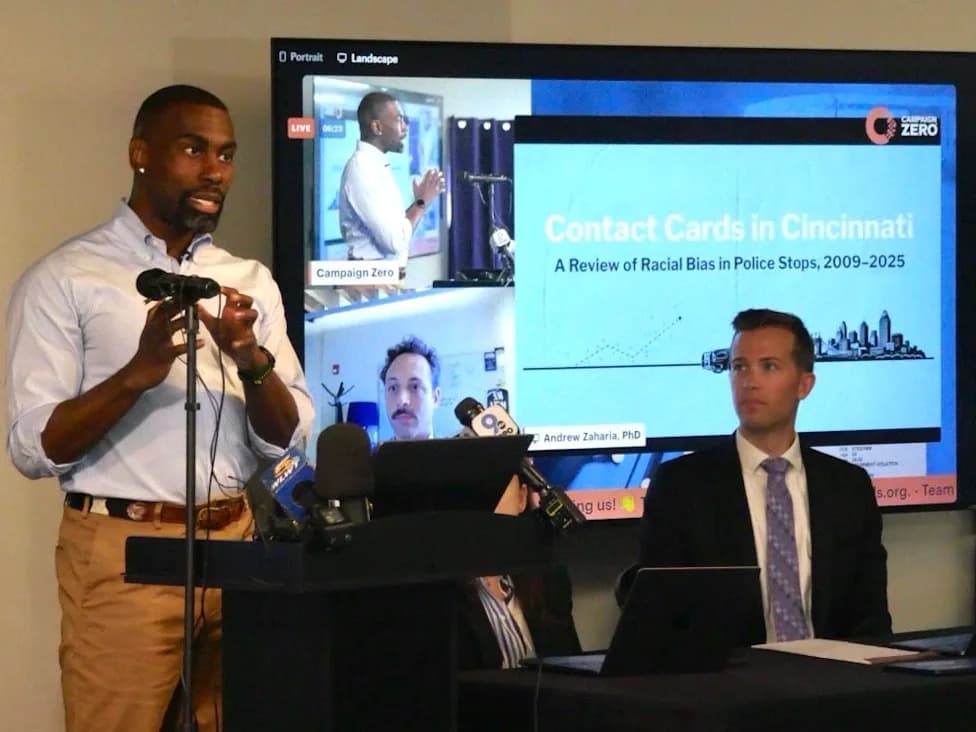
DeRay Mckesson, the executive director of Campaign Zero, speaks about his organization's report documenting racial disparities in police stops in Cincinnati
You may have felt whiplash watching how Cincinnati officials responded to a comprehensive June report documenting racial bias in stops by the Cincinnati Police Department. The Campaign Zero analysis of CPD contact-card data—nearly half a million stops since 2009—produced stark findings that deserve clear answers and public accountability, not defensiveness.
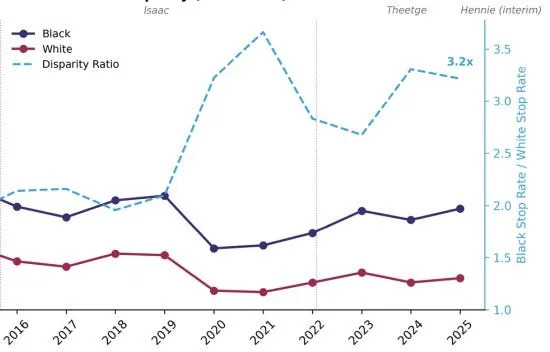
Campaign Zero has released a new report saying racial disparity in police stops has increased since the pandemic.
Interim Police Chief Adam Hennie initially dismissed the study in an email to officers, writing that he would not stand by while the professionalism and dedication of officers were unfairly questioned. A month later, at a public forum, Hennie said he was 'glad this report came out' and that it was the first time the department was 'really taking a look at this information.' That raises an obvious question: why did it take an outside nonprofit to prompt examination of contact-card data the city has retained for more than 15 years?
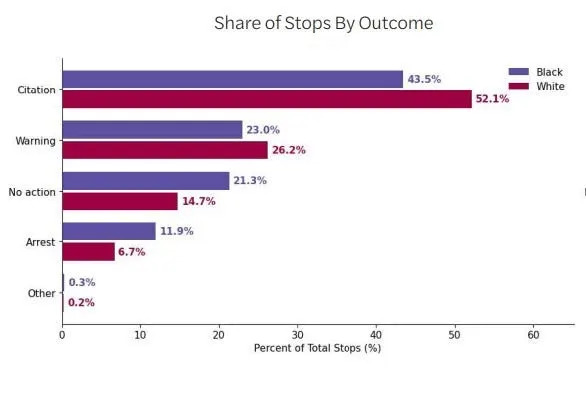
Researcher say Black people in Cincinnati are more like to be arrested or for police to end the encounter without taking action. They say Black people are less like to receive a warning or a citation.
Key Findings From the Report
Campaign Zero compared outcomes for Black and White residents and found pronounced disparities across many measures. Highlights include:
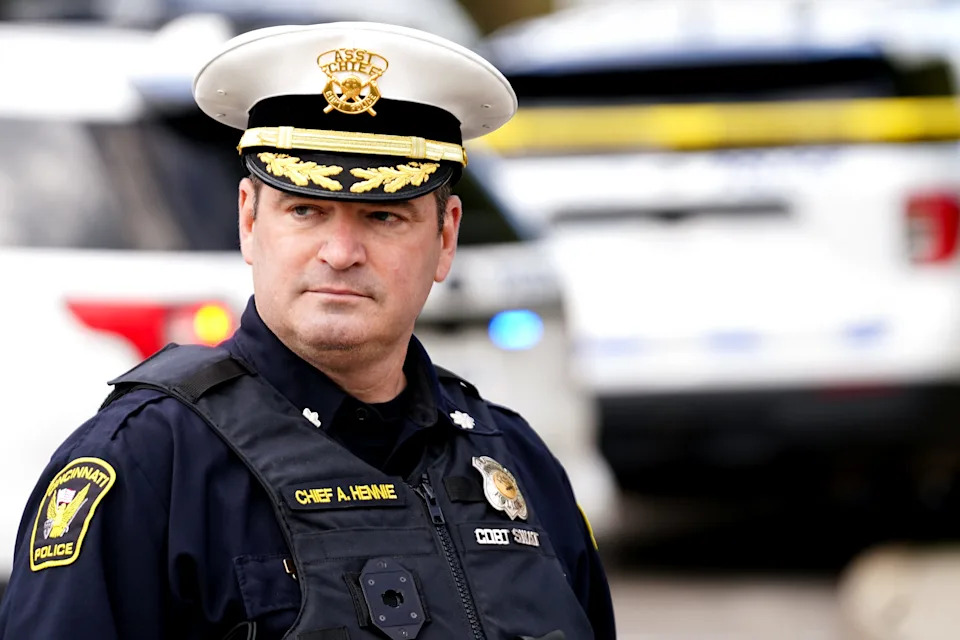
Cincinnati Interim Police Chief Adam Hennie looks out to the street after speaking to the media during an investigation in Winton Hills Wednesday, Oct. 22, 2025.
- Stops: Black people were about three times more likely to be stopped than White people.
- Searches, Force, Arrests: Black people were roughly twice as likely to be searched, have force used against them, and be arrested.
- Neighborhood Disparities: In majority-White areas, Black motorists were nearly four times more likely to be stopped (Report, Page 16). In some majority-White neighborhoods Black pedestrians were 16 times—and in the most extreme cases 32 times—more likely to be stopped (Report, Page 17).
- Crime Rates Don’t Explain It: Neighborhood crime rate does not account for these disparities (Report, Page 19), undercutting the argument that calls for service justify the difference in stops.
- Timing Patterns: The report identifies peak disparity times: around 3 a.m. for motorists and around 8 p.m. for pedestrians.
Evidence Beyond the Numbers
Numbers are supported by body-worn camera footage and documented incidents that show how stops and force play out on the ground. As a former journalist now working as a public defender in Hamilton County, I have reviewed hours of footage that illustrate the human impact of these disparities.

Max Londberg
Examples include:
- In 2018, Officer Kevin Brown deployed a Taser on an 11-year-old girl suspected of shoplifting and taunted her afterward. The report shows Brown was 1.43 times more likely to stop Black people than Whites.
- In 2024, Sgt. James Perkins detained and shoved two Black women over a honking incident; charges against both were later dismissed. The contact-card analysis shows Perkins stops Black people at twice the rate of Whites.
- Also in 2024, Officer Michael Roetting fired a Taser at a woman who was handcuffed to a wall; all charges against her were later dropped. The report indicates Roetting stops Black people at 2.38 times the rate of Whites and is twice as likely to use force on Black people.
- In 2025, CPD stopped and charged a Black man with trespass in a case that cost him his job; the charge was eventually dropped.
Not all mistreatment is dramatic. Footage also shows officers laughing at or taunting people in distress, ignoring juveniles asking to call a parent, and at times using force—shoves, tackles, tasers, or mace—at minimal or no provocation. These moments, when multiplied across hundreds of thousands of stops, help explain the racial disparities the report documents.
Questions About Transparency and the City's Review
City leaders have offered some steps, including proposals to improve contact-card practices and to link stop and arrest data with civilian complaint records to better measure compliance with policy and law. Those are positive signals, but they are incomplete if the review process remains opaque.
The city’s Request For Proposals for an 'independent' review instructs prospective firms to incorporate city feedback into the final report and says findings will be presented to the city and 'designated stakeholders'—not explicitly to the public. If the mayor’s stated commitment to open and transparent information is sincere, final findings should be released publicly and presented in forums accessible to those most affected.
The public, and especially Black Cincinnatians who bear the brunt of these disparities, deserve candid accountability: full public disclosure of the review, concrete timelines for reform, and measurable policy changes tied to independent oversight.
Max Londberg is a trial attorney with the Law Office of the Hamilton County Public Defender.
Help us improve.