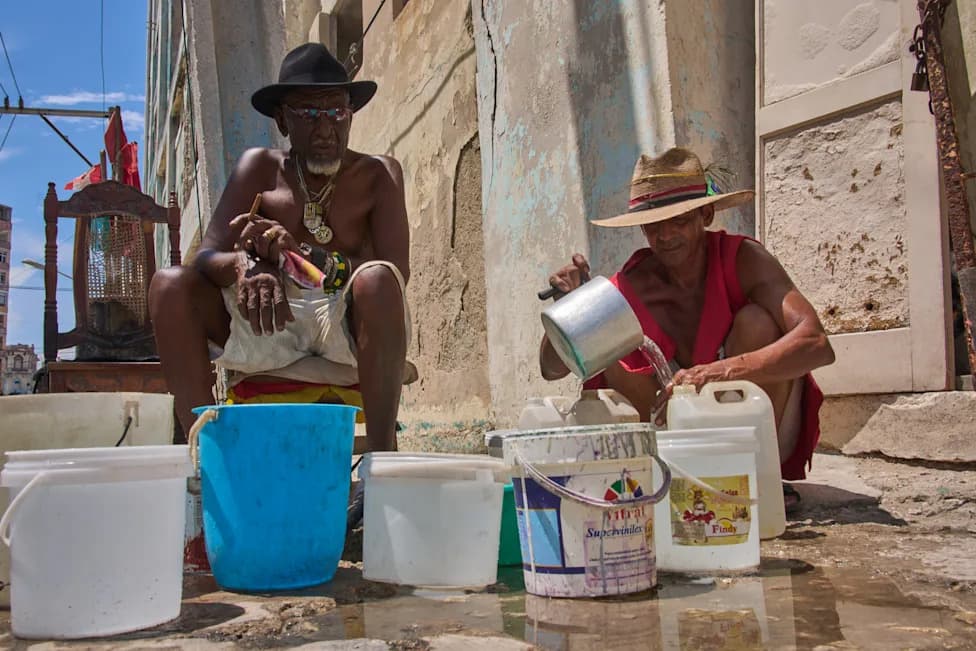
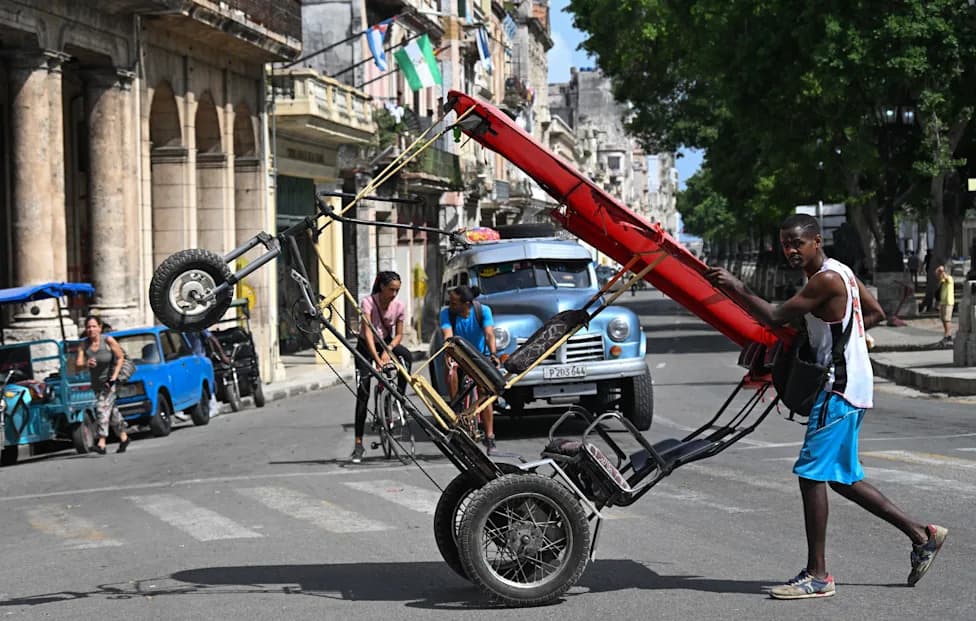
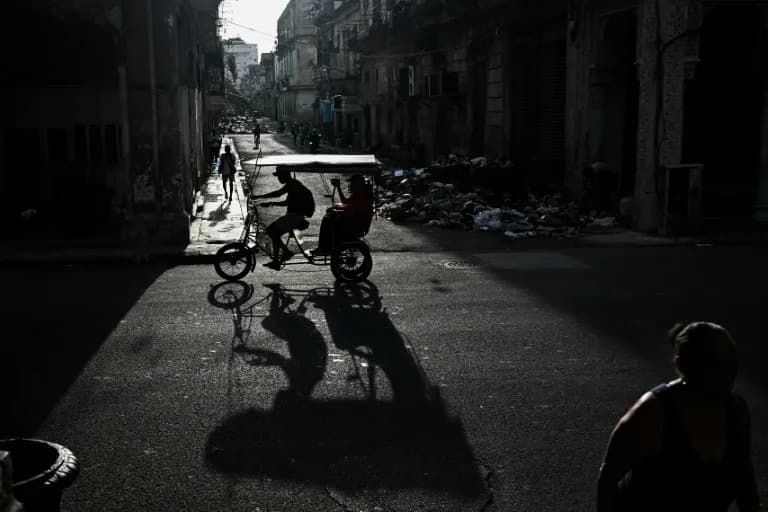
The Cuban Observatory for Human Rights reports that 94% of Cubans meet its extreme-poverty threshold and that 80% have skipped meals due to lack of money or food shortages. Based on 1,318 interviews across 79 municipalities, the study finds widespread distrust of government economic measures (84% skeptical) and identifies power outages, food shortages and the rising cost of living as top public concerns. The report also documents severe housing and infrastructure problems and was published as Cuba marked Fidel Castro's centennial.
Survey Finds 94% Of Cubans Living In Extreme Poverty As Castro Centennial Is Marked
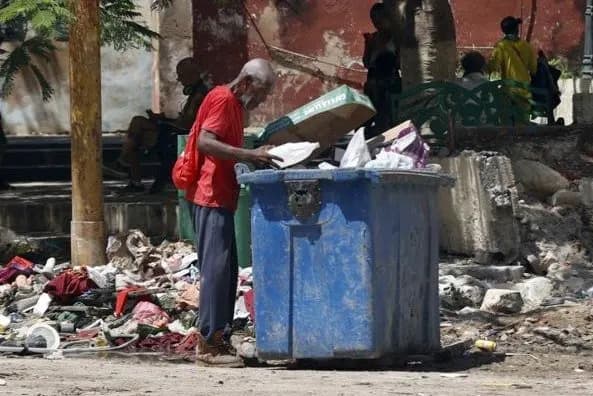
A person checks a garbage container, looking for food, in Havana last summer. File Photo by Ernesto Mastrascusa/EPA
A new study released as Cuba marks the 100th anniversary of Fidel Castro's birth reports severe and widespread economic distress across the island. The Ninth Study on Social Rights in Cuba, by the Cuban Observatory for Human Rights, finds that 94% of Cubans meet the study's threshold for extreme poverty and that eight in 10 people have skipped a meal because they lacked money or food.
Survey Scope and Methodology
The report is based on 1,318 interviews conducted between June 27 and July 29 across 79 municipalities covering all provinces and the special municipality of Isla de la Juventud. The observatory used a sample stratified by place of residence, sex, age and racial group. To estimate extreme poverty, researchers compared households' reported incomes with the dollar's value over the previous six months and applied a daily personal-income threshold of $1.90. Using that benchmark, the observatory calculated a three-person household would need roughly $171 per month to be above the extreme-poverty line. The report also notes that 68% of households reported monthly incomes under 20,000 Cuban pesos — which the organization equated to about $30 at the exchange rate it applied.
Key Findings
Food insecurity: Eight in 10 respondents (80%) said they had skipped breakfast, lunch, or dinner because of lack of money or food shortages, up from 70% in the prior year. Another 63% reported difficulty buying essential goods, while 30% said their income covers only basic needs and just 6% said they can afford purchases beyond essentials.
Public priorities and concerns: Blackouts were the top concern, cited by 70% of respondents, followed by the food crisis (52%) and the rising cost of living (45%). Public health and access to medicines were highlighted by 34%, wages by 27%, and crime and violence by 24%.
Distrust of government measures: The study found broad skepticism about recent economic steps from Havana: 84% said they do not expect the latest measures to improve the situation, while only 6% believed the measures would have a positive effect.
"These results demonstrate the political and economic exhaustion of the Cuban regime,"
— Yaxys Cires, Director of Strategies, Cuban Observatory for Human Rights
Housing and Infrastructure
The survey highlights serious housing and infrastructure problems: only 18% said they live in a home in good condition; 47% said their homes need repairs, 25% need urgent repairs, and 7% said their homes are at risk of collapse. Electricity was rated poorest among infrastructure items, with 95% describing it as in poor condition. Hospitals and healthcare facilities were rated poor by 82% of respondents, and 84% rated water supply and sewer systems as poor.
Context
The report's release coincided with official commemorations for Fidel Castro's centennial on Aug. 13. The Cuban government has designated 2026 the "Year of the Centennial of Commander in Chief Fidel Castro Ruz" and organized exhibitions, conferences and other events, including the International Colloquium "Fidel: Legacy and Future" in Havana. The observatory's findings portray everyday hardships experienced by many Cubans amid those official celebrations.
Note: The observatory's poverty estimates depend on the exchange rate and methodology it used to convert Cuban pesos to dollars. Different exchange-rate assumptions or poverty benchmarks could yield different numeric estimates.
Help us improve.