Russian President Vladimir Putin visited the disputed Kuril Islands, drawing sharp protest from Japan, which calls the territory the Northern Territories. The Kremlin released footage of the visit, which included a tour of a fish-processing plant after naval drills near Sakhalin. Japan reiterated its historical and legal claim while Moscow emphasized the islands' strategic and economic importance. Past negotiations, including a 1956 Soviet proposal, have not resolved the dispute.
Putin Visits Disputed Kuril Islands, Sparking Strong Protest From Japan
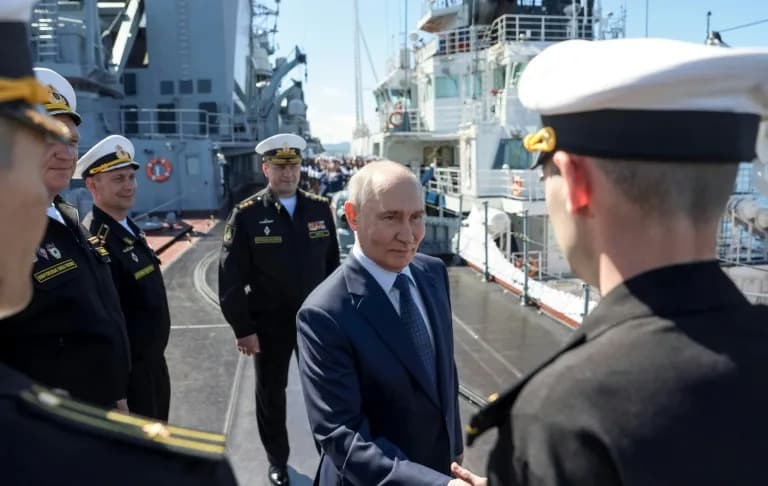
In this pool photograph distributed by the Russian state agency Sputnik, Russia's President Vladimir Putin shakes hands with officers onboard the Russian Navy's guided missile cruiser Varyag during the final stage of a Pacific Fleet's naval drills on far eastern Sakhalin Island on August 13, 2026. (Gavriil Grigorov)
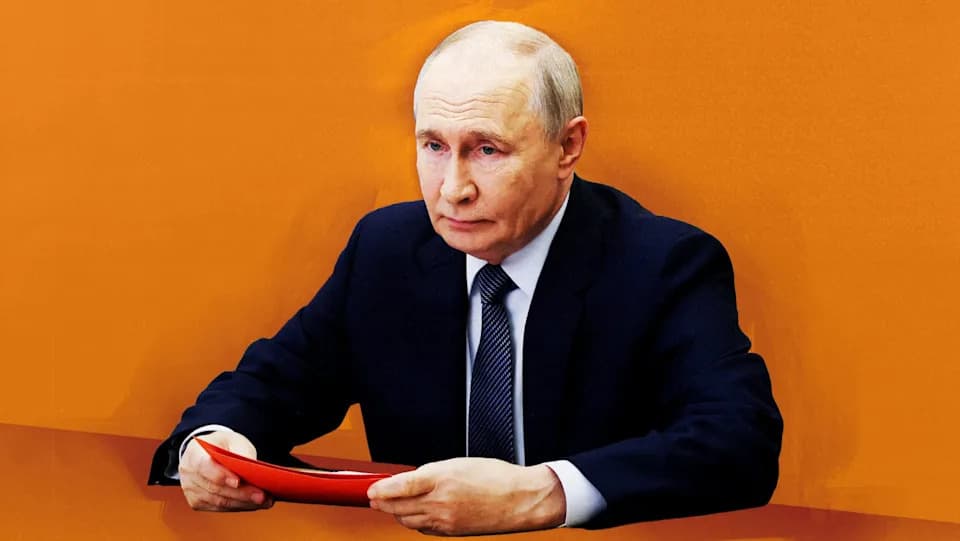
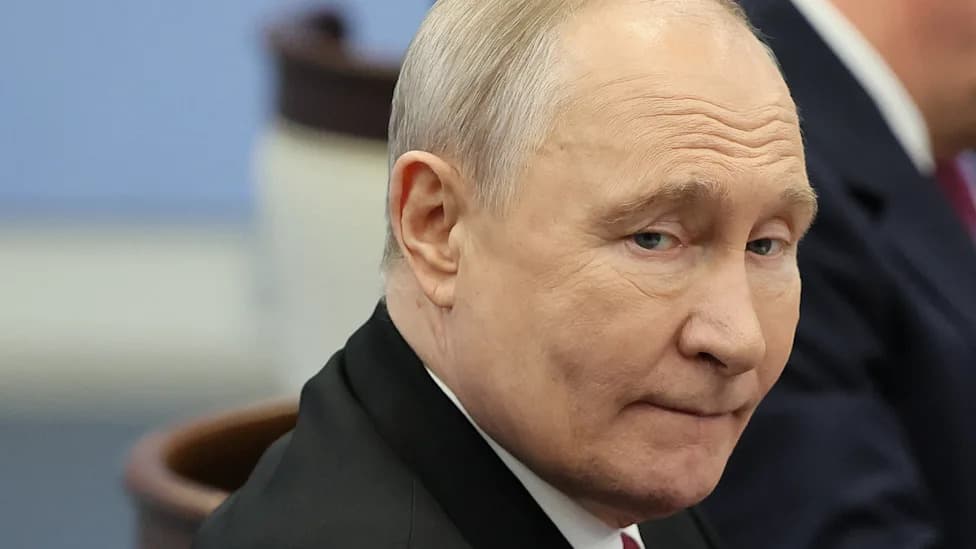
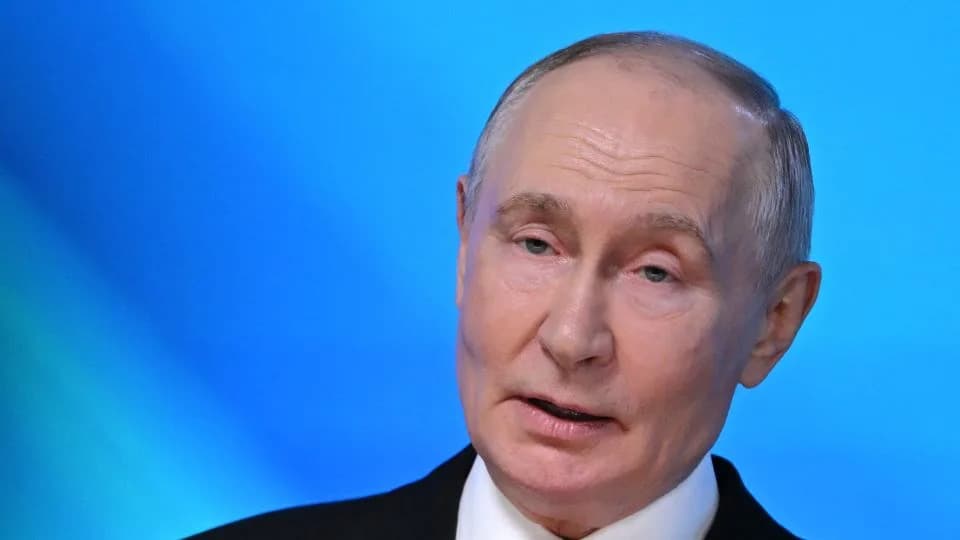
Russian President Vladimir Putin traveled to the far-eastern Kuril Islands on Thursday in his first visit to the disputed archipelago, prompting a strong diplomatic protest from Japan, which refers to the territory as the Northern Territories.
What Happened
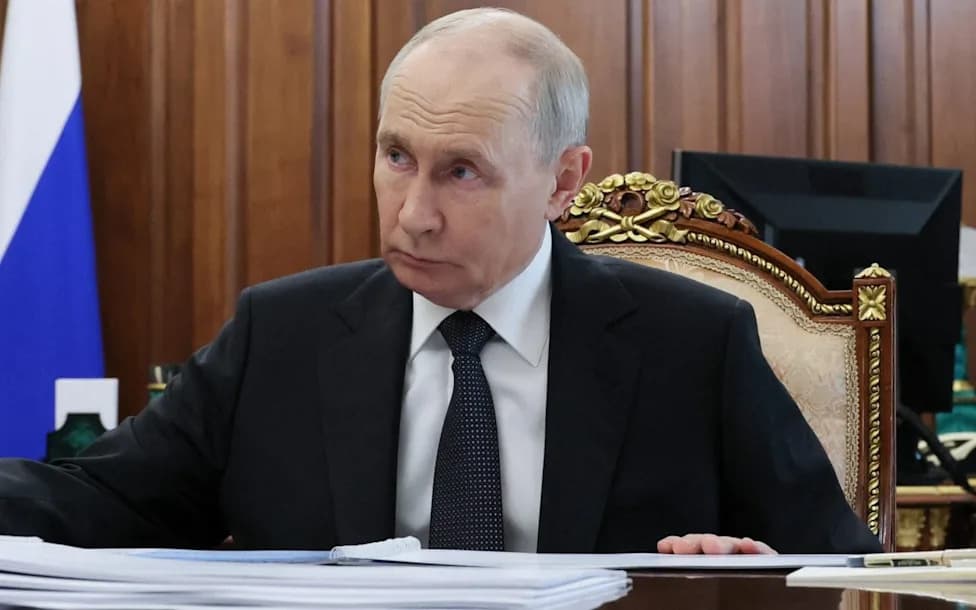
The Kremlin released footage of Mr. Putin touring the islands, including a visit to a fish-processing plant where he was presented with caviar. He made the trip after visiting nearby Sakhalin Island, where Russian naval drills were underway and he chaired a meeting on "ensuring the security of Russia's eastern borders," according to RIA Novosti.
Diplomatic Reaction
Tokyo condemned the visit. Foreign Minister Toshimitsu Motegi said: "The Northern Territories... are an inherent part of Japan's territory both historically and under international law, and the Government of Japan strongly protests this visit." Relations between Moscow and Tokyo have been strained further since Russia's full-scale invasion of Ukraine in 2022, even as Russia has deepened ties with China and North Korea.
Background
The four contested islands—Kunashir, Habomai, Shikotan and Iturup (known in Japanese as Kunashiri, Habomai, Shikotan and Etorofu)—belong to the Kuril chain that arcs from Russia's Kamchatka Peninsula toward Japan's Hokkaido. The Soviet Union seized the volcanic archipelago in the final days of World War II in 1945 and has maintained a military presence there since.
After occupation, Moscow deported about 17,000 Japanese residents. Today roughly 20,000 Russian citizens live on the islands in a harsh climate. The territory is valued for its fishing grounds and mineral prospects, including deposits of gold and silver, and it retains strategic military importance.
Negotiations So Far
Diplomatic talks between Moscow and Tokyo have been intermittent. In 1956, Soviet leader Nikita Khrushchev signaled that two of the islands might be returned under a peace treaty, but subsequent negotiations — including talks resumed after the 1991 collapse of the Soviet Union — have failed to produce a final settlement.
Context: The visit underscores the persistent territorial dispute and highlights how regional security and geopolitical alignments continue to shape relations between Russia and Japan.
Help us improve.