The 11th U.S. Circuit Court of Appeals upheld the FRA's 2024 rule requiring two-person crews for many freight trains in a 93-page, 2-1 decision, finding the agency acted within its authority. The court rejected industry claims that the rule was arbitrary, capricious, or procedurally flawed, and affirmed the FRA's use of legacy exemptions and a special-approval process for one-person operations. A 28-page dissent argued the agency changed course without adequate explanation and undercounted costs. The ruling preserves the FRA's nationwide framework while leaving possible further appeals open.
11th Circuit Upholds FRA Two-Person Crew Rule in 2-1 Ruling, Rejects Railroad Challenges
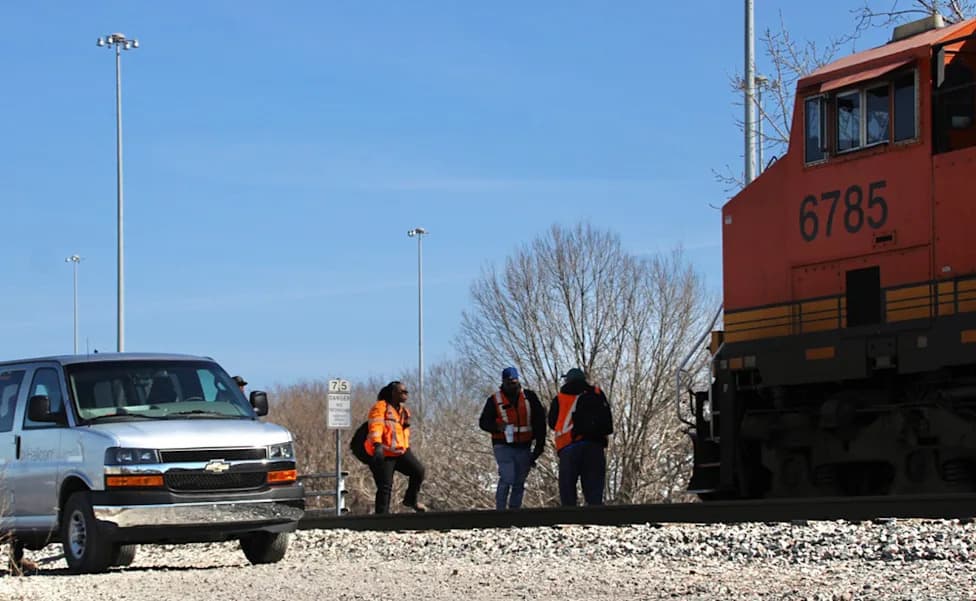
A crew van delivers a new set of crew members for a BNSF intermodal train and picks up others in Chicago on March 3, 2024. A federal appeals court has upheld a Federal Railroad Administration rule requiring two-person crews in most circumstances. David Lassen
ATLANTA, Ga. — A federal appeals court on Aug. 11 upheld the Federal Railroad Administration's 2024 rule requiring two-person crews for many freight operations, rejecting legal challenges from major rail trade groups and several carriers.
Court Decision
In a 93-page, 2-1 decision, a three-judge panel of the U.S. Court of Appeals for the 11th Circuit denied petitions from the Association of American Railroads (AAR), the American Short Line and Regional Railroad Association (ASLRRA) and six railroads. The majority opinion, authored by Judge Robin Rosenbaum and joined by Judge Embry Kidd, concluded that "none of the railroads' arguments have merit" and that the FRA acted within its statutory authority.
Major Legal Findings
The court rejected multiple industry claims, including that the FRA exceeded its authority under the statute that empowers the agency to issue safety rules "as necessary," and that the final rule was arbitrary and capricious for reversing a prior agency position or for not following a National Transportation Safety Board (NTSB) recommendation to gather more data. The court noted that the 2019 withdrawal of a crew-size rule had been invalidated by a lower court and found that the NTSB did not direct the FRA to refrain from regulation until more data were collected.
The AAR's argument that the rule failed to consider economic costs — citing higher cost estimates in earlier proposals — was also rejected. The court observed that the final rule preserves a process for one-person operations through a special approval pathway, which affects cost estimates.
Short-Line Petitioners
Challenges from ASLRRA and two short-line carriers focused on the rule's two-year "legacy status" threshold (which allows some existing one-person operations to continue), whether ownership changes affect legacy status, and the decision to allow legacy lines to carry hazardous materials under legacy status. The court found some arguments forfeited for not being raised during rulemaking and otherwise concluded the FRA reasonably considered the relevant factors consistent with the Administrative Procedure Act.
Safety Technology And Alerters
The rule expands the requirement that locomotives operated by one-person crews be equipped with an "alerter" — a device intended to stop a train if the engineer is non-responsive — applying it to all locomotives used by one-person crews rather than only those operating above 25 mph. The court concluded the FRA provided a sufficient explanation for the change.
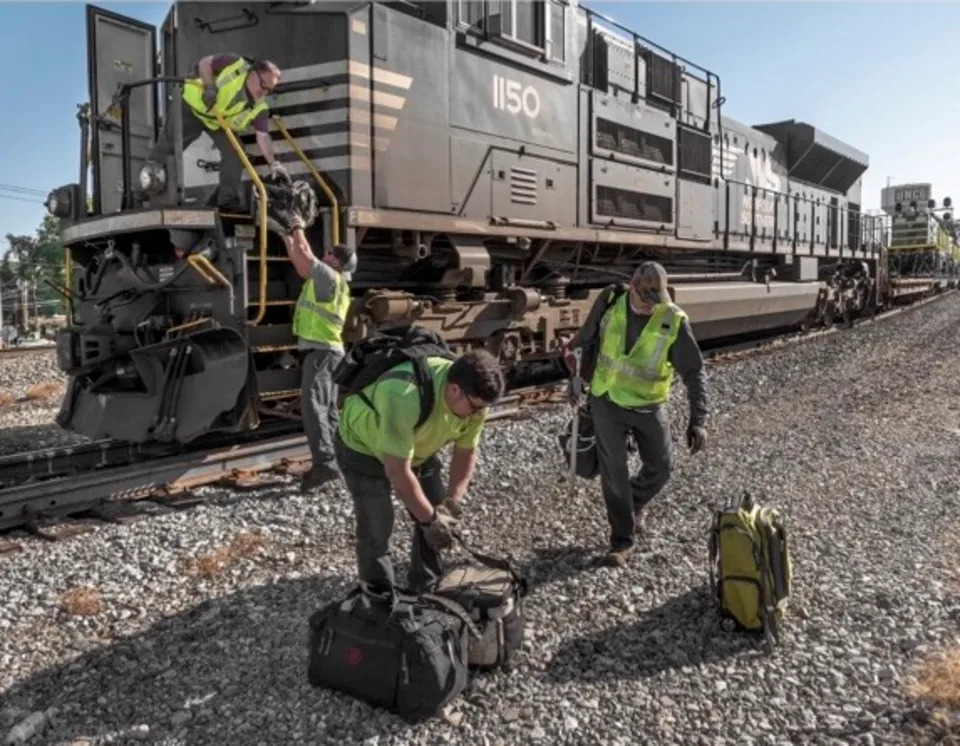
A Norfolk Southern train pauses for a crew change. NS
Dissent
Judge Elizabeth Branch filed a 28-page dissent, saying she would have vacated the rule as arbitrary and capricious. Branch argued the agency changed prior positions without adequate explanation and did not sufficiently analyze or account for the rule's economic costs.
Background
The FRA released the 223-page final Crew Size Rule in April 2024, carving out exceptions for operations it determined "do not pose significant risks to railroad employees, the public, or the environment." The rule preserves a framework of legacy exemptions and a special-approval process for one-person crews in particular circumstances. The rulemaking was first proposed in 2016, withdrawn in 2019, and revived in 2022 as train lengths and operating practices changed industry-wide.
Reactions
The International Association of Sheet Metal, Air, Rail and Transportation Workers-Transportation Division (SMART-TD) hailed the ruling as "a major victory for railroad safety." SMART General President Michael Coleman said the decision reinforced that "having two qualified workers on a train crew is just common sense."
The AAR said it is reviewing the opinion and evaluating next steps. BNSF deferred comment to the AAR. The Brotherhood of Locomotive Engineers and Trainmen said it would respond later. Trains has requested comment from the FRA, ASLRRA and Union Pacific.
Implications And Next Steps
The 11th Circuit's ruling leaves the FRA's nationwide regulatory framework in place, maintaining the two-person requirement for covered operations while preserving legacy exemptions and a special-approval pathway for one-person operations. The decision could be appealed to the full 11th Circuit or to the U.S. Supreme Court, depending on the petitioners' strategic choices.
Contact: To report corrections or news tips to Trains, email [email protected].
Help us improve.