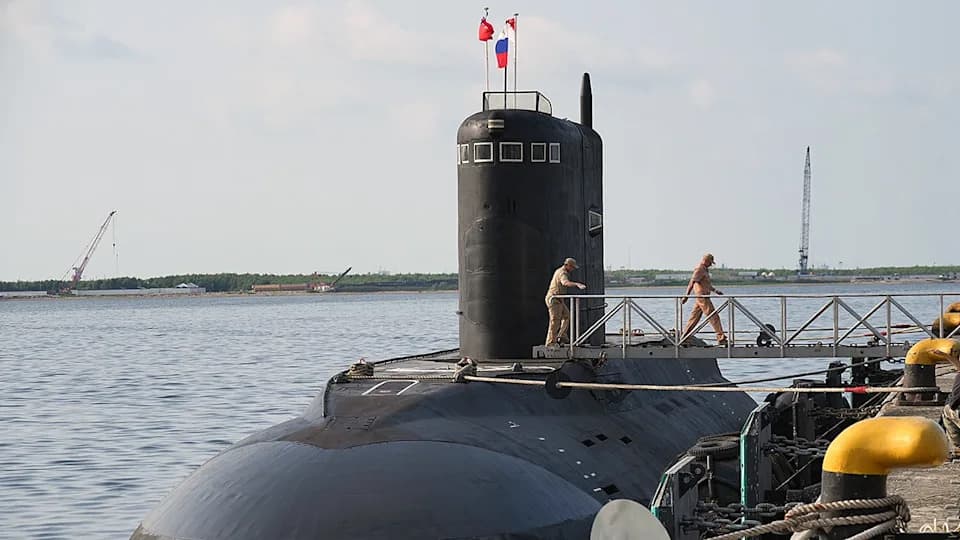
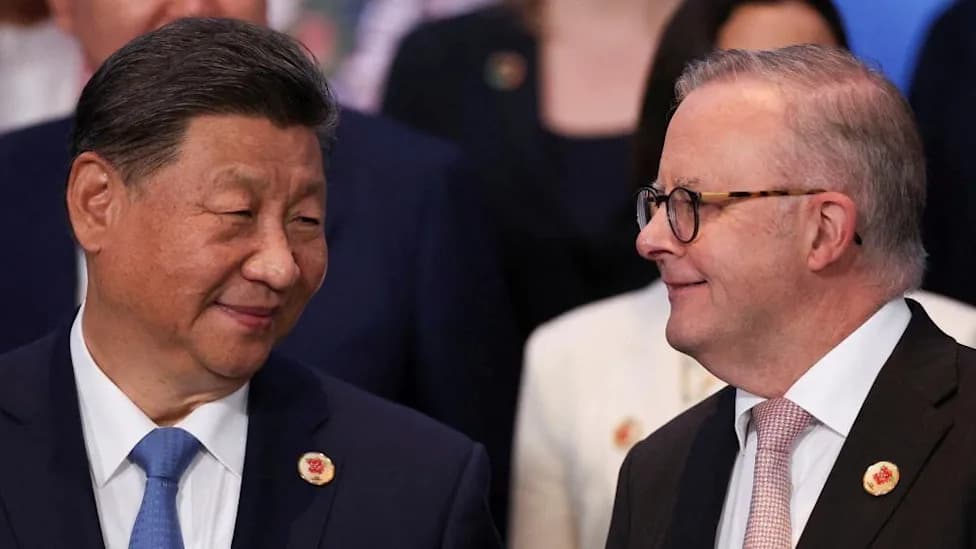
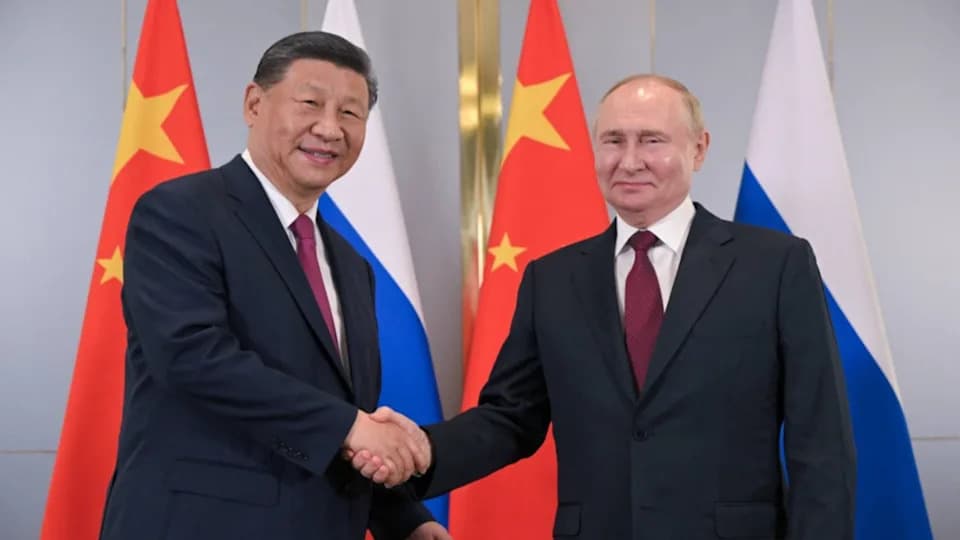
Retired Rear Adm. Mark Montgomery warns Russia may be transferring submarine-quieting technology to China, potentially eroding a key U.S. undersea advantage as tensions over Taiwan rise. Adm. Samuel Paparo has raised similar concerns, framing the transfers as part of a broader reciprocal exchange in which China supplied machine tools and legacy chips to Russia. Investigations and U.S. Treasury reporting point to growing military-industrial ties between Moscow and Beijing, a development that—if confirmed—would complicate U.S. deterrence and anti-submarine operations in the Indo-Pacific.
Longtime U.S. Officer Warns Russia May Be Helping China Narrow Undersea Edge Amid Taiwan Tensions
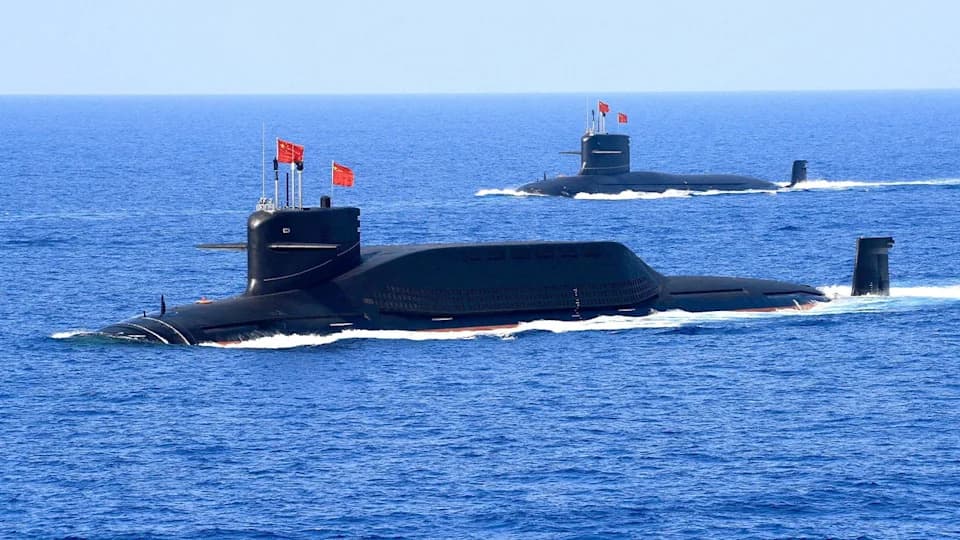
A nuclear-powered Type 094A Jin-class ballistic missile submarine of the Chinese People's Liberation Army (PLA) Navy navigates during a military display in the South China Sea.
Alarm is rising among U.S. defense observers over a deepening security partnership between Russia and China that could erode longstanding American undersea advantages as tensions over Taiwan grow.
Key Claims and Sources
Retired Rear Adm. Mark Montgomery, co-author of the book Axis of Aggressors, told Fox News Digital that Moscow appears to be transferring technology that would make Chinese submarines harder for U.S. forces to detect. Montgomery described the assistance as "allegedly submarine quieting technology," a capability that reduces a vessel's acoustic signature and can substantially complicate anti-submarine warfare.
"Russia is giving incredibly important technology to China. They're allegedly giving them submarine quieting technology," Montgomery said.
Adm. Samuel Paparo, commander of U.S. Indo-Pacific Command, expressed similar concerns to the Senate Armed Services Committee in April 2025, saying China was receiving "potentially submarine quieting help" from Russia. Paparo and other officials have framed these reports as part of a broader, reciprocal exchange in which Beijing supplied Moscow with machine tools and legacy semiconductor chips that helped sustain Russia's war effort in Ukraine.
Evidence Cited
Officials and investigations cited in reporting include:
- The U.S. Treasury Department's October 2024 report that a Russian defense firm coordinated production of Garpiya attack drones at factories in China using Chinese-made engines and components before transferring the weapons to Russia for use in Ukraine.
- A 2025 RUSI investigation, based on leaked contracts and correspondence, which found Moscow agreed to equip and train a Chinese airborne battalion and to transfer technologies that could enable China to develop similar capabilities.
- Senate testimony from Adm. Paparo that Beijing provided significant amounts of machine tools and legacy chips—figures he cited as roughly 70% and 90%, respectively—to help rebuild Russian defense production.
Implications for Taiwan and U.S. Deterrence
Quieting technology lowers a submarine's acoustic signature, making detection and tracking by sonar and other sensors more difficult. U.S. planners consider acoustic stealth and technological superiority central to undersea operations; any meaningful narrowing of that edge could complicate detection, tracking and targeting of People's Liberation Army Navy (PLAN) submarines in the waters around Taiwan.
Montgomery and other analysts argue that such a transactional relationship—where each side supplies capabilities the other lacks—creates risks for U.S. allies and partners across both Europe and the Indo-Pacific. Russia benefits from Chinese industrial and financial support amid the war in Ukraine, while China could gain access to Russian know-how and battlefield-tested technologies.
Responses and Caveats
The Chinese Embassy did not confirm transfers of submarine-quieting technology, issuing a statement that China–Russia military cooperation "consistently adheres to the principles of non-alliance, non-confrontation, and non-targeting of third parties" and urging observers to avoid "groundless speculation." Fox News Digital said it reached out to the Russian embassy; U.S. Indo-Pacific Command declined to comment.
Many of the claims remain unconfirmed in open-source reporting; officials use cautious language such as "allegedly" and "potentially." Nonetheless, multiple U.S. officials and investigative reports point to growing military-technical exchange between Moscow and Beijing with clear implications for undersea warfare and regional deterrence strategies.
Bottom line: If verified, transfers of submarine-quieting technology would be a measurable shift in the military balance beneath the waves, complicating U.S. efforts to deter or defend around Taiwan and stressing the need for updated anti-submarine capabilities and allied coordination.
Help us improve.