The color image of English schoolchildren praying before mid-morning milk is a colorized, AI-enhanced edit of a genuine black-and-white 1944 photograph in the Imperial War Museums collection. Sightengine flagged the circulated edit as 99% likely AI-generated. The altered version standardizes the cups into disposable-style white vessels and invents facial detail for blurred pupils, demonstrating how AI enhancement can introduce inaccurate historical detail. Treat the colorized image as an edited interpretation, not original color photography.
Fact Check: Color Image Of 1944 Schoolchildren Is A Colorized, AI-Enhanced Edit — Original Photo Is Black-and-White
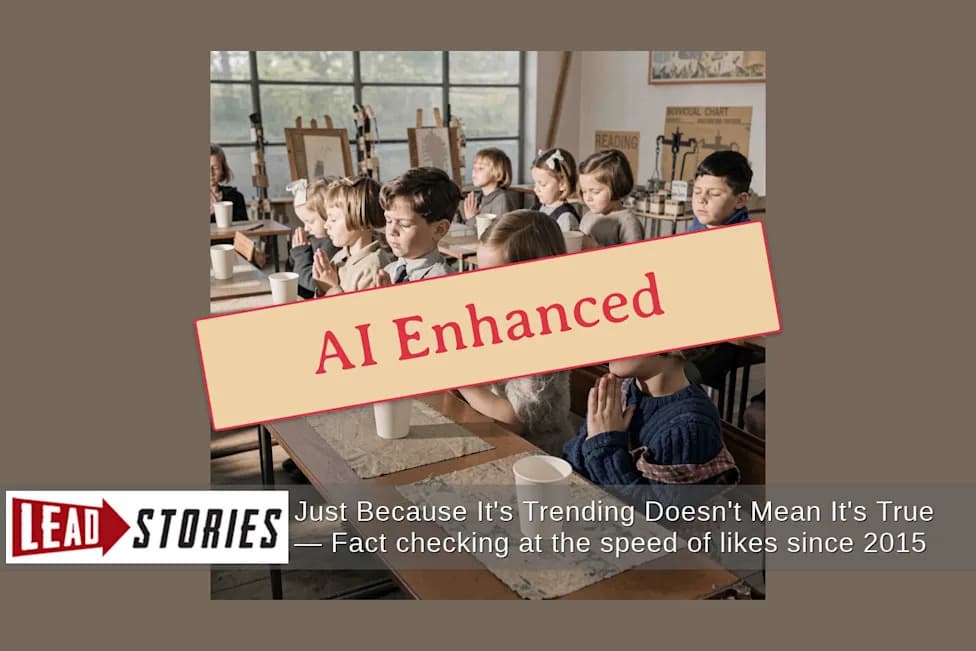
Lead Stories says: AI Enhanced
Does a genuine color photograph show English schoolchildren praying before their mid-morning milk in 1944? No. The image circulating online is a colorized and AI-enhanced edit of a genuine black-and-white archival photograph held by the Imperial War Museums (IWM).
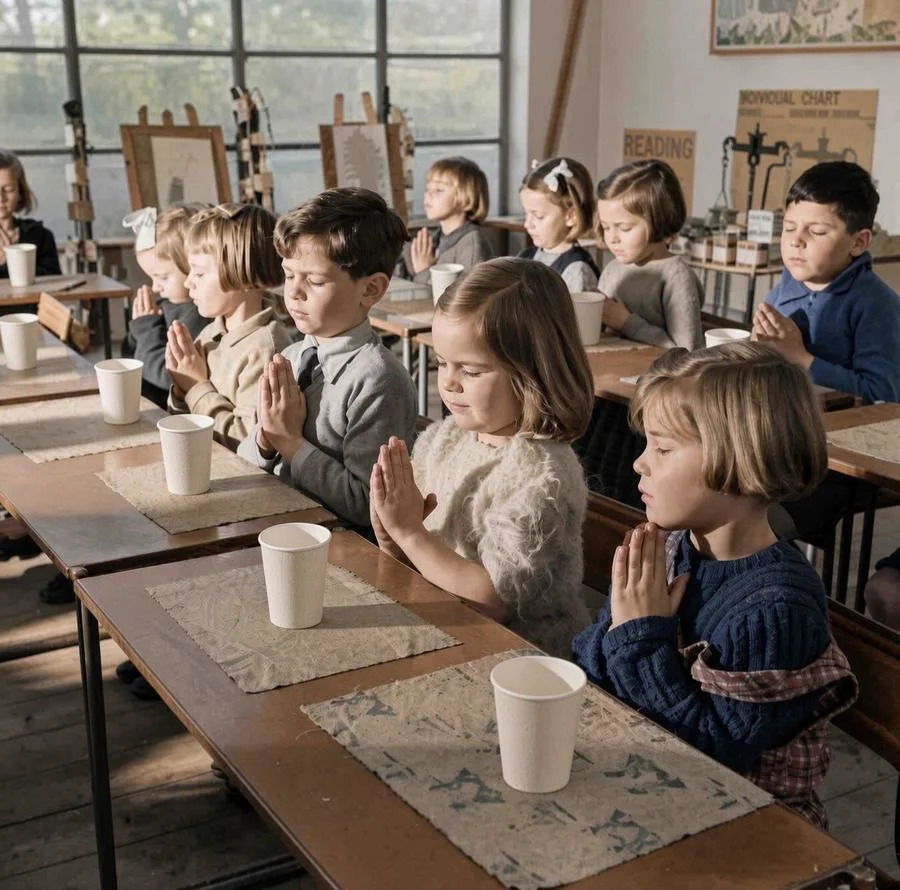
Image source: post by @bo66ie29 on X.
What we verified
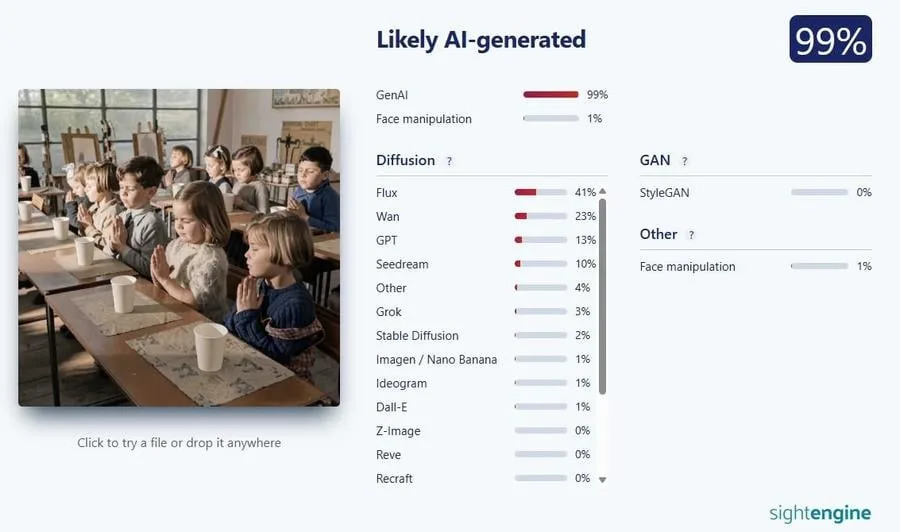
Image source: Sightengine.
The original black-and-white picture is part of the Ministry of Information Second World War Official Collection in the IWM. Its museum caption identifies the scene as pupils at Fen Ditton Junior School saying grace before mid-morning milk. The altered color version was posted on X by @bo66ie29 on Aug. 10, 2026, with the caption: "Morning prayers before milk. England, 1944."
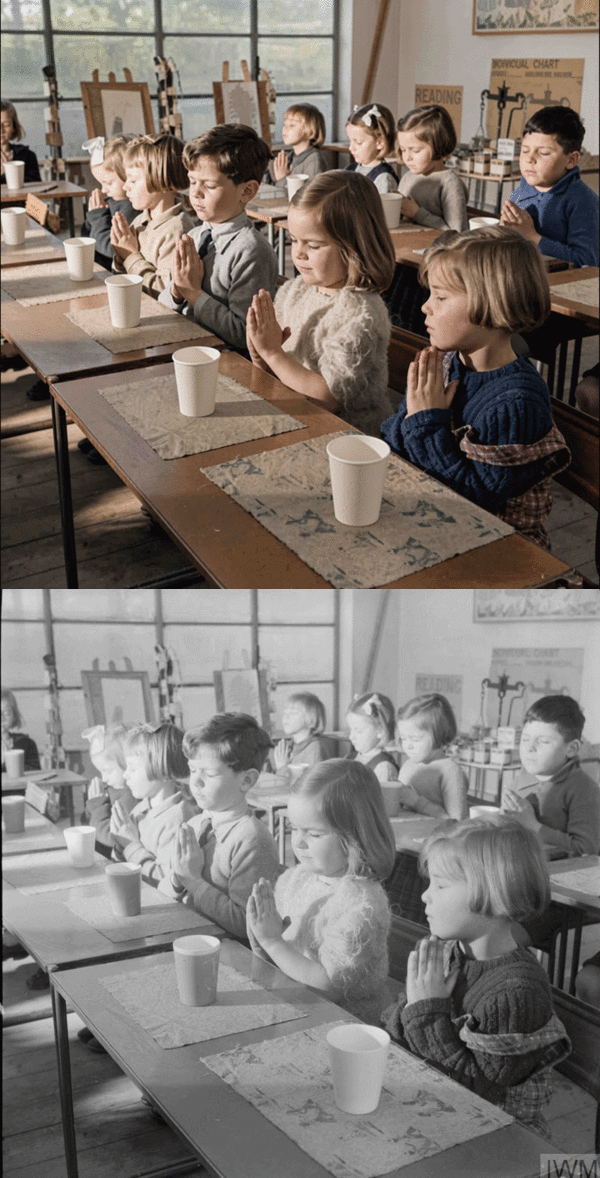
Image source: Imperial War Museums andpost by @bo66ie29 on X.
How the image was altered
A forensic check by Lead Stories and an automated analysis via Sightengine flagged the circulated color image as overwhelmingly likely to be AI-generated (reported at about 99% likelihood). A side-by-side GIF produced by Lead Stories makes the changes obvious.
Key changes introduced by the colorization and enhancement include:
- Uniform, Reimagined Cups: In the original photo the cups on the desks vary in appearance and lighting. The colorized edit renders them all as identical white cups with a rolled rim resembling modern disposable paper cups, and applies an unrealistic, consistent highlight to them.
- Invented Facial Detail: Several children in the back rows are blurry and overexposed in the archival photo. The AI-enhanced version sharpens and invents facial features for those pupils, which risks creating false impressions of identity or likenesses that aren’t present in the historical record.
- Sharpened But Unclear Text: Posters on the classroom wall are partially legible in the original (one reads "reading"). The edit sharpens letterforms but does not reliably recover or clarify the original wording; instead it may introduce plausible-looking but inaccurate text.
Why this matters
AI colorization and enhancement tools can make archival photos more visually striking, but they can also overwrite or invent historical detail. When faces, objects or text are reconstructed by an algorithm, added features may be imagined rather than faithful restorations of the source image. That can mislead viewers or create incorrect historical associations.
Bottom line: The photograph is a genuine 1944 image from the IWM collection, but the widely shared color version is an AI-driven colorization and enhancement that alters and invents visual details. Treat the colorized image as an edited representation, not as an original color photograph from 1944.
Help us improve.