The Supreme Court's 1999 Olmstead decision enshrined the right of people with disabilities to receive services in the most integrated community setting. Recent federal actions — including a DOJ memo and proposed Medicaid funding changes — threaten the stability of home- and community-based services (HCBS), which are essential lifelines for daily care, employment supports, and transportation. Cutting HCBS risks pushing people back into costly institutions, harming families and local economies, and rolling back civil-rights progress. Preserving HCBS is both a moral and fiscally prudent policy.
The Promise to Americans With Disabilities Is Under Threat: Olmstead, Medicaid Cuts, and the Future of Community Care
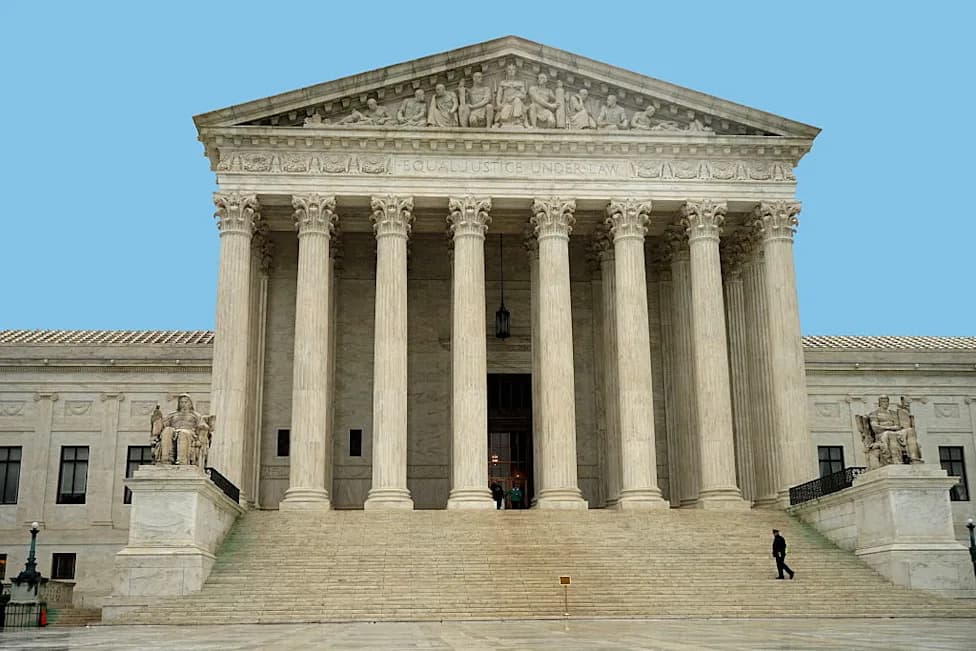
Exterior of the U.S. Supreme Court in 1999. —Universal History Archive—Getty Images
For much of American history, people with disabilities were routinely placed in large, isolating state institutions. In those overcrowded, understaffed settings, residents were often neglected and denied privacy, autonomy, and meaningful ties to their communities. Public exposure of these abuses sparked outrage and launched a decades-long deinstitutionalization movement that helped build services enabling people to live in their own homes and communities.
That long fight produced meaningful improvements. The Supreme Court's 1999 ruling in Olmstead v. Lois Curtis — now 27 years old — provided crucial legal backing, affirming that the Americans with Disabilities Act (ADA) protects a right to receive services in the most integrated setting appropriate.
Why Olmstead Still Matters
Before Olmstead, the practical choices for many Americans with disabilities were stark: expensive, confining institutions on one end, or complete independence without supports on the other. Olmstead's legal precedent, together with the expansion of community-based services, created a middle ground — a spectrum of supports that make community life possible for millions.
New Threats to Community-Based Services
That hard-won foundation is now under strain. Last month, on the anniversary of the Olmstead decision, the U.S. Department of Justice published a legal memorandum that casts doubt on the settled right to receive services in the most integrated setting. While the memo does not change the law, its language risks eroding decades of civil-rights protections and undermining the policy rationale for home- and community-based services (HCBS).
Concurrently, federal actions — including proposed Medicaid spending cuts scheduled to take effect next year and the withholding of hundreds of millions of dollars in community-service funding in the name of program integrity — send a troubling message. In July 2026, the administration paused more than $1 billion in Medicaid payments to California and Minnesota, citing fraud but providing little public detail. Taken together, these moves convey that HCBS are wasteful rather than essential.
Senior officials have suggested Medicaid sometimes pays family members to perform tasks they previously did without compensation — a characterization that risks being used to justify deep cuts to supports many people and families rely on.
The Real-World Stakes
Home- and community-based services are not luxuries. Medicaid funds direct support professionals who help people dress, manage medications, and respond to behavioral crises; job coaches who teach workplace skills; and transportation and navigation supports that allow people to access medical care and participate in community life. For millions, Medicaid is a lifeline.
Expecting families to shoulder this care without supports is unrealistic and shortsighted. Many parents are elderly or deceased; spouses often work full-time or multiple jobs; siblings may live far away; and some people have no family available. Direct support professionals receive training to deliver individualized, person-centered care that family members cannot be expected to provide safely or sustainably in all cases.
Rollbacks of HCBS would likely produce predictable harms: longer waiting lists, fewer providers, higher workforce attrition among direct support staff, and more people funneled into expensive, isolating institutions. Those outcomes would devastate families and local economies.
Costs And Common Sense
Community-based care is also far more cost-effective. Supporting an individual with an intellectual or developmental disability through HCBS averages about $70,500 per year, compared with more than $395,000 annually in a public institution. If policymakers genuinely want to protect taxpayers while honoring civil rights, they should preserve and strengthen HCBS — the approach that advances inclusion and delivers fiscal savings.
Although recent memos and administrative actions do not formally overturn Olmstead, they add stress to the fragile structure that sustains community living for millions. The rights Olmstead affirmed must be reaffirmed, not reinterpreted to narrow access to community-based supports.
Help us improve.