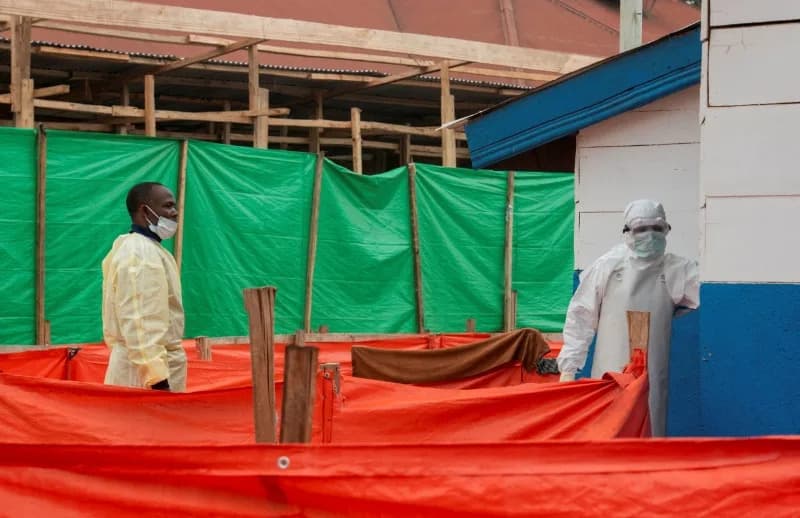
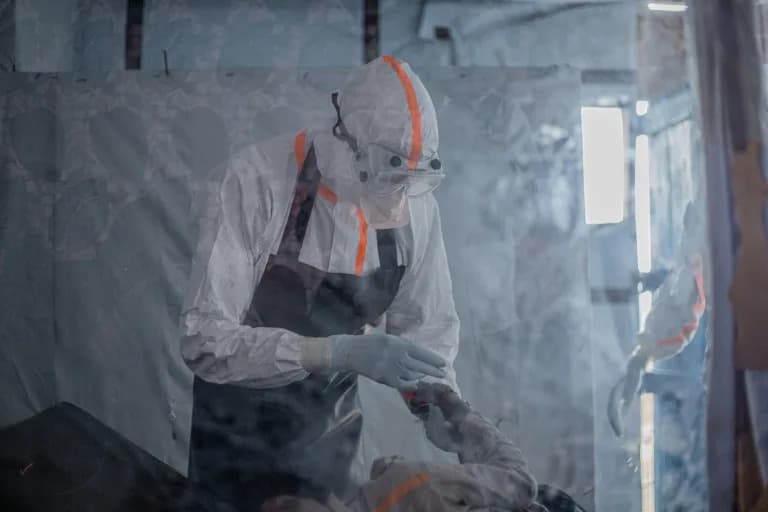
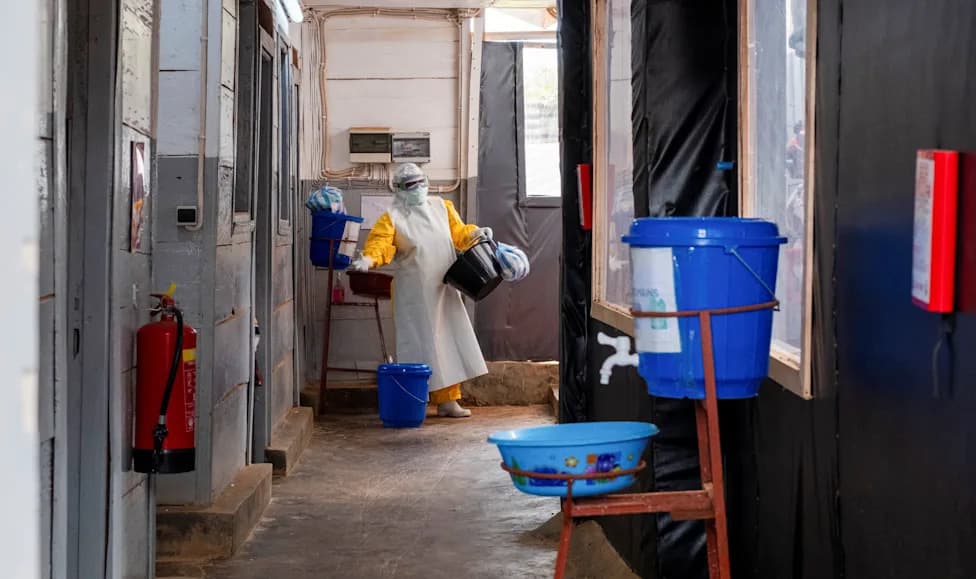
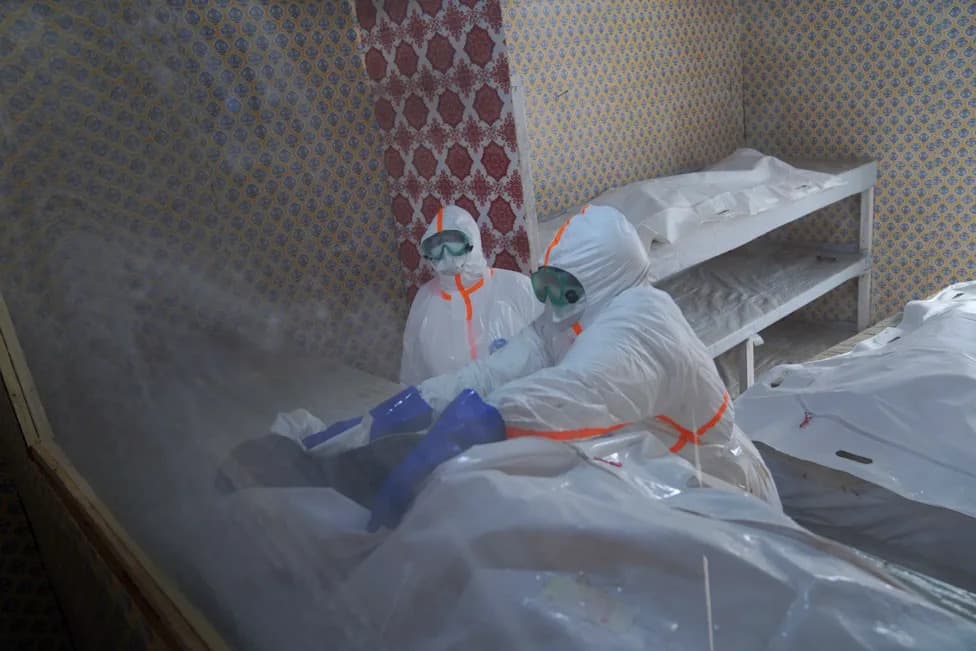
The Democratic Republic of Congo has confirmed 2,011 deaths and 4,381 cases in its current Ebola outbreak, driven by the Bundibugyo strain for which no approved vaccine or specific treatment exists. WHO has declared the situation a public health emergency of international concern and cases have been reported in Uganda. A Science study suggests transmission may have started in January in Ituri; shortages, insecurity and delayed detection have accelerated spread. Local authorities in North Kivu deployed a militia-backed task force in Butembo to protect responders and enforce quarantines, raising concerns about trust and human rights.
DR Congo Ebola Death Toll Tops 2,000 as Bundibugyo Outbreak Accelerates
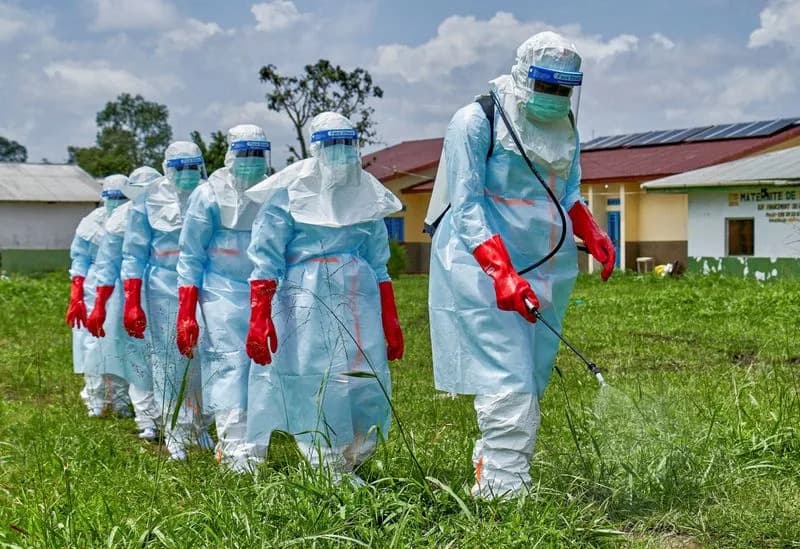
FILE PHOTO: Red Cross workers walk in a formation as they disinfect Rwampara general hospital before handling the body of a person who died of Ebola, as aid agencies intensify efforts to contain a new Ebola outbreak involving the Bundibugyo strain, in Rwampara outside Bunia, Ituri province, Democratic Republic of Congo, May 21, 2026. REUTERS/Gradel Muyisa Mumbere/File Photo
Health authorities in the Democratic Republic of Congo (DRC) said on Tuesday that confirmed Ebola deaths have reached 2,011, with 4,381 confirmed cases reported across five provinces. Officials describe this as the fastest-spreading Ebola episode recorded in the country.
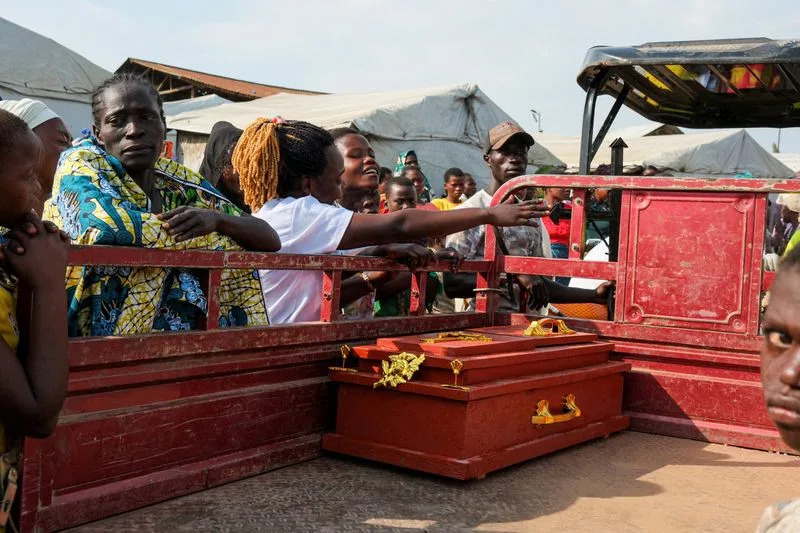
FILE PHOTO: Relatives and friends mourn next to the coffin of a person who is suspected to have died of Ebola before the burial at Nyamurongo Cemetery, one month after an Ebola outbreak was declared, in Bunia, eastern Democratic Republic of Congo, June 18, 2026. REUTERS/Gradel Muyisa Mumbere/File Photo
The outbreak, Congo's 17th, is caused by the Bundibugyo species of the virus. Unlike some other Ebola strains, Bundibugyo currently has no approved vaccines or proven treatments, complicating clinical response efforts. The World Health Organization (WHO) has declared the situation a public health emergency of international concern, and cases have crossed the border into neighbouring Uganda.
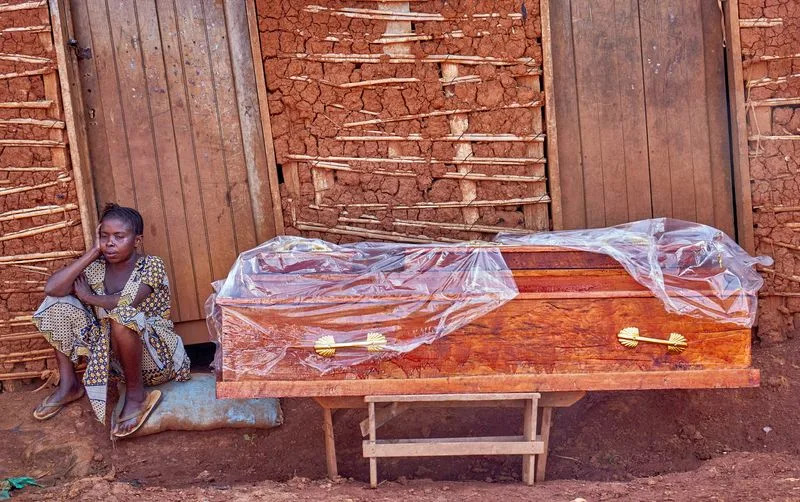
FILE PHOTO: A Congolese woman reacts outside the house of a man, who died of Ebola, as she waits for medical workers to retrieve his body, as aid agencies intensify efforts to contain a new Ebola outbreak involving the Bundibugyo strain, in Quartier Shuni 1, a residential sector in Mongbwalu, Djugu Territory of Ituri province, Democratic Republic of Congo, May 24, 2026. REUTERS/Gradel Muyisa Mumbere/File Photo
A study published in Science last month suggests transmission may have begun in January or earlier in Ituri province, identifying more than 500 suspected cases between mid-January and May 15. Delayed detection, ongoing conflict, shortages of medical supplies and strained health services have all contributed to faster transmission and hampered contact tracing, patient isolation and treatment.
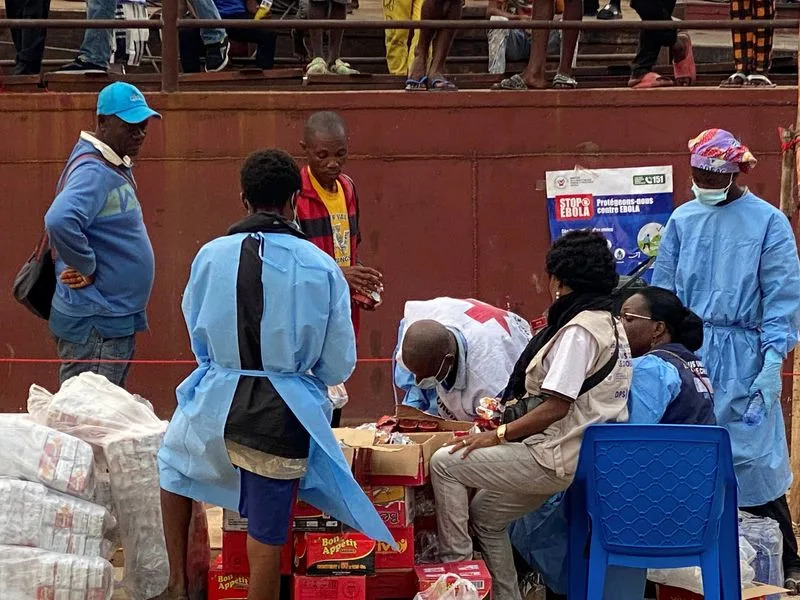
Passengers who disembarked from a boat intercepted by health authorities wait to be tested following the death of a passenger suspected of having Ebola, in Kinshasa, Democratic Republic of the Congo, August 6, 2026. Authorities said the passenger had disembarked earlier in the city. REUTERS/Benoit Nyemba
Comparative timelines underline the outbreak's speed: West Africa's 2014–2016 epidemic recorded 28,616 cases and 11,310 deaths but took nearly five months from declaration to reach 1,000 deaths. By contrast, the current DRC outbreak reached 2,000 deaths in under three months and rose from 1,000 to 2,000 deaths in less than a month. In the DRC's 2018–2020 outbreak, it took a little over a year to hit 2,000 deaths.
Local Response And Security Measures
Community mistrust and resistance have complicated containment efforts, occasionally putting response teams at risk—particularly during disputes over burial and care practices. In North Kivu province, authorities in the city of Butembo formed a government-backed task force that pairs pro-government militia fighters with civil society groups to protect health workers, secure treatment centers and support quarantine enforcement.
At a press conference, task force leader Guy Ngavo said people found handling the bodies of Ebola victims or repeatedly refusing quarantine orders could be forcibly taken to Ebola treatment centres and, in cases of repeated non-compliance, subjected to corporal punishment.
Humanitarian and health agencies warn that the use of force and punitive measures can undermine trust and make community engagement harder, which in turn may impede efforts to trace contacts and stop transmission. Continued international support, secure supply lines, and community-led outreach are critical to slowing the outbreak and improving access to care.
Reporting: Fiston Mahamba. Writing: Ayen Deng Bior. Additional reporting: Clement Bonnerot and Ilham Sougue. Editing: Robbie Corey-Boulet, Sharon Singleton and Toby Chopra.
Help us improve.