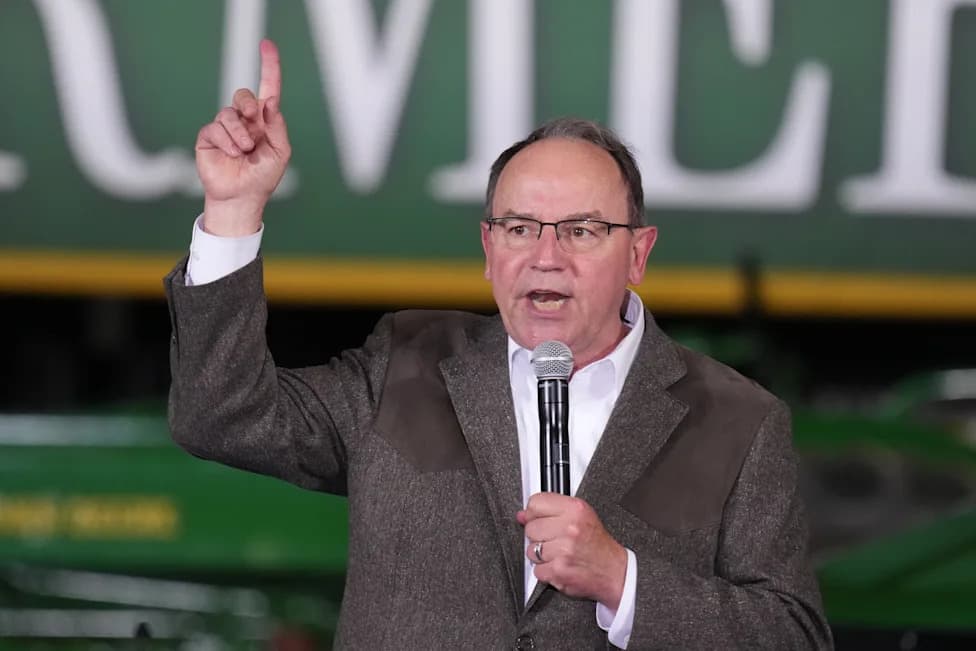
Mike Lindell, backed by former President Trump, leads in Minnesota’s fractured GOP primary and could become the Republican nominee for governor despite questions about his residency and alleged campaign finance issues. The split between establishment candidates Lisa DeMuth and Kendall Qualls has amplified Lindell’s insurgent surge. If nominated, Lindell would likely face Sen. Amy Klobuchar in November. Other notable developments include an expected Wisconsin GOP nominee in Tom Tiffany and a crowded special Senate race in South Carolina.
Mike Lindell Could Win Minnesota GOP Primary Amid Residency Fight and Trump Endorsement

Amid heavy coverage of other statewide contests, Minnesota Republicans may nominate a highly unconventional candidate for governor: Mike Lindell, the MyPillow CEO and prominent promoter of 2020 election fraud theories. With a split field and a Trump endorsement, Lindell has a real path to become the GOP nominee — despite questions about his residency and campaign conduct.
Why Lindell Is Leading
The Republican primary in Minnesota is divided among multiple contenders. State House Speaker Lisa DeMuth has significant fundraising support, while the state GOP formally endorsed businessman Kendall Qualls. That split in establishment backing has helped create an opening for an insurgent candidate.
Former President Donald Trump has endorsed Lindell, and several polls show him ahead in the three-way primary. The surveys vary in methodology and reliability, but the trend of strong name recognition and passionate supporters helps explain Lindell’s position.
Controversies and Legal Questions
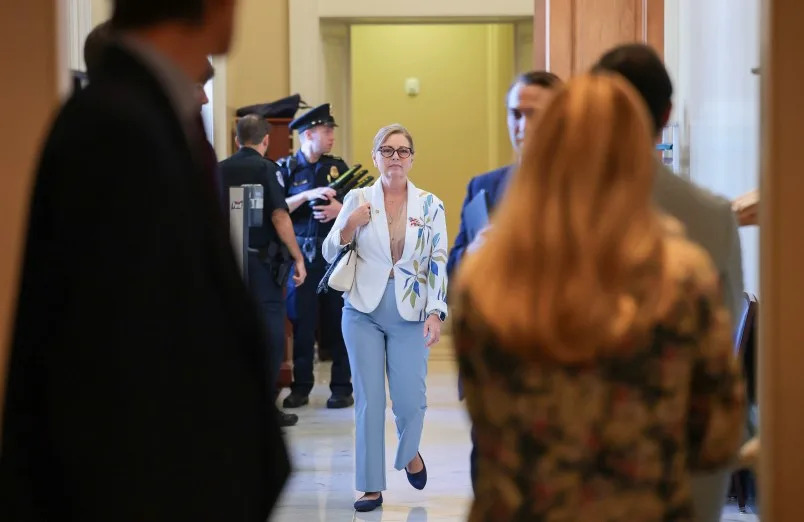
WASHINGTON, DC – AUGUST 06: U.S. Sen. Darline Graham Nordone (R-SC) departs from a lunch with Senate Republicans at the U.S. Capitol Building on August 06, 2026 in Washington, DC. (Photo by Anna Moneymaker/Getty Images)
Lindell’s campaign has been punctuated by controversies typical of his public profile. One recent allegation claims he distributed MyPillows to voters on the campaign trail, raising questions about possible campaign finance violations. Separately, Minnesota Republicans are contesting whether Lindell — who previously resided in Texas — meets the state’s residency requirements to appear on the ballot.
“We've never had a party challenge the residency of one of its serious candidates,” said Steven Schier, a political scientist at Carleton College. “And then you add the fact that this candidate has been endorsed by the president of that party. It's really an extraordinary situation.”
What’s At Stake
Whoever emerges from the Republican primary is likely to face U.S. Sen. Amy Klobuchar (D-MN) in November, following Gov. Tim Walz’s decision not to run for re-election. Minnesota’s primary season has already seen record turnout, according to the state secretary of state.
Other Races And National Context
In Wisconsin, U.S. Rep. Tom Tiffany (R-WI) is widely expected to secure the Republican gubernatorial nomination. Tiffany has been described by some outlets as an election denier and was among the House Republicans who opposed certifying the 2020 presidential election results.
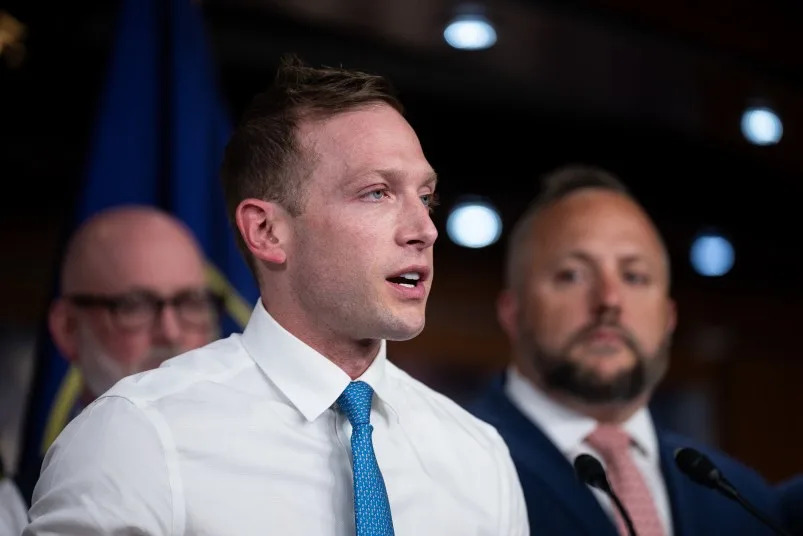
WASHINGTON – JUNE 26: Rep. Max Miller, R-Ohio, speaks during the news conference on efforts to hold Attorney General Garland in iInherent contempt of Congress in the U.S. Capitol on Wednesday, June 26, 2024. (Bill Clark/CQ-Roll Call, Inc via Getty Images)
South Carolina is holding a special election to fill the late Sen. Lindsey Graham’s seat. The appointed incumbent, Darline Graham Nordone, is running to keep the seat, and a crowded GOP field includes former governor Mark Sanford, Rep. Russell Fry, and Rep. Ralph Norman — among others. Two candidates are expected to advance to a runoff.
Other notable developments: Reuters reports that the Justice Department has lost repeated court efforts to obtain state voter rolls in related litigation; a recent summary counted 21 losses in similar cases. Separately, Rep. Max Miller (R-OH) remains in a competitive primary despite allegations of abuse, prompting Democrats to invest heavily in his opponent and shifting the race toward a toss-up in some ratings.
Unverified or Emerging Claims
Some reports circulating in political media have made sensational claims — such as an unverified story that former President Trump was moved between aircraft inside a catering crate amid a purported foreign plot — but those accounts remain unconfirmed and should be treated cautiously.
As Minnesota’s primary concludes, the GOP’s choice will shape the next phase of a competitive gubernatorial contest in a key Midwestern state — and offer a window into how national endorsements and intra-party splits affect state-level outcomes.
Help us improve.