Researchers trained an AI to find the most effective way to read under constraints of time, memory and visual intake. The model skipped predictable words and revisited difficult passages, a strategy researchers call 'resource rationality.' In experiments it adjusted to time pressure like 39 human participants, skimming when rushed and rereading when given more time. The findings could inform adaptive reading tools, AR displays and support for readers with dyslexia or limited language skills.
Why We Skip Words and Reread Sentences — AI Reveals the Strategy Behind Efficient Reading
Why do our eyes skip and reread words? AI may reveal how we read efficiently
Scientists trained an artificial intelligence model to discover its own optimal reading strategy and found that its behaviour resembled human readers in striking ways.
Researchers from Aalto University (Finland), the Hong Kong University of Science and Technology, City University of Hong Kong and the National University of Singapore built a model that assumes human readers face limits in time, memory and visual intake. The team trained it on millions of text samples so it would maximise understanding while operating under those constraints.
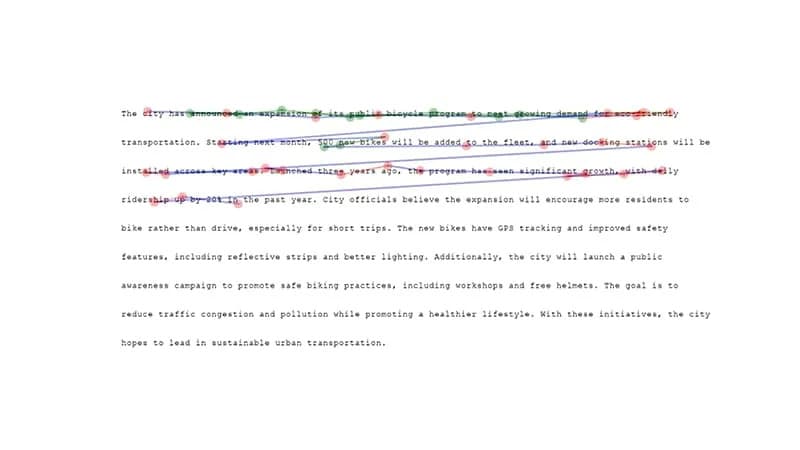
Importantly, the AI learned without being given human gaze or comprehension data. Despite that, many human-like reading patterns emerged. The model spent less time on common or highly predictable words and often skipped them, while ambiguous or difficult words and sentences caused it to revisit earlier text more frequently.
Resource Rationality: Spending Attention Like a Budget
Researchers describe this behaviour as 'resource rationality' — the idea that readers allocate limited time and attention to parts of text where it most improves comprehension. As Shengdong Zhao, a professor at City University of Hong Kong, put it, reading feels effortless, but the brain is constantly deciding where to look, what to skip and when to backtrack.
Antti Oulasvirta, professor at Aalto University, said the project marks the first time AI methods were used to understand, not merely mimic, human reading strategies.
The model adapted to time pressure in ways that matched the behaviour of 39 adult participants in an experiment. Under tight time limits it prioritised covering more of the text; given more time it devoted extra attention to difficult passages and reread more often.
The team emphasises that their results do not prove the human brain performs the exact same calculations as the model. Rather, the model offers a plausible explanation for how diverse reading behaviours could emerge from the single objective of maximising understanding with finite cognitive resources.
Potential Applications
Better insight into how memory and attention shape reading could lead to technologies that tailor text to individual readers and contexts. Potential uses include adaptive reading apps, customised versions of complex documents for different readers, and augmented reality smart glasses that adjust pace or layout of on-screen text.
The researchers plan to explore whether the approach could assist people with dyslexia or limited language proficiency and to adapt text in situations where attention is critical, such as presenting information to drivers without causing unnecessary distraction.
Now that the model provides a clear, testable account of efficient reading strategies, the team says it is time to explore practical applications that could help readers in real time.
Help us improve.