The Bald Range wildfire in interior British Columbia forced residents to evacuate overnight, with more than 20,000 people displaced and an 80-year-old woman killed while fleeing. Neighbours formed convoys in the dark to reach shelters in West Kelowna, where restaurants and charities mobilized support. Officials declared a provincial state of emergency as crews battle fast-moving flames amid drought-like conditions and rising temperatures. Canada has lost over 4 million hectares to fires this year, highlighting growing wildfire risk.
Late-Night Convoys to Safety as Bald Range Wildfire Forces More Than 20,000 to Evacuate
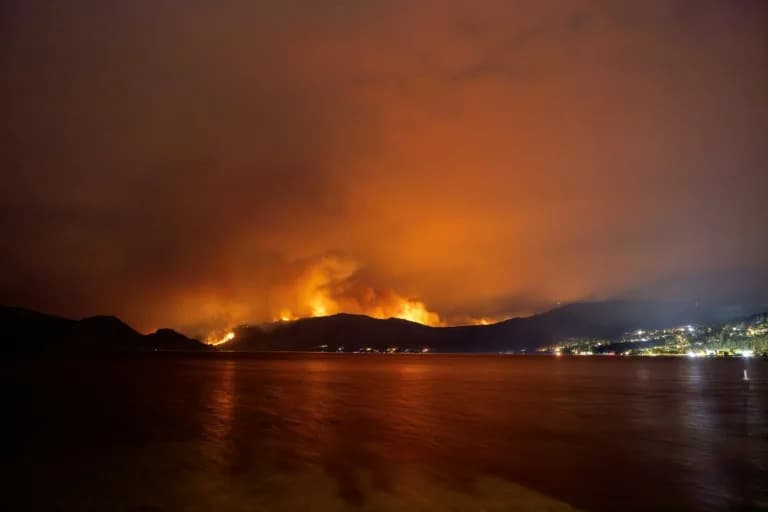
Peachland is one of the communities in western Canada forced to evacuate by the fast moving Bald Range wildfire (Darren HULL)
When authorities ordered an evacuation at 3:00 a.m. as the Bald Range wildfire raced across interior British Columbia, neighbours Larry and Mora Goodman joined others to form a convoy and drive through the night toward safety in West Kelowna.
Evacuation in the Dark
Many residents were elderly or uncomfortable driving at night, Mora Goodman told AFP from West Kelowna, one of the towns sheltering those displaced. After checking that everyone was packed, Larry placed a light on the hood of his car to improve visibility and led the convoy about 20 kilometres from Peachland to West Kelowna.
"We all caravaned down the highway, in the middle of the night," Mora recalled. "We're eating far more food than we ever would at home," she added, praising local restaurants and community groups that mobilized help.
Officials say the fire began on Friday and spread with terrifying speed over the weekend. More than 20,000 people have been forced from their homes and an 80-year-old woman died while fleeing. Provincial authorities have declared a state of emergency as teams work to contain the blaze.
Wider Context and Response
Canada has seen unusually intense wildfire activity this year: more than 4 million hectares have burned so far—an area roughly the size of Switzerland. Experts warn that drought-like conditions in parts of British Columbia, combined with rising temperatures and expanding communities in fire-prone areas, increase the risk of severe summer fires.
Ottawa has responded by procuring additional water-bombing aircraft and emphasizing proactive forest-management strategies, though officials acknowledge these measures have limits. Major population centres have also felt the effects: last month cities such as Toronto experienced some of the worst air quality in the world.
Humanitarian Needs
Local charities, restaurants and civil-society groups in West Kelowna set up shelters and distribution centres. Salvation Army officer Rob Henson noted that displaced people include migrant workers who arrived with few possessions, describing widespread uncertainty as evacuees await news about their homes.
The situation remains fluid as crews battle the Bald Range fire and authorities monitor weather and fuel conditions that could worsen the threat to communities across the region.
Help us improve.