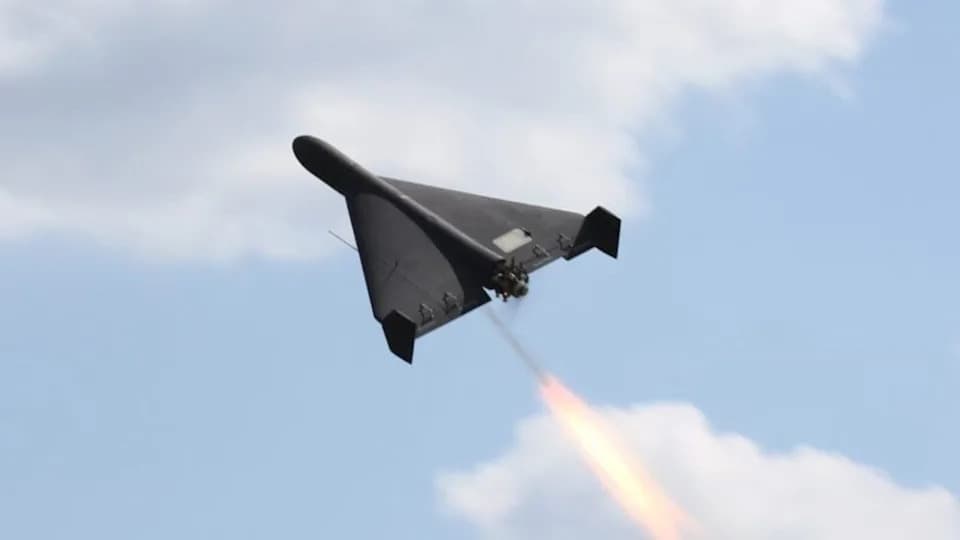
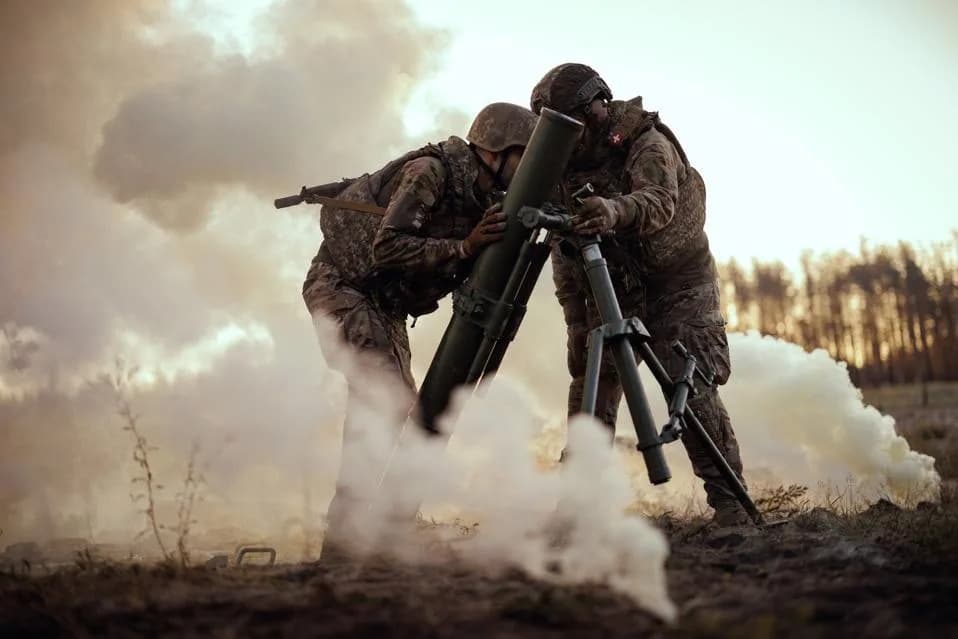
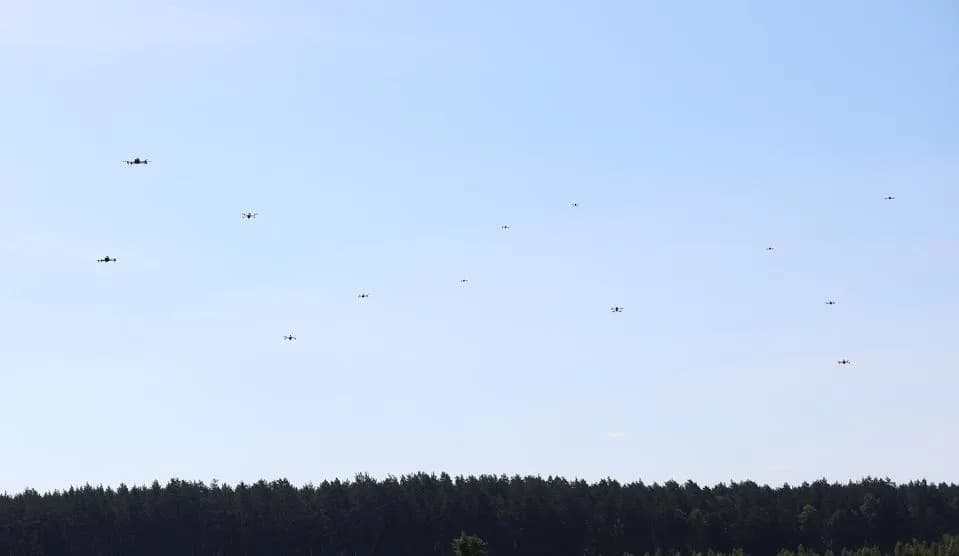
The U.S. Army has issued a Sources Sought notice seeking a 50mm cannon and compatible 50x228mm ammunition for counter‑UAS missions, with responses due Aug. 31. A live‑fire demonstration will use Northrop Grumman's XM913 Bushmaster while contractors supply rounds and integration plans. The system aims to defeat Group 1–3 UAS — from small quadcopters to medium UAVs up to 1,320 lb and 250 knots — and will likely rely on programmable HEAB‑T airburst rounds to maximize effect against agile targets.
U.S. Army Seeks 50mm Cannon and Ammunition for Counter-Drone Defense — Live-Fire Demo Planned
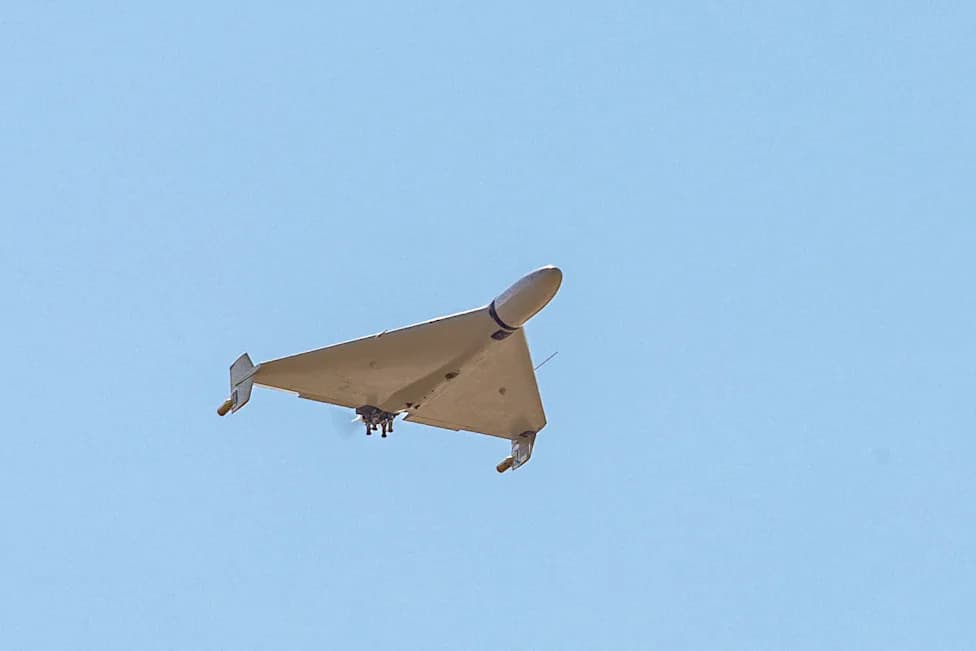
An Iranian-made Shahed-136 attack drone flies over Kermanshah, Iran, on March 7, 2024. The U.S. Army is looking for companies that can provide a 50mm cannon to take down Class 1, 2 and 3 drones. (Middle East Images/AFP via Getty Images)
The U.S. Army has issued a Sources Sought notice asking industry to propose a 50mm cannon and compatible ammunition to strengthen counter‑drone (C‑UAS) defenses. Responses are due by Aug. 31. While the solicitation does not list detailed technical specifications, it signals a clear interest in a rapid‑fire gun solution tailored to defeat small to medium unmanned aerial systems.
Planned Live‑Fire Demonstration
The service plans a live‑fire demonstration using Northrop Grumman's XM913 Bushmaster 50mm chain gun. Participating firms are expected to supply 50x228mm ammunition for testing and to describe how their solutions will integrate with sensors, fire control, and platforms for C‑UAS missions.
What The Army Is Asking For
- A detailed description of company capabilities related to C‑UAS.
- Proposed C‑UAS system architecture and fire control/sensor integration plans.
- A draft test or demonstration plan and an estimated timeline to deliver a system ready for live fire.
- An explanation of how the platform will employ 50x228mm ammunition against the specified target set.
Target Set and Operational Rationale
The cannon is intended to defeat a broad range of UAS threats (Group 1–3), from very small quadcopters to medium UAVs weighing up to 1,320 pounds and capable of speeds up to 250 knots. Massed, low‑cost UAS attacks have emerged as a major threat to armored formations — a factor in the reduced frontline exposure of some armored vehicles in the Ukraine conflict — and have driven renewed interest in gun‑based C‑UAS options as more affordable complements to missiles.
XM913, XM30, and Ammunition Types
The XM913 is slated to be the primary weapon for the XM30 Mechanized Infantry Combat Vehicle, the planned successor to the M2 Bradley. The XM913 weighs about 692 pounds and can fire single shots, controlled bursts, or sustain rates up to 200 rounds per minute. Its ammunition family includes the XM1203 Armor Piercing Fin Stabilized Discarding Sabot with Trace (APFSDS‑T) and the XM1204 High Explosive Airburst with Trace (HEAB‑T).
HEAB‑T is expected to be particularly important against agile and small aerial targets because it uses a programmable fuze with point‑detonate, point‑detonate‑delay, and airburst modes. Airburst capability allows a gunner to program range and burst timing so a single round can achieve greater effect against small or maneuvering UAS, reducing the number of rounds required compared with legacy point‑detonating HE rounds.
Cost and Tactical Considerations
Historically, anti‑aircraft artillery gave way to surface‑to‑air missiles, but the high cost of missiles (often millions of dollars each) compared with relatively inexpensive drones has prompted militaries to reconsider guns and cannon as cost‑effective C‑UAS tools. Ukraine has demonstrated the utility of dense belts of short‑range guns and mobile mounts to blunt UAS threats in large numbers.
Next Steps for Industry
Interested contractors should prepare submissions that detail technical approach, integration plans, test timelines, and ammunition capabilities for the 50x228mm family. The Army will use the information to gauge industry readiness and to select rounds and system concepts for the scheduled live‑fire events.
Help us improve.