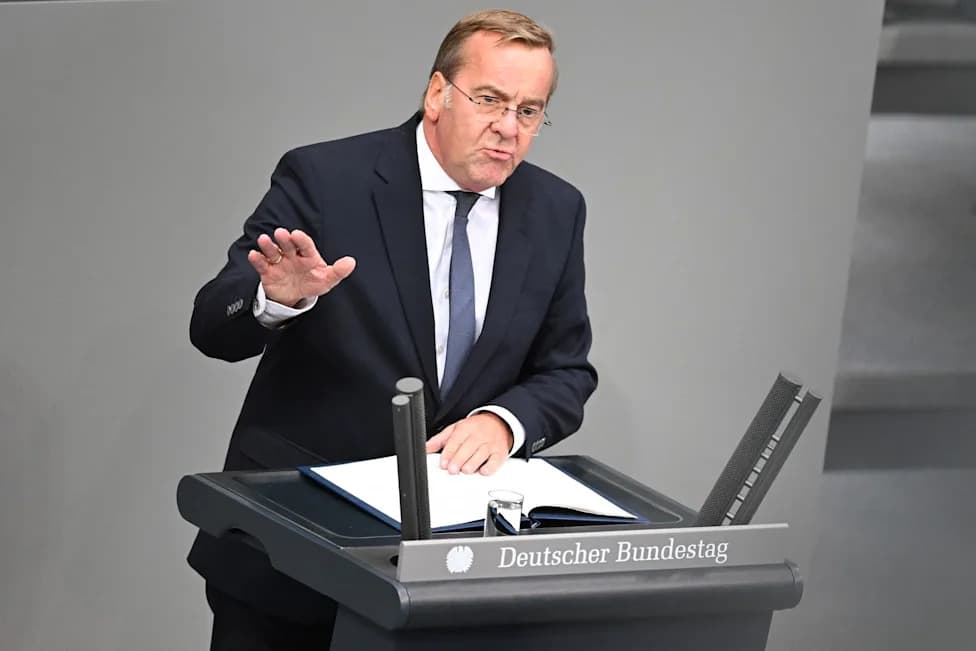
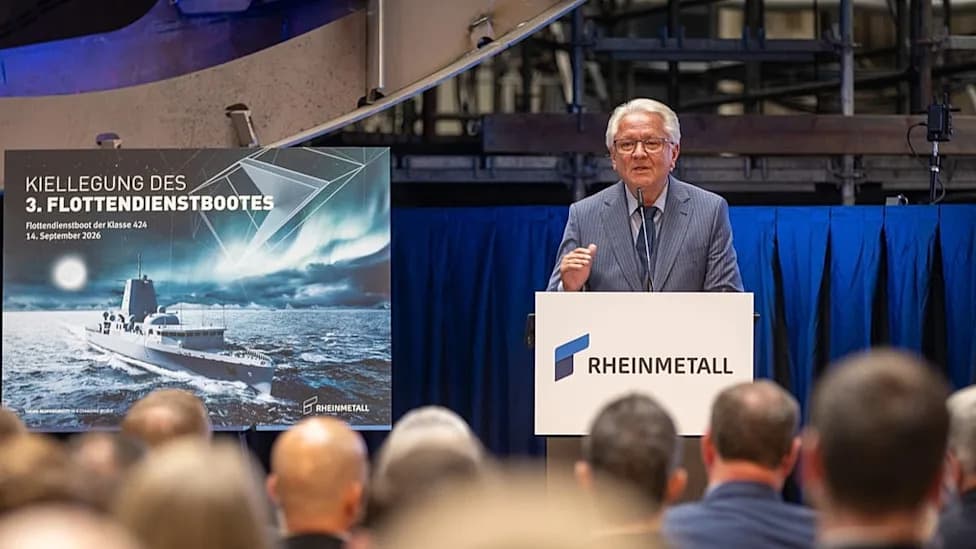
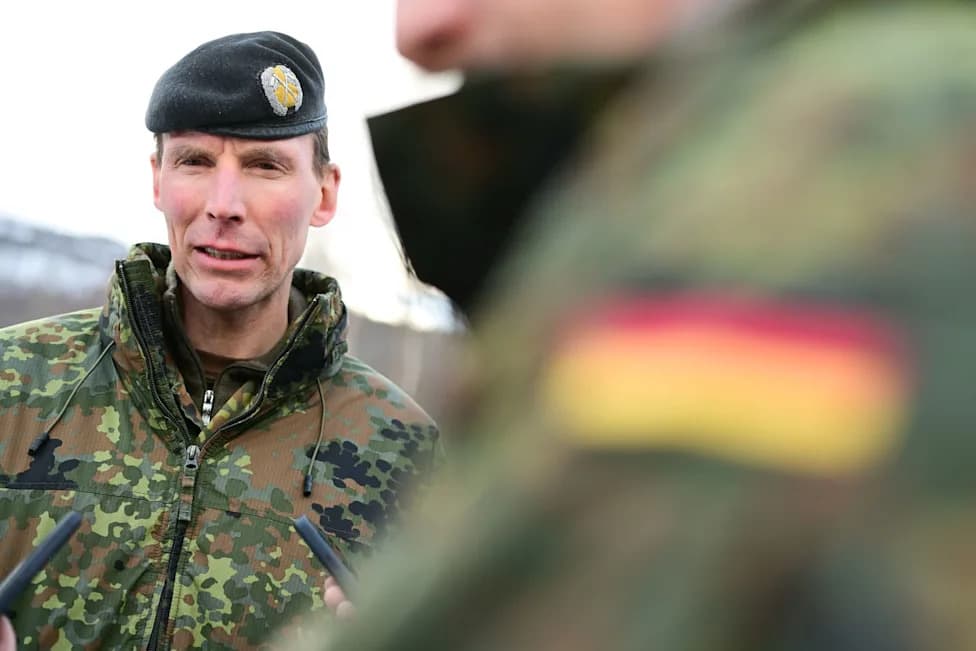
The German Defence Ministry rejected claims that it is prioritising tanks and ships over drones, AI and robotics, after IfW president Moritz Schularick warned the €700 billion fund risks being spent on older platforms rather than modern capabilities. Schularick argued that investments in AI, robotics, drones and satellites could both modernise the Bundeswehr and boost growth. The ministry said immediate readiness for a potential attack by 2029 dictates current purchases, with cutting‑edge technologies planned as a second phase.
Germany Defends Tank-and-Ship Spending as Economist Urges Shift to AI, Drones
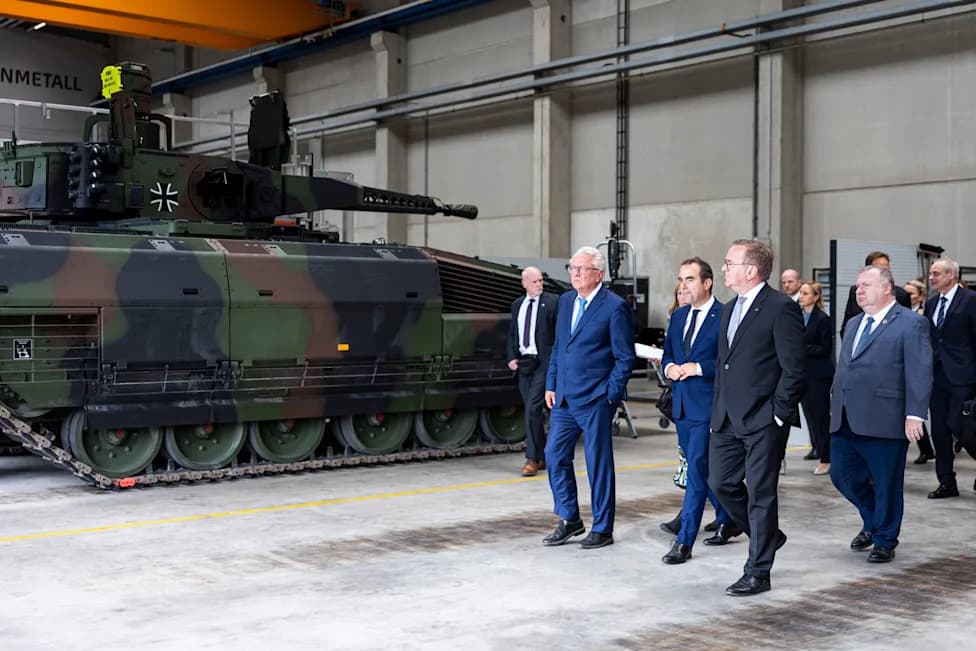
Armin Papperger (2nd L), CEO of Rheinmetall AG, France's Defence Minister Sebastien Lecornu (3rd L) and Germany's Defence Minister Boris Pistorius (4th L) walk past a Puma infantry fighting vehicle during a visit to the Rheinmetall plant, amid the Franco-German MGCS tank project. (is associated with: «German ministry rejects criticism of 'outdated' defence strategy») Michael Matthey/dpa
The German Defence Ministry on Monday pushed back against criticism that it is prioritising purchases of additional tanks and warships over investments in drones, artificial intelligence and robotics.
Moritz Schularick, president of the Kiel Institute for the World Economy (IfW), warned that the €700 billion fund earmarked for the Bundeswehr risks being channelled into legacy platforms instead of next‑generation capabilities. In comments published by the Süddeutsche Zeitung, Schularick said the largely debt‑financed programme could — if well allocated — both modernise Germany’s armed forces and stimulate economic growth.
"We have a lot of capital, a lot of industrial know‑how and in some areas still highly advanced technologies," Schularick said, highlighting Germany's industrial strengths. "What we do not have is hundreds of thousands of people who want to climb into tanks and drive to the front. That means: instead of more soldiers, more manned vehicles and more barracks, we must — wherever possible — rely on AI, robotics, drones and satellite technology."
Responding to those remarks, the Defence Ministry said the criticism missed the essential point. A ministry spokesman stressed that the Bundeswehr must be ready to deter or repel a possible attack by 2029, and that the immediate procurement choices reflect that operational urgency.
The spokesman acknowledged the importance of emerging technologies but said the newest systems cannot all be fielded within the short timeframe and will therefore form a second phase of capability development. That approach, the ministry argued, balances immediate readiness needs with longer‑term modernisation.
Why the Debate Matters
The exchange highlights a broader strategic trade‑off: investing now in conventional platforms to meet near‑term defence commitments versus redirecting funds toward autonomous systems, AI, and space assets that promise future asymmetric advantages. Both sides underscore valid points — immediate deterrence requirements and the economic and military potential of cutting‑edge technologies — leaving policymakers to balance urgency with innovation.
Implications: How the €700 billion is allocated could shape the Bundeswehr’s capabilities for decades, influence Germany’s defence industrial base, and affect wider economic outcomes if procurement choices spur domestic technological development.
Help us improve.