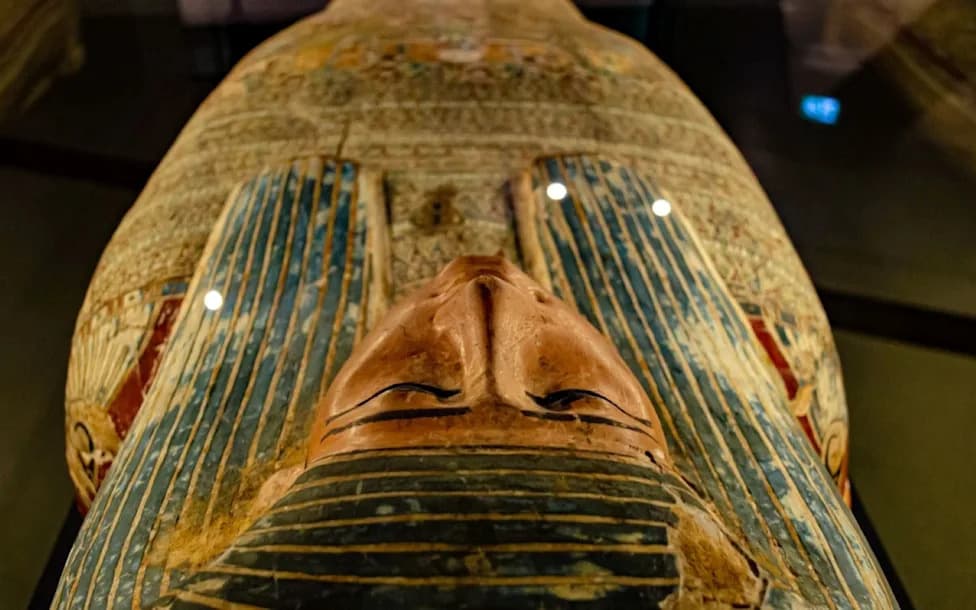
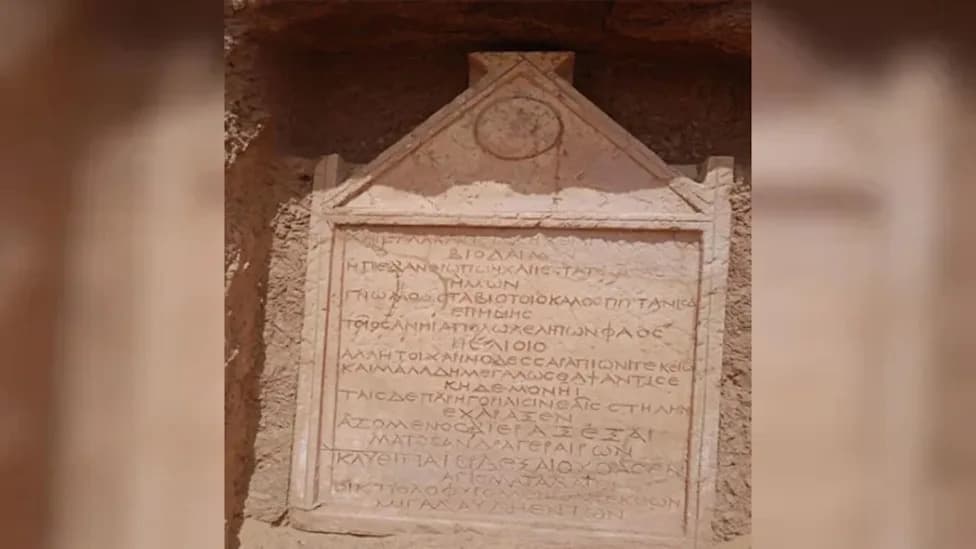
A Roman-era mummy recovered at Oxyrhynchus (Al Bahnasa), Egypt, was found with a papyrus fragment of Homer’s Iliad deliberately placed on the abdomen as part of the embalming ritual. Radiocarbon and contextual evidence date the burial to roughly 1,600 years ago, in the late Roman/early Byzantine period.
What Was Found
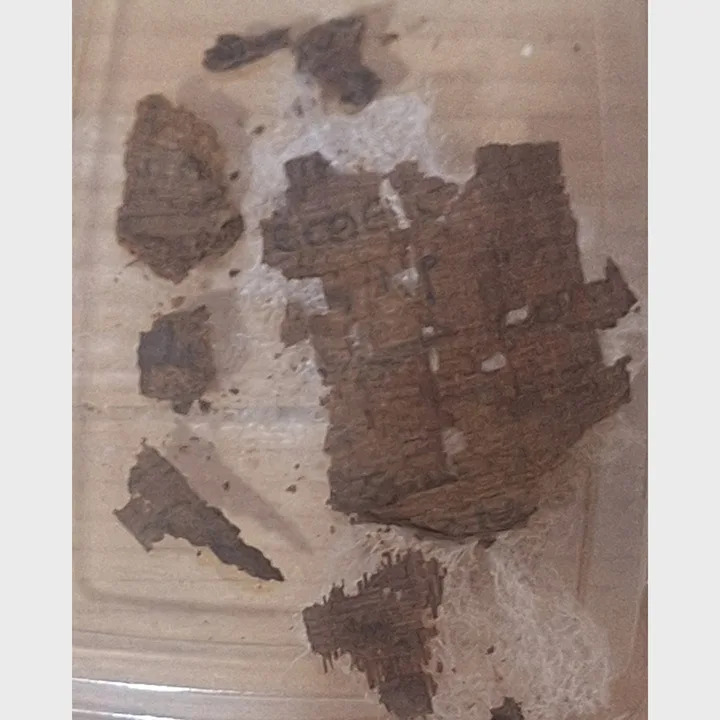
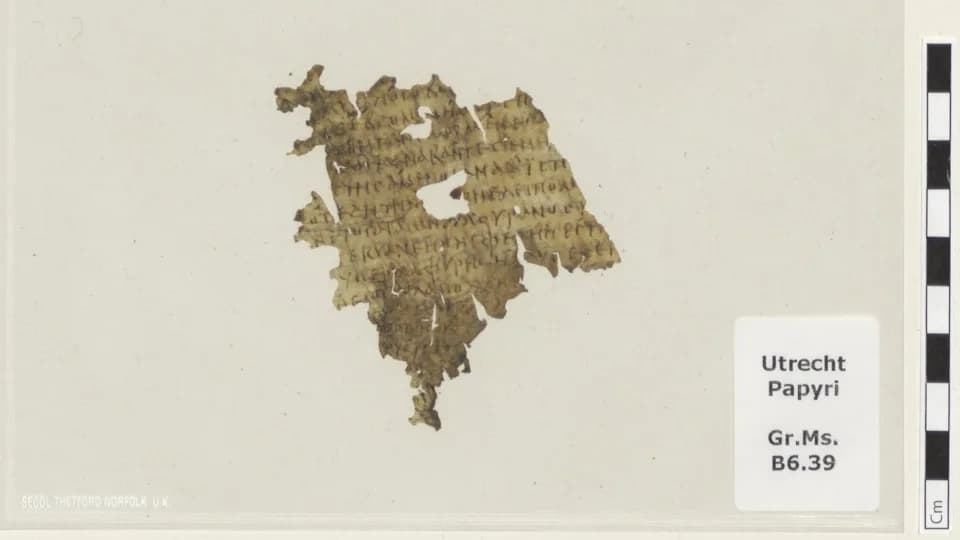
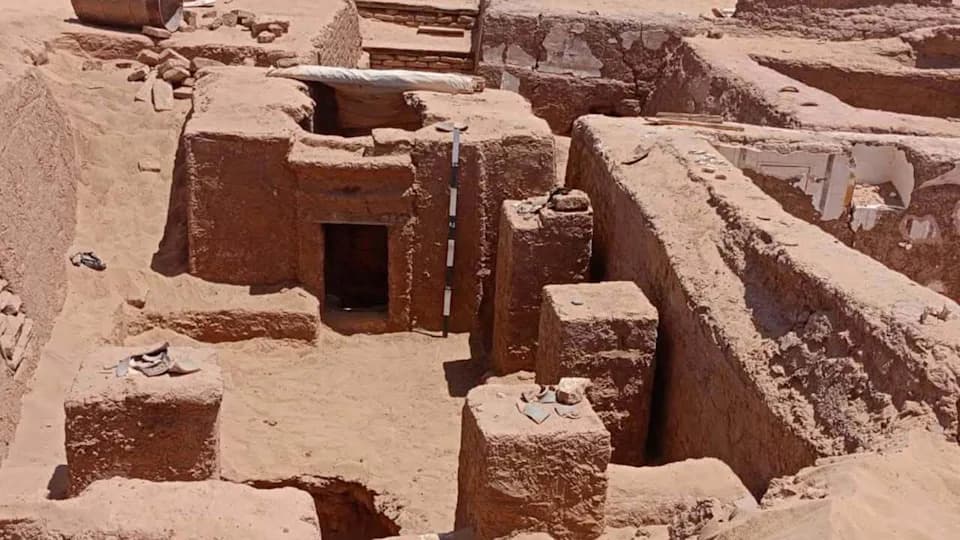
Conservators recorded a papyrus fragment resting directly on the mummy’s abdomen in Tomb 65, Sector 22 — a funerary complex containing three limestone burial chambers and decorated wooden sarcophagi, several of which show signs of ancient looting. Specialists identified the text as an excerpt from Book II of the Iliad, the Catalogue of Ships, a long roster (about 300 lines in tradition) listing Greek contingents, captains, and cities.
Why This Matters
While papyrus scraps frequently appear in Egyptian burials — ranging from administrative receipts to magical spells and ritual formulas — this is the first documented case in which canonical Greek verse appears to have been intentionally incorporated into the embalming process rather than lying nearby or being reused as packing material. An earlier find at Hawara had Homeric text near mummies, but lacked clear evidence of purposeful placement as part of mummification. The Oxyrhynchus case therefore marks a new category of mortuary practice.
Image: University of Barcelona
Archaeological Context and Team
Oxyrhynchus is one of the world’s richest papyrological sites, famed for preserving thousands of Greek texts in its arid conditions. The discovery was announced by the Oxyrhynchus Archaeological Mission; named team members include Maite Mascort, Esther Pons, Núria Castellano, Margalida Munar, Leah Mascia, and Ignasi‑Xavier Adiego. The team emphasizes that the fragment’s placement and preservation indicate deliberate inclusion during embalming.
Interpretation and Significance
The deliberate placement of Homeric verse on a body raises several interpretive possibilities: it could reflect the deceased’s cultural identity or education, a symbolic protective or commemorative function, or the blending of Greek literary culture with Egyptian mortuary customs in Roman Egypt. These explanations remain speculative, but the find opens new avenues for studying cultural interaction, literacy, and ritual practice in late antique Egypt.
Key point: This is the first clear example of canonical Greek literature intentionally used in a mummification context, expanding how scholars understand the role of texts in Roman Egyptian burial rites.
As Oxyrhynchus continues to be excavated and as conservation and imaging technologies improve, researchers expect further insights into how literary culture circulated and functioned in daily and ritual life across multicultural Roman Egypt.
Image credit: University of Barcelona / Oxyrhynchus Archaeological Mission.