Bahrain — Britain’s oldest Gulf ally — is positioning itself as a close strategic partner as the region undergoes deep change. The UK’s accession to C-SIPA and the UK–GCC trade deal provide a platform to deepen cooperation, especially in maritime autonomy. A proposed UK–Bahrain Centre for Maritime Autonomy would protect undersea cables and offshore energy, boost UK exports and improve regional security. Bahrain’s post‑2011 reconciliation experience and ties with Iran also make it a valuable partner for contingency planning.
Bahrain: Britain’s Strategic Gulf Partner — A Case for Maritime Innovation and Regional Planning
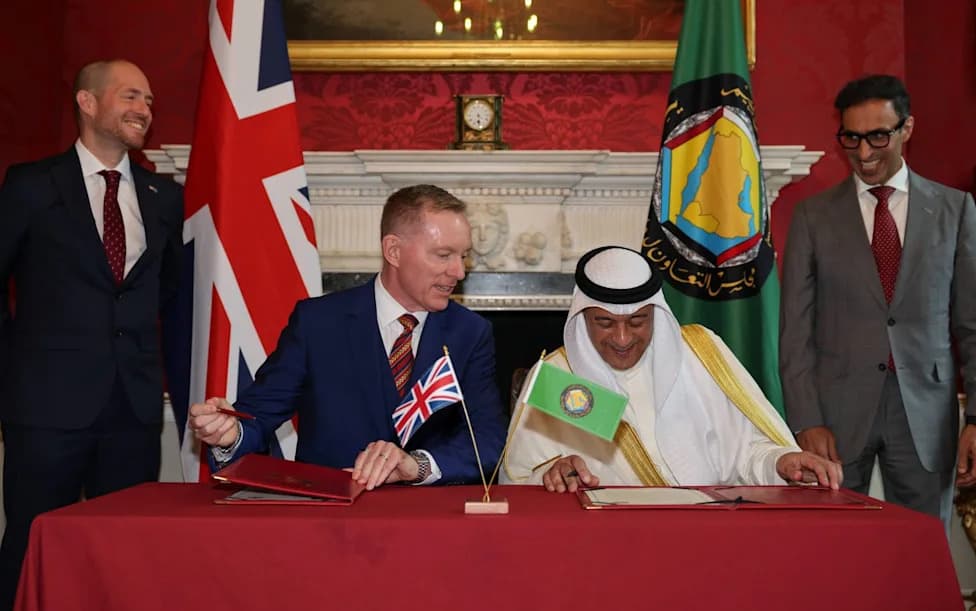
Sir Chris Bryant, the trade minister (centre left), and Jasem Mohamed Albudaiwi, secretary-general of the Gulf Co-operation Council (centre right), at Downing Street on May 20 - Adrian Dennis/Getty
Returning from Bahrain this week, I was struck not only by the warmth of Britain’s oldest Gulf ally but also by the seriousness with which its leaders are planning for the region’s future. Over several days I met Bahrain’s interior minister, the ministers for finance and national economy, transport and telecommunications, and information, as well as the deputy national security adviser — a Sandhurst graduate whose career underlines the long-standing ties between the two countries.
Strategic Momentum
Our conversations ranged across trade, defence, emerging technologies and regional security. A single theme threaded through every meeting: the Gulf is entering a period of profound strategic change, and Britain must ensure it has the right partners to navigate it. No country is better placed to be that partner than Bahrain.
The UK’s accession to the Comprehensive Security Integration and Prosperity Agreement (C-SIPA) marks a significant milestone in an already close relationship. It reflects a growing recognition in London that prosperity, security, technology and diplomacy are interconnected — and that they should be pursued through coherent, joint strategies rather than in isolation.
Maritime Innovation: A Practical Next Step
Bahrain already hosts Britain’s permanent naval headquarters east of Suez, possesses one of the Gulf’s most sophisticated financial sectors and maintains a regulatory environment that welcomes innovation. Above all, it has consistently proved itself a dependable strategic ally. The next logical step is to establish Bahrain as Britain’s principal Gulf hub for maritime innovation.
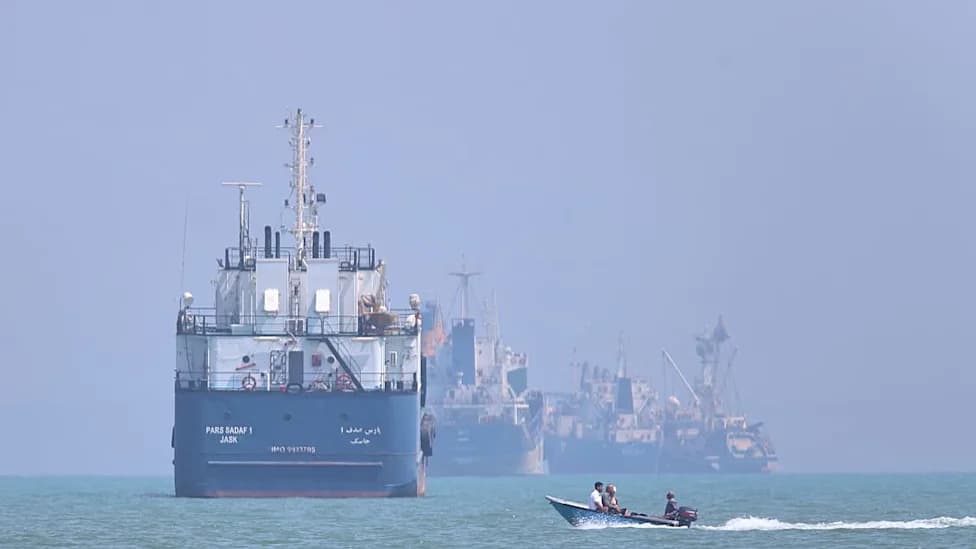
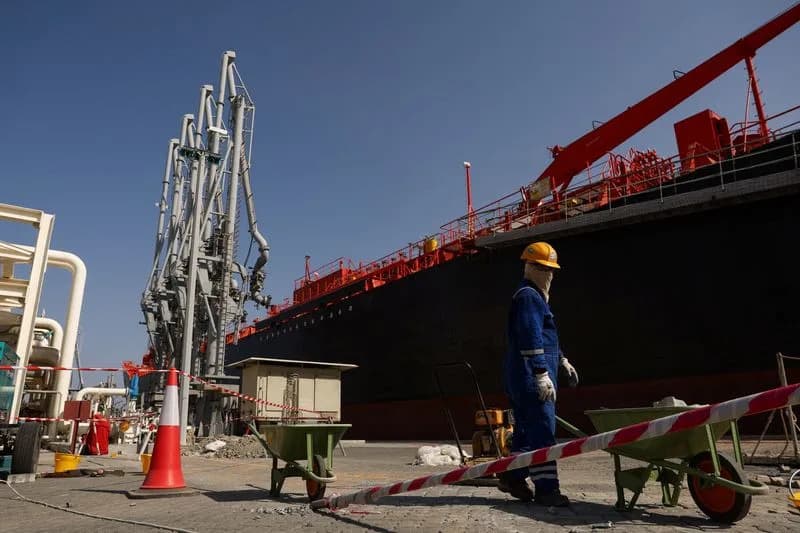
The character of naval warfare and maritime security is changing. Autonomous surface vessels, unmanned underwater vehicles and artificial intelligence are becoming as strategically important as frigates and destroyers. At the same time, undersea communications cables, energy pipelines and other offshore critical infrastructure are increasingly attractive targets for hostile states and non-state actors.
Britain is a global leader in autonomous mine countermeasures and unmanned maritime systems. Bahrain offers an ideal location to develop, test and deploy these capabilities alongside Gulf partners. A joint UK–Bahrain Centre for Maritime Autonomy could unite the Royal Navy, British industry and regional allies to pioneer autonomous mine clearance, protect subsea communications cables, secure offshore energy infrastructure and improve maritime domain awareness across one of the world’s most strategically vital waterways.
Such a partnership would support Britain’s industrial strategy, create export opportunities for UK defence and tech firms, and enhance collective regional security.
Securing Sea Lanes and Trade
The finance minister emphasised the duty of the international community to guarantee the freedom of maritime trade, particularly through the Strait of Hormuz. He noted that Bahrain was among the small number of countries that supported Operation Prosperity Guardian and argued for renewed international resolve to keep trade flowing — even as alternative proposals, such as Oman’s suggestion of a fund modelled on the Aids to Navigation Fund used for the Malacca Straits, continue to be discussed.
Preparing for Political Change in Iran
Iran remains one of the Middle East’s greatest strategic uncertainties. No one can predict when or how political change there might occur, but responsible governments should plan for contingencies now rather than react afterwards. I suggested during our talks that Bahrain could play a distinctive role in this planning.
Bahrain’s experience of national reconciliation after the unrest of 2011 — combined with its historic cultural and commercial links with Iran — gives it a perspective few neighbours possess. That understanding could prove invaluable should Iran ever enter a period of political transition. Bahrain’s approach emphasises that reconciliation involves administrative processes as well as moral commitments: inquiries, reinstatement, compensation, police oversight, employment, dialogue and institutional continuity.
As President Dwight D. Eisenhower observed: “Plans are worthless, but planning is everything.”
Too often, Western governments have concentrated on how conflicts begin rather than on how peace should be constructed. If political change does come to Iran, Britain and its allies should already be engaged with regional partners capable of promoting stability, reconciliation and economic renewal. Bahrain deserves to be among those partners from the outset.
Conclusion
History has given Britain and Bahrain an alliance spanning more than two centuries. C-SIPA provides a robust framework for future cooperation, and the UK–GCC free trade agreement opens further economic opportunities. A focused partnership on autonomous maritime technology could strengthen collective security, deliver industrial benefits for the UK and protect critical global trade routes.
Thoughtful contingency planning with trusted partners such as Bahrain could also help ensure that, whenever the next chapter of the Middle East begins, Britain and its allies are better prepared than they were in Iraq. That is a prize worth pursuing — and one Britain should seize now.
Help us improve.