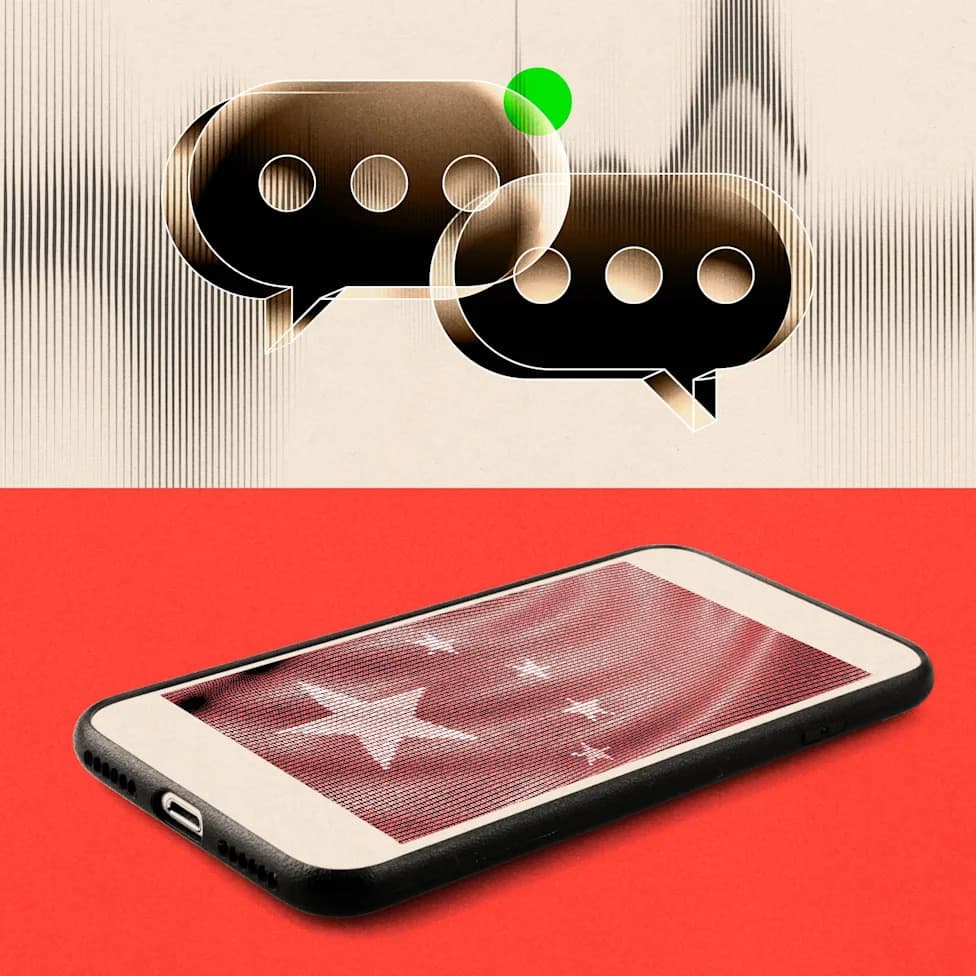
Major Chinese tech firms suspended AI companion services after new rules, effective July 15, banned emotionally manipulative content and required warnings about overreliance. Users like 24-year-old Li Linlin—who exchanged roughly 700,000 words with an AI partner—say they were left distressed and without a chance to say goodbye. Experts call the move precautionary and expect companies to develop alternative products, while social media erupted with complaints and attempts to migrate chat histories.
China's AI Companion Crackdown: Users Mourn as Virtual Partners Go Offline

Attendees pass by the Alibaba booth near a display which reads "Rest assured giving AI to Ali Cloud" at the World AI Conference held in Shanghai on July 17, 2026. (AP Photo/Ng Han Guan)(AP Photo/Ng Han Guan)
Li Linlin, 24, cried for days after losing access to the AI boyfriend she had messaged for years. Over two years she exchanged roughly 700,000 words with that virtual partner and says she never had a chance to say goodbye.
What the New Rules Require
On July 15, Chinese regulators introduced rules that bar AI platforms from producing content that manipulates users' emotions in ways that might prompt risky decisions, or that could provoke extreme feelings or unhealthy habits in children and teenagers. The rules also require platforms to provide clear risk warnings about overreliance on AI services and forbid marketing an app as a replacement for real-life social interaction.

FILE - Visitors gather at a display booth for Chinese technology firm Tencent at the China International Fair for Trade in Services (CIFTIS) in Beijing on Sept. 5, 2020. (AP Photo/Mark Schiefelbein, File)(AP Photo/Mark Schiefelbein)
Industry Response
Several major technology companies suspended AI companion services to comply. ByteDance, the developer behind TikTok, is among those that pulled the plug; others include Alibaba and Tencent, the owner of WeChat. Some companies are redirecting users to alternative products—such as apps focused on personalized characters and stories—but many users say substitutes fall short.
Expert Views
“This regulation is an attempt to balance the interests of service providers, users and guardians of minors,” said Yolanda Ma, a fellow at ERA, a UK-based nonprofit. Ma noted that China has a tradition of precautionary regulation and pointed to rare but serious incidents abroad where vulnerable people harmed themselves after interacting with AI companions.
Angela Zhang, a law professor at the University of Southern California, said Beijing has strong incentives to tighten oversight given observed psychological risks internationally, but she does not expect the rules to stop development of AI companions entirely; firms are already exploring alternatives.

FILE - Women wearing masks to prevent the spread of the coronavirus chat as they pass by the headquarters of ByteDance, owners of TikTok, in Beijing on Aug. 7, 2020. (AP Photo/Ng Han Guan, File)(AP Photo/Ng Han Guan)
Public Reaction
The shutdowns provoked a flood of complaints on social media. Some users uninstalled apps in protest, others attempted to upload or migrate chat histories to other platforms in an effort to resurrect virtual partners, and some organized online campaigns urging people to contact regulators and companies to express frustration.
Song Wenxin, a 22-year-old video industry designer in Chengdu, said she was not deeply attached to these services but empathized with those who were. She echoed public speculation that part of the clampdown reflects broader government policy to encourage higher birth rates: “Any virtual app getting women too engaged to give birth in real life gets banned,” she said, adding that she personally has no desire for children. Song also noted that newcomers to a city or people lacking social support sometimes rely on AI companions for companionship and practice social interaction.
Looking Ahead: Regulators and companies now face a delicate trade-off: protecting users—especially young or vulnerable people—while allowing room for innovation in conversational AI. How firms redesign companion services and how users adapt to replacements will shape the future of these virtual relationships.
Help us improve.