AegeanTec divers have located what may be the only surviving Leichte Schnellboot-class torpedo boat, LS 6, lying nearly upright at about 96 m (315 ft) between Lefkada and Preveza after an 11-year search. The wreck retains distinctive Junkers Jumo engines, a towing cable, and an aluminum hull—features that make it unusually valuable to maritime archaeologists and historians. The find highlights how archival research and technical diving can recover and protect underwater cultural heritage.
Nearly Intact German WWII Torpedo Boat (LS 6) Found Off Greece After 83 Years
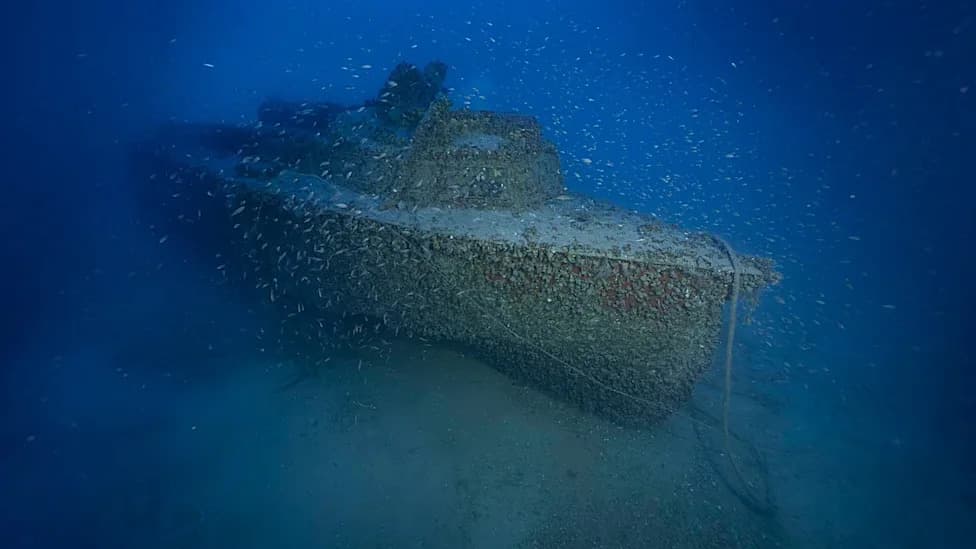
Photo Credit: AegeanTec
Researchers report the discovery of a nearly intact German World War II torpedo boat on the seabed of the Ionian Sea, closing an 11-year search and potentially revealing the only surviving example of its class.
Discovery and Identification
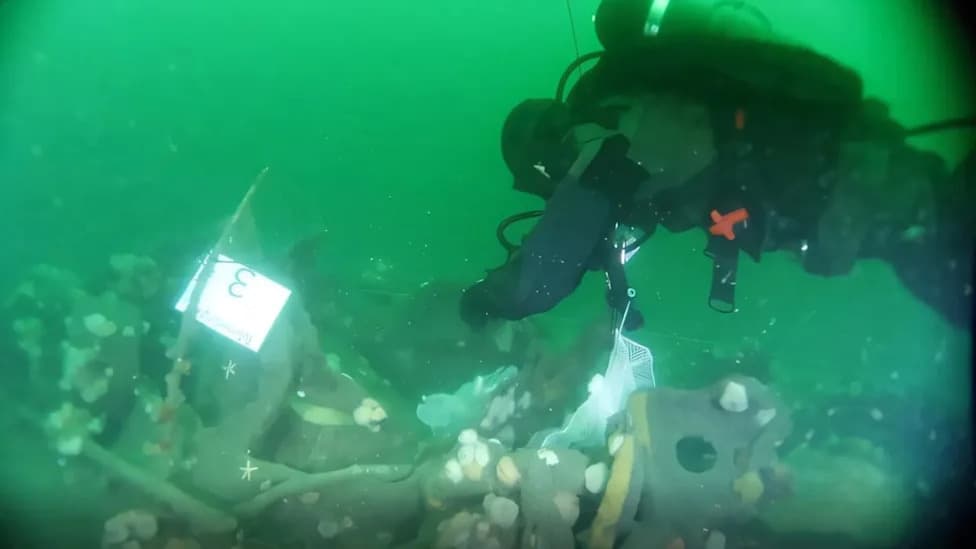
The wreck has been identified as Leichte Schnellboot 6 (LS 6), a rare German "Light Fast Boat" that sank in September 1943. AegeanTec located the vessel lying almost upright at about 96 meters (315 feet) depth in the waters between Lefkada and Preveza.
The search began in 2013 after German naval historian Peter Schenk highlighted records describing a small Kriegsmarine craft lost while under tow. Historical researcher Giorgos Karelas used wartime archives to narrow the search area, and the AegeanTec team reached the site using closed-circuit rebreather gear.
How Researchers Identified the Wreck
Investigators identified the boat from several distinctive features: the presence of Junkers Jumo engines, the vessel's measured dimensions and construction details, and a towing cable still attached to the bow. If confirmed, LS 6 would be the only surviving Leichte Schnellboot-class craft known worldwide.
Why the Find Matters
LS 6's construction is unusual for wartime small craft: it used a lightweight aluminum hull designed for increased speed and maneuverability during special operations. The unusually good condition of the wreck—despite eight decades underwater—offers maritime archaeologists and historians a rare opportunity to study wartime naval experimentation, construction techniques, and the circumstances of the boat's loss.
"Some pursuits of hidden wrecks are measured in meters. Others are measured in years…"
—Marinos, AegeanTec
Preservation and Heritage
The discovery demonstrates how methodical archival research paired with advanced technical diving can recover long-lost pieces of history. Once formally recorded and protected, the site can be studied responsibly and shielded from looting or unregulated disturbance, supporting broader efforts to document underwater cultural heritage.
In upcoming reports, AegeanTec plans to publish the evidence behind the identification and more detailed documentation of the wreck and its onboard features.
Help us improve.