Stacy Librandi arrived in Haiti after the Jan. 12, 2010 earthquake and stayed, founding HERO (Humanitarian Emergency Response Organization). What began as improvised aid distribution evolved into Haiti’s first locally run, 24/7 emergency medical, ambulance and medevac service. HERO now operates 10 ambulances, four helicopters and employs roughly 120 people—about 95% Haitian—and has added a security arm, HALO, following the 2021 unrest.
From Volunteer to Lifeline: How Stacy Librandi Built Haiti’s 911

A volunteer arrived in Haiti after the earthquake. Now, she runs a Haitian 911.
Stacy Librandi landed on the Port-au-Prince tarmac days after the Jan. 12, 2010 magnitude-7 earthquake expecting to stay a week. Sixteen years later she remains in Haiti as the founder and CEO of HERO (Humanitarian Emergency Response Organization), the country's first locally operated, 24/7 emergency medical, ambulance and medevac service.

Librandi and her team standing with the U.S. Coast Guard. The Coast Guard thanked HERO for providing
A Moment That Changed a Life
What she found on the airfield — tents, thousands of people and supplies rotting in the sun — compelled Librandi to act. With a small team and an English–Creole translator, she began organizing aid distribution and returning the next day with clear instructions. That simple, pragmatic approach scaled into broader coordination with international agencies and ultimately a new model for emergency response in Haiti.
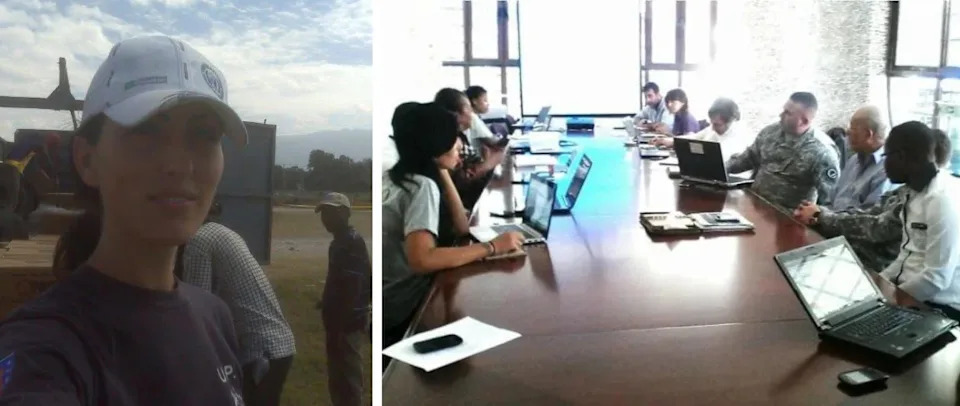
Left to right: Librandi at the Port-au-Prince airport in 2010 in front of the box truck her and her team filled with aid; Librandi and the HERO team meeting with the U.S military and disaster relief officials in Haiti around 2016. / Credit: Photos from Stacy Librandi
From Ad Hoc Relief to a National Service
Librandi lived and worked alongside Haitian colleagues, taking EMT courses and experimenting with funding models. Her breakthrough was a low-cost membership program — roughly $100 USD a year for ambulance and EMT coverage — supplemented by contracts with insurance companies, ports, manufacturers and tourism boards. A 2012 donated ambulance accelerated growth and allowed HERO to expand services across Haiti's 10 departments.
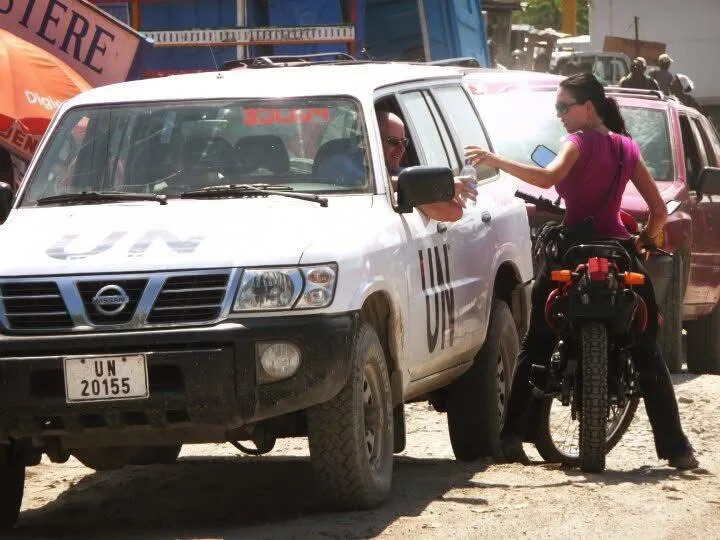
Librandi on her motorcycle in Haiti. / Credit: Photo from Stacy Librandi
"I never saw my life going this way," Librandi told 60 Minutes. "I just came down thinking I am going to give this a complete shot. And that was when I was born in a lot of ways."
Scaling in a Time of Crisis
HERO now operates a fleet that includes 10 ambulances and four helicopters, and employs roughly 120 people — about 95% of whom are Haitian. The staff mix includes EMTs, emergency managers, surgeons, search-and-rescue specialists, communications and geospatial experts, and even a dentist. The organization works closely with local hospitals and holds contracts with the U.S. Embassy, the U.S. State Department and the Haitian National Police.
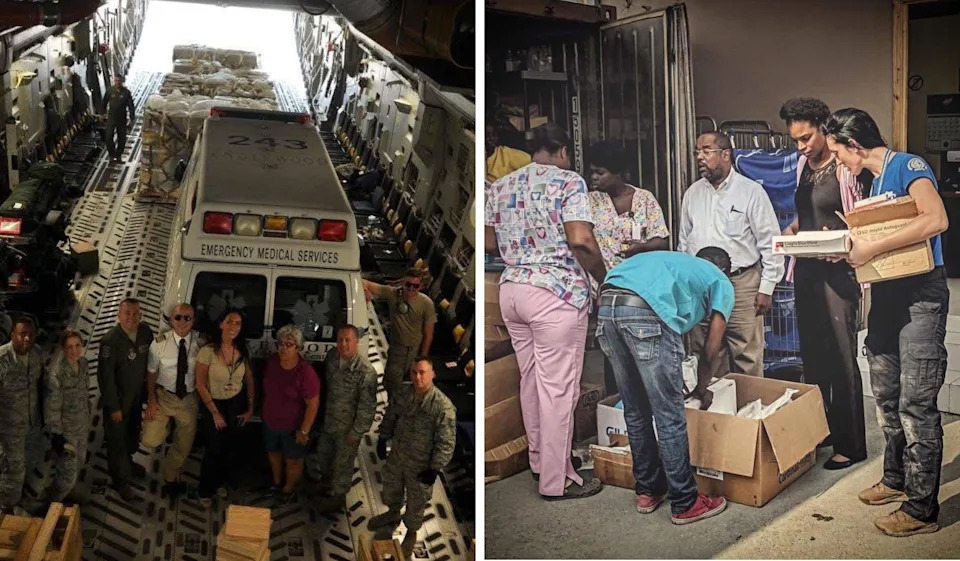
Left to right: HERO's first ambulance was donated in 2012, flown in from the U.S.; Librandi and a team organize aid for Haiti. / Credit: Photos from Stacy Librandi.
Security, Medevac and New Challenges
After the 2021 assassination of President Jovenel Moïse and the ensuing surge in gang violence, HERO adapted once again. Librandi coordinated high-risk medevacs — including an evacuation from the president's office — helped stranded internationals and established an aviation capability. To protect staff and operations, she and partner Coralie Caze launched HALO Solutions Firm, a security arm staffed by former military personnel and supported by armored vehicles.
Looking Ahead
HERO plans to open a Level II Trauma Center by summer's end and has had recent discussions with delegations from South America and Africa about exporting the model. Its combination of local staffing, institutional contracts and a pragmatic membership approach has helped keep it one of the few fully operational emergency-response organizations in a country where many international NGOs have withdrawn.
This article was originally published on March 15, 2026.
Help us improve.