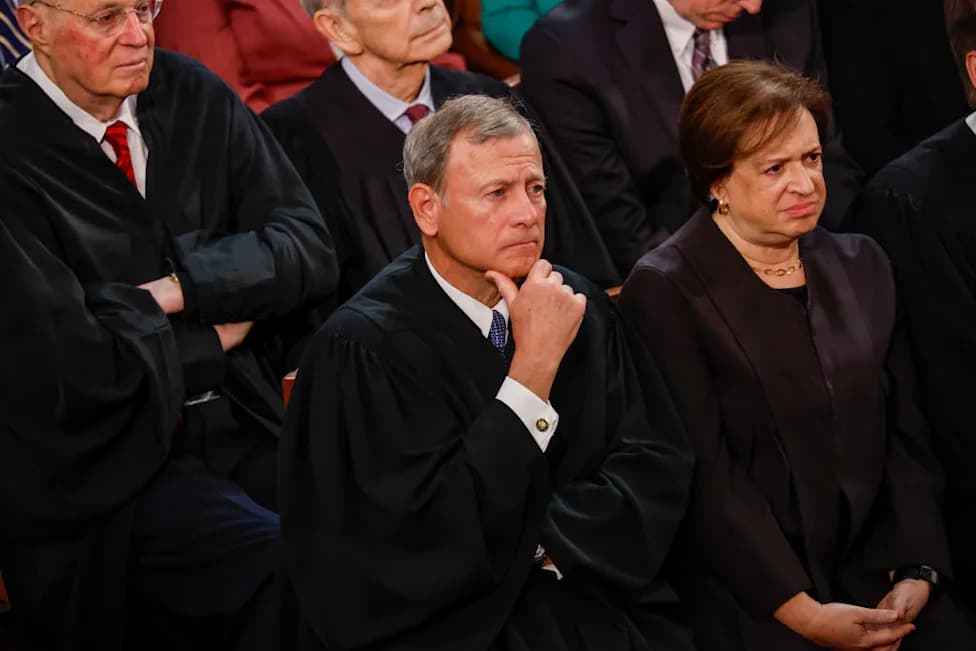
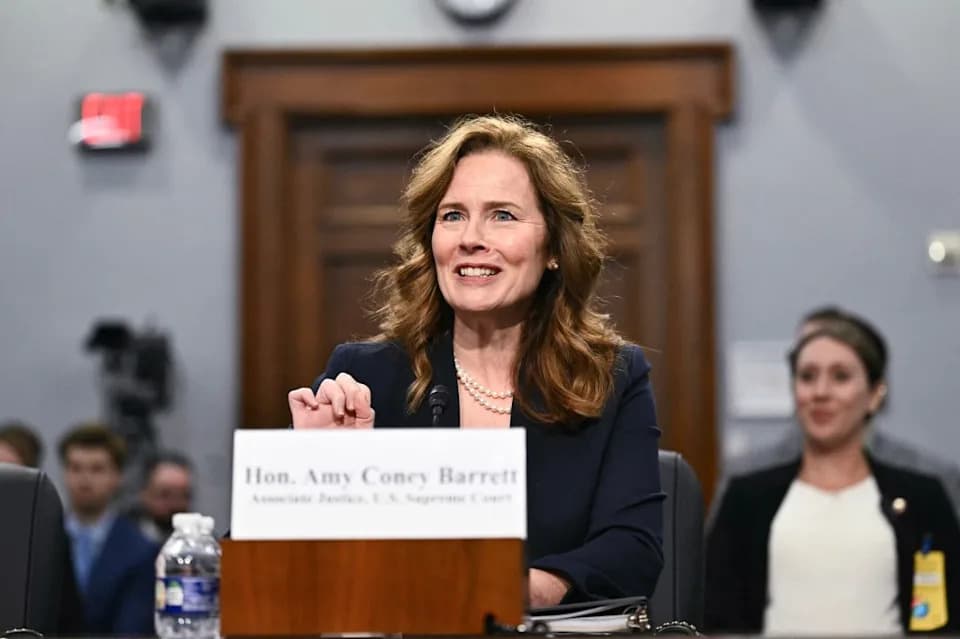
The Supreme Court issued two divergent rulings: Trump v. Slaughter allows the president to remove certain agency heads at will, while Trump v. Cook preserved removal protections for Federal Reserve Governor Lisa Cook. The author argues that insulating key policymaking from democratic control — even for sound reasons like protecting monetary stability — can reduce voters' incentives to elect capable leaders and weaken accountability. Restoring some political control over major levers of policy could strengthen democratic incentives without abandoning technocratic expertise.
The Unaccountability Trap: How Insulating Agencies Can Erode Democratic Incentives
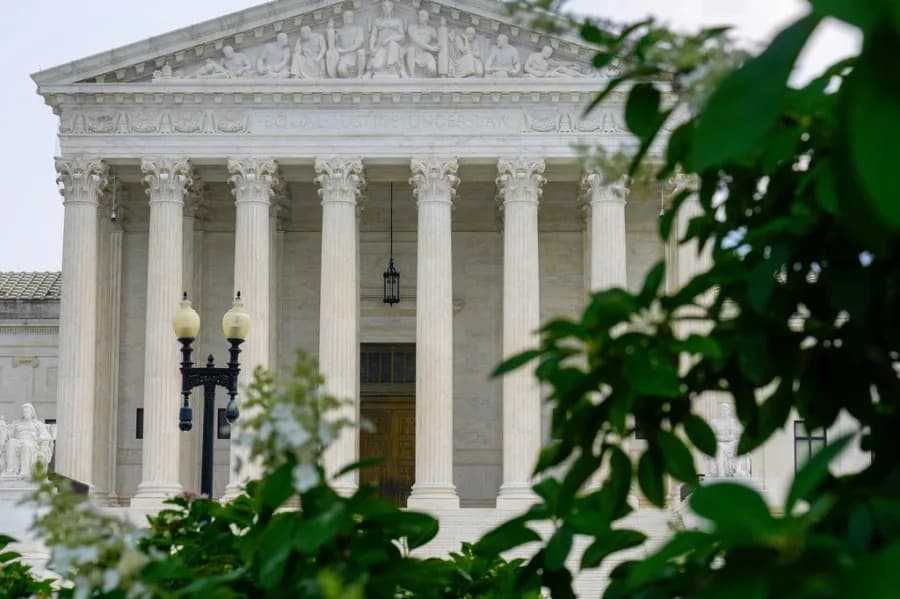
Earlier this summer, the Supreme Court issued two contrasting decisions that reshape the balance between presidential authority and independent agencies. In Trump v. Slaughter, the Court held that the president may remove at will the heads of certain so-called independent agencies, reasoning that the Constitution vests executive power in the president and requires him to ensure the laws are faithfully executed — a function that demands control over subordinates exercising executive authority.
On the same day, however, the Court reached a different result in Trump v. Cook, preserving removal protections for Federal Reserve Governor Lisa Cook after President Trump attempted to oust her, citing alleged false statements related to a mortgage. The majority in Cook relied on contested historical analogies to earlier national banks and emphasized the perceived economic risks of politicizing the Federal Reserve.
Putting aside debates about historical interpretation, there is wide agreement that monetary policy should be insulated from short-term political pressures. We generally distrust elected officials to resist electoral incentives to "juice" the economy before elections. At oral argument, Paul Clement, representing Governor Cook, stressed that markets and the public must have confidence that the Fed is independent of the president and Congress so they believe rate moves reflect prudent management rather than political expediency.
Chief Justice John Roberts, in his majority opinion in Cook, warned of "the calamities that could arise from even the 'suspicion' of political manipulation of monetary policy." Justice Brett Kavanaugh, concurring, cautioned that uncertainty about the Fed's status "could spark political upheaval ... as well as turmoil in the U.S. and world economies." At the same time, scholars at the Cato Institute have argued that clear monetary-policy rules set by Congress may matter more than institutional independence alone.
But the appeal of insulating policy-making from democratic control carries a trade-off. By removing the most consequential levers of policy from regular political contestation, we risk dulling voters' incentives to demand capable, serious leaders. When institutions that most affect everyday economic life operate outside direct political control, voters may discount candidates' competence and instead reward spectacle, grievance, or performative behavior at the ballot box.
It is true that some major departments — State, Defense and Justice, among others — have long been subject to political control. Yet polling shows that voters consistently place inflation and the economy among the nation's top concerns. The Fed, which manages monetary policy, therefore occupies an outsized place in public attention: "There's a reason that the markets watch the Fed a little more closely than they watch really any other agency of government," Clement observed.
Technocratic expertise matters. But policymaking inevitably involves trade-offs that require judgment — judgment informed by experts but ultimately exercised by accountable representatives. By allowing Congress to cede substantial authority to the executive branch and to independent agencies, we may have weakened democratic incentives for selecting the kind of leadership we would prefer if voters saw those powers directly in play.
Designing institutions to channel and check political ambition is wise — the framers did that. But when policy bodies are structured to circumvent democratic accountability, they can foster political passivity and erode self-government.
The Slaughter decision moves in the direction of restoring constitutional structures that align political incentives with responsibility. The Cook decision, however, preserves a zone of electorally insulated decision-making at the Fed, potentially blunting any democratizing effects of Slaughter. The goal is not to eliminate expertise from governance — rather, it is to ensure comparable competence across the full range of public offices and to preserve incentives for voters to demand serious stewardship from their leaders.
Molly Nixon is a senior fellow at the Cato Institute, where she studies executive power, its constitutional limits, and its history.
Copyright 2026 Nexstar Media, Inc. All rights reserved. This material may not be published, broadcast, rewritten, or redistributed.
Help us improve.