A Bangor University study shows that Timema stick insects, which have reproduced asexually for roughly one million years, still retain dosage compensation—the mechanism that balances gene expression between males and females. Researchers examined gene expression in the rare males that appear in these populations and discovered the balancing system remains functional despite being apparently redundant. The findings, published in PNAS, suggest some genetic regulatory systems can persist long after their original selective pressure disappears.
Asexual Stick Insects Keep Male–Female Gene Balance After ~1 Million Years, Study Finds
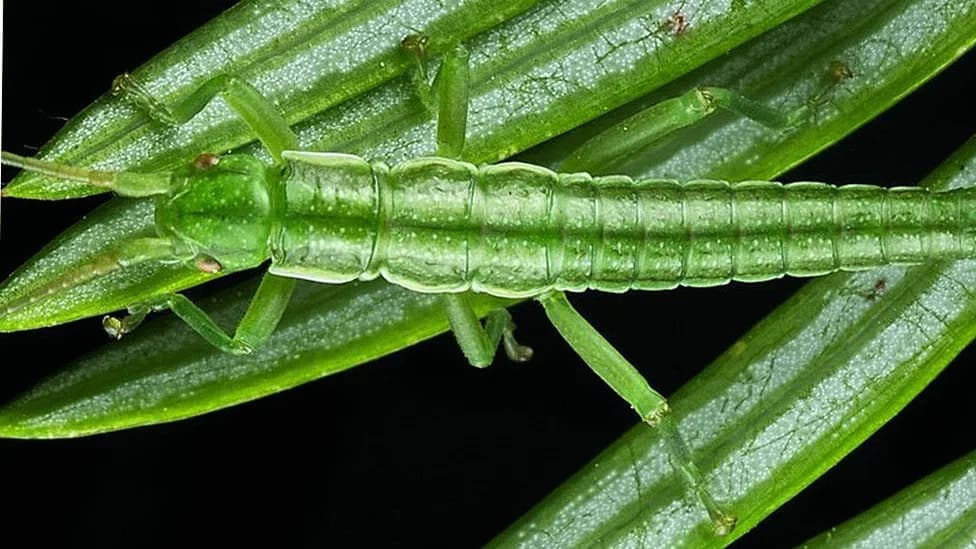
Experts say Timema have reproduced without needing sex for about a million years [Bart Zijlstra Photography]
A new study led by researchers at Bangor University finds that Timema stick insects that have reproduced asexually for about a million years still retain the molecular machinery that balances gene expression between males and females.
What the researchers studied
Timema are small, wingless stick insects native to the western United States. Several Timema lineages reproduce by parthenogenesis — a form of asexual reproduction in which embryos develop from unfertilised eggs. Because these populations are overwhelmingly female and males are extremely rare, scientists expected the systems that equalise gene output between sexes to have decayed over evolutionary time.
Dosage Compensation: Why It Matters
Each cell carries chromosomes made of DNA, and genes on these chromosomes are expressed at different levels depending on cell type and sex. Males and females often differ in sex-chromosome number (for example, XY males vs XX females), so many species have evolved dosage compensation—mechanisms that balance gene expression from sex chromosomes between the sexes.
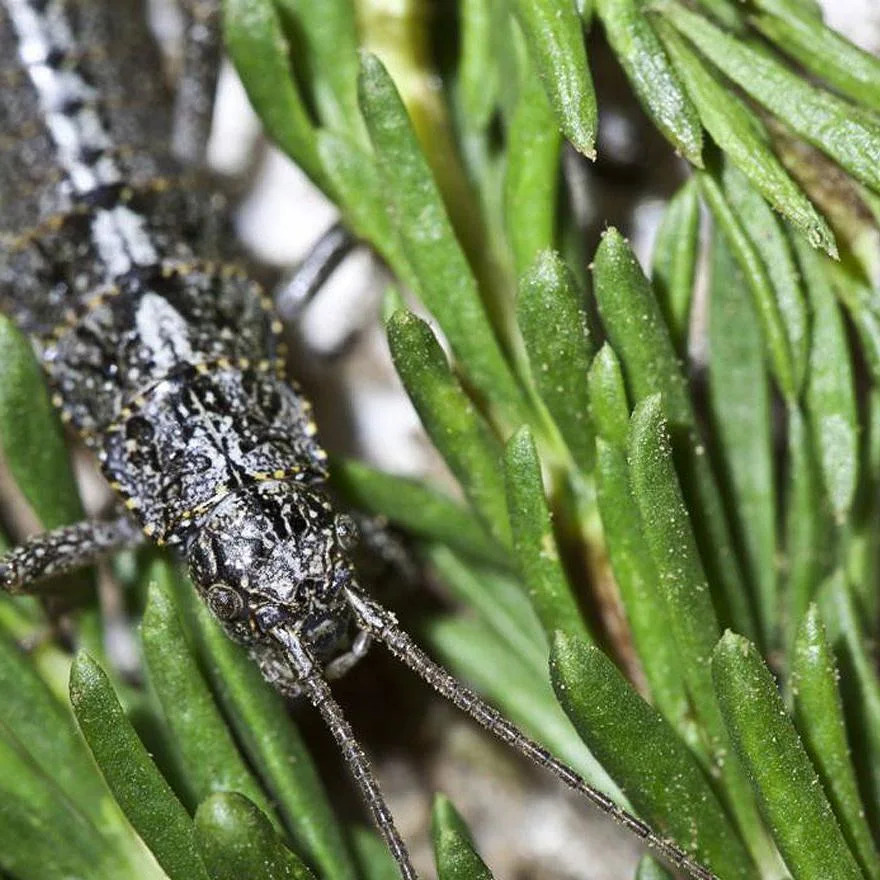
Timema are wingless stick insects native to the western United States [Bart Zijlstra Photography]
Surprising Findings
Instead of finding a breakdown of dosage compensation, the team measured gene expression in the rare males that occasionally appear in these asexual Timema populations and found that dosage compensation mechanisms remained largely functional. In other words, the regulatory system that equalises gene expression between sexes persisted even though it has been apparently redundant for roughly one million years.
Why this is important
The result challenges the expectation that unused molecular systems will necessarily degrade quickly. It suggests some genetic regulatory mechanisms are unusually stable over long evolutionary timescales, with implications for how we understand the maintenance and loss of genetic functions when selective pressures change.
“That’s the question we set out to answer,” said Dr Darren Parker, lecturer in evolutionary biology at Bangor University. “By investigating gene expression in rare males, we found that dosage compensation had not decayed as expected, but remained functional despite more than a million years without regular sexual reproduction.”
The study is published in the Proceedings of the National Academy of Sciences (PNAS).
Help us improve.