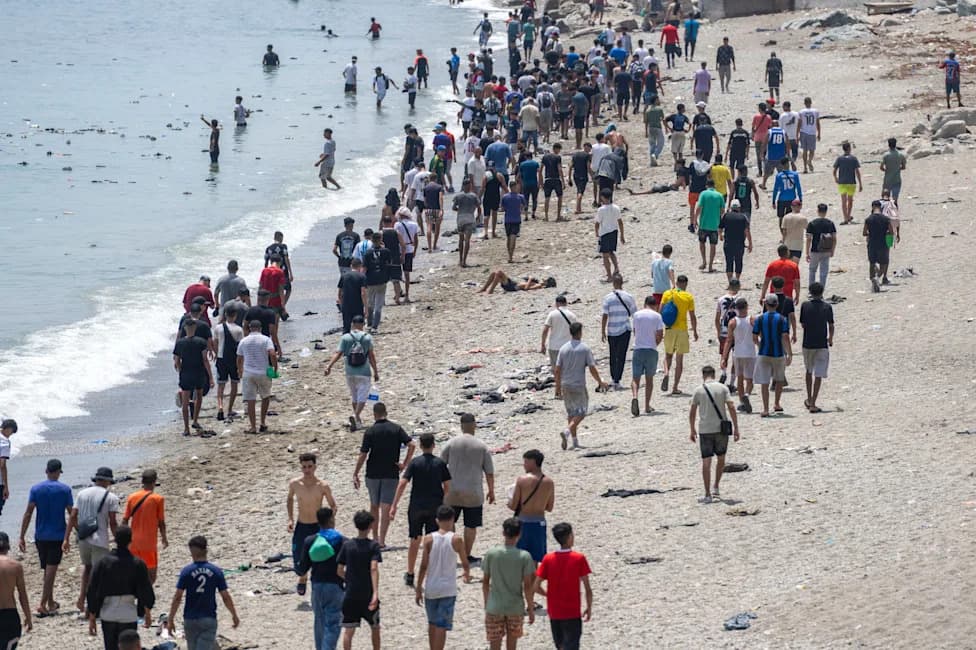
Mass crossings into Ceuta have reignited tensions over Europe's open-border Schengen system after roughly 78,000 migrants entered the Spanish exclave. Italy closed air and sea links to Spain and Madrid retaliated with border checks, while Brussels has offered statements but little decisive action. Several Schengen states now operate internal controls, and the UK — outside Schengen — faces rising Channel crossings in 2026 with no clear government plan to stem them. The episode highlights growing calls for a rethink of Schengen and coordinated European responses to weaponised migration.
Ceuta Crisis Exposes Schengen's Fractures — Europe's Open-Borders Fantasy Is Evaporating
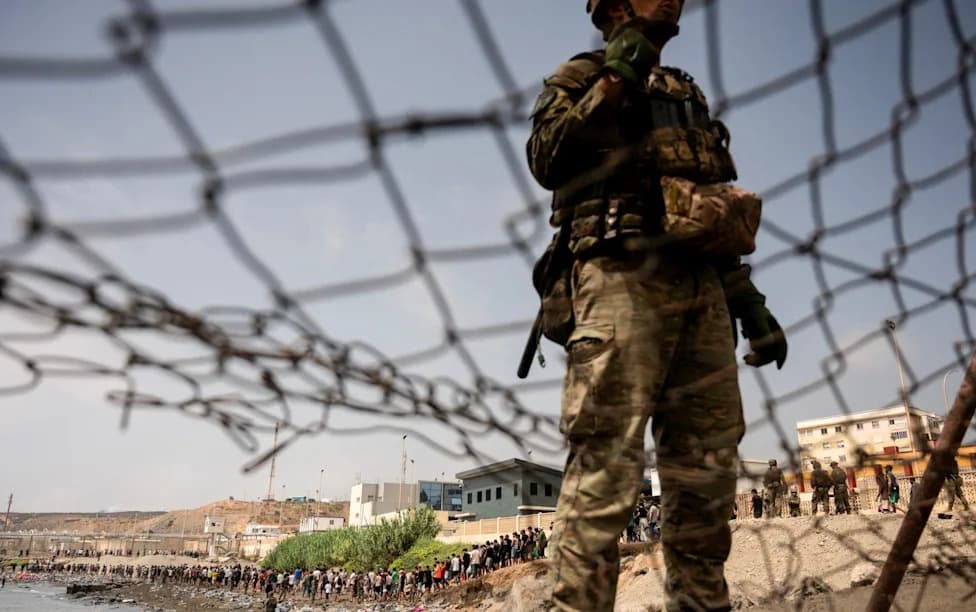
Around 78,000 migrants broke across the border from Morocco into the Spanish exclave of Ceuta - Jorge Guerrero/AFP
Europe's experiment with virtually open internal borders is under fresh stress after a major migrant surge in Ceuta triggered reciprocal controls between EU states. What began as a humanitarian and security challenge in the Spanish exclave has quickly become a political flashpoint for Schengen and for countries outside the pact, including the UK.
What Happened in Ceuta
Roughly 78,000 migrants crossed from Morocco into Ceuta in a short period, prompting Italy to close its air and sea links with Spain on security grounds. Madrid responded by imposing checks on travellers from Italy and accused Rome of staging a political maneuver. Meanwhile, Brussels has issued public statements but has so far avoided decisive intervention.
Schengen Under Strain
The Schengen Agreement, created in 1985 to allow passport-free travel across much of Europe, was designed for a different era. In recent years migration has been increasingly described as being weaponised — with countries such as Turkey and Belarus, and now Morocco, accused of manipulating cross-border movements to gain leverage. That has turned the Schengen framework into a perceived liability for some national-security planners.
In practice, several member states have reinstated internal controls: Germany has reintroduced checks with Poland twice in three years, Italy maintains controls on its border with Slovenia, and overall as many as nine Schengen countries — including Sweden and France — currently operate internal checks despite the agreement's original intent.
Implications for the UK
Though the UK is not part of Schengen, it is not immune to the fallout. Channel crossings continue: 2026 is shaping up to be one of the worst years for small-boat arrivals since the crisis began in 2018. About 5,000 people are reported to remain in Ceuta, raising concerns some may try to reach mainland Europe and then attempt the Channel crossing.
Legal migration levels also remain high, placing pressure on public services and feeding social tensions. After Brexit, the UK sets its own border policy; yet the current Labour government has not presented a clear, publicly communicated strategy to reduce crossings, prompting calls for a robust plan from ministers.
What Comes Next?
Expect more short-term border measures, bilateral pressure between affected states, and renewed debate in Brussels about whether Schengen needs fundamental reform to cope with modern migration tactics. The immediate priorities for governments are managing humanitarian needs in Ceuta, preventing destabilising onward flows, and coordinating a coherent policy response across Europe.
Bottom line: The Ceuta surge has exposed weaknesses in Europe's open-border arrangements and forced governments to balance security, humanitarian obligations, and political accountability.
Help us improve.