The study from Florida State University shows that metamorphism — heat-driven gas release from buried rocks — likely amplified volcanic emissions and helped trigger severe ancient extinctions. Sulfur released during metamorphism produced short cooling pulses, while carbon dioxide accumulated and caused long-term warming; their overlap produced repeated temperature swings. The findings highlight emission duration, not just eruption intensity, as a key driver of climate instability and ecosystem collapse.
Underground Gas Releases Amplified Volcanic Crises, Driving Ancient Climate Swings and Mass Extinctions
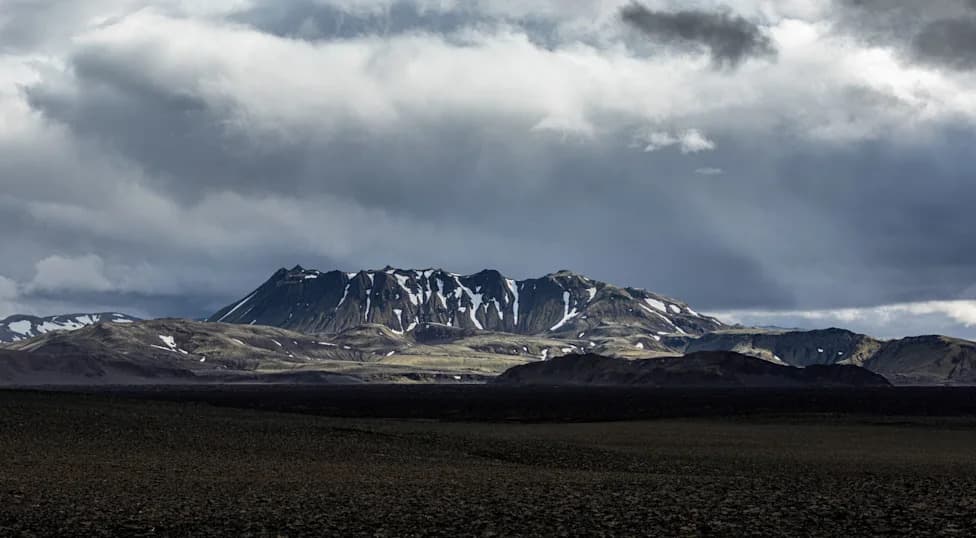
New research shows gases from heated underground rocks may have caused climate swings that led to ancient mass extinctions. (CREDIT: Shutterstock)
New research from Florida State University shows that heat-driven gas release from rocks deep beneath the surface — a process called metamorphic devolatilization — likely amplified the climate disruption caused by large volcanic provinces and helped trigger some of Earth's most severe mass extinctions.
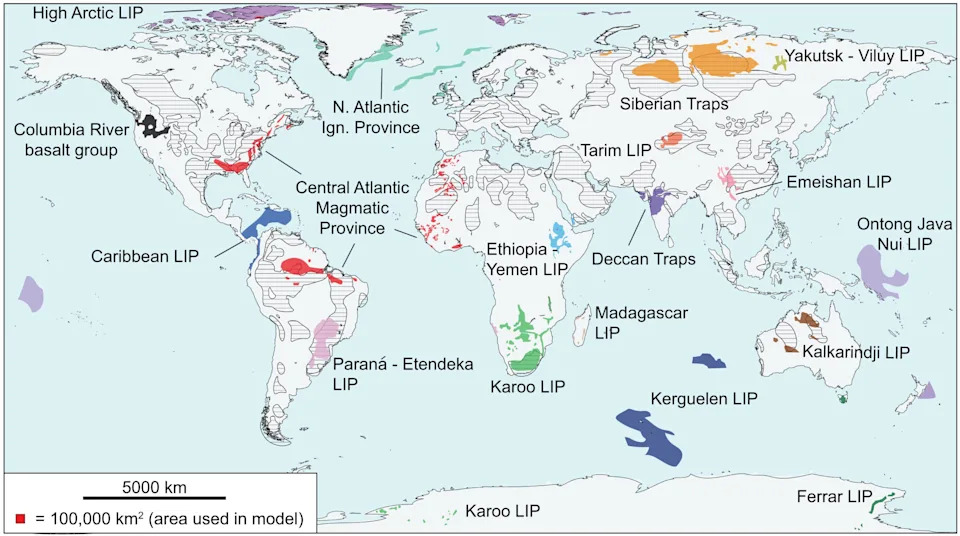
LIPs and shale basins. (CREDIT: Science Advances)
The study, published in Science Advances, argues that metamorphism of carbon- and sulfur-rich sedimentary rocks around intruding magma produced a sustained, secondary source of greenhouse gases and aerosols. Unlike explosive volcanic eruptions, which release large pulses of gas and ash quickly, metamorphic gas release can be prolonged as heat migrates through thick basins.
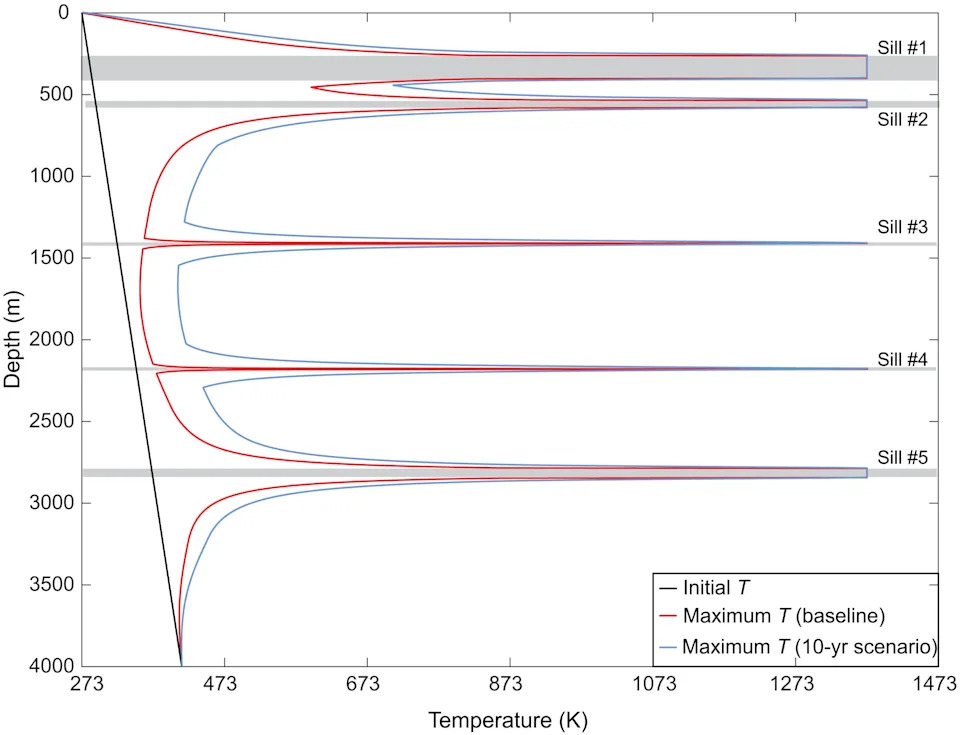
Thermal modeling of intrusion. (CREDIT: Science Advances)
How Metamorphism Releases Gases
When molten rock intrudes into the crust it cooks surrounding sedimentary layers. That heating alters minerals and forces volatile elements such as sulfur and carbon out of the rock as gases. Sulfur converts into atmospheric aerosols that reflect sunlight and produce brief cooling episodes, while carbon — mainly CO2 — accumulates in the atmosphere and causes long-term warming.
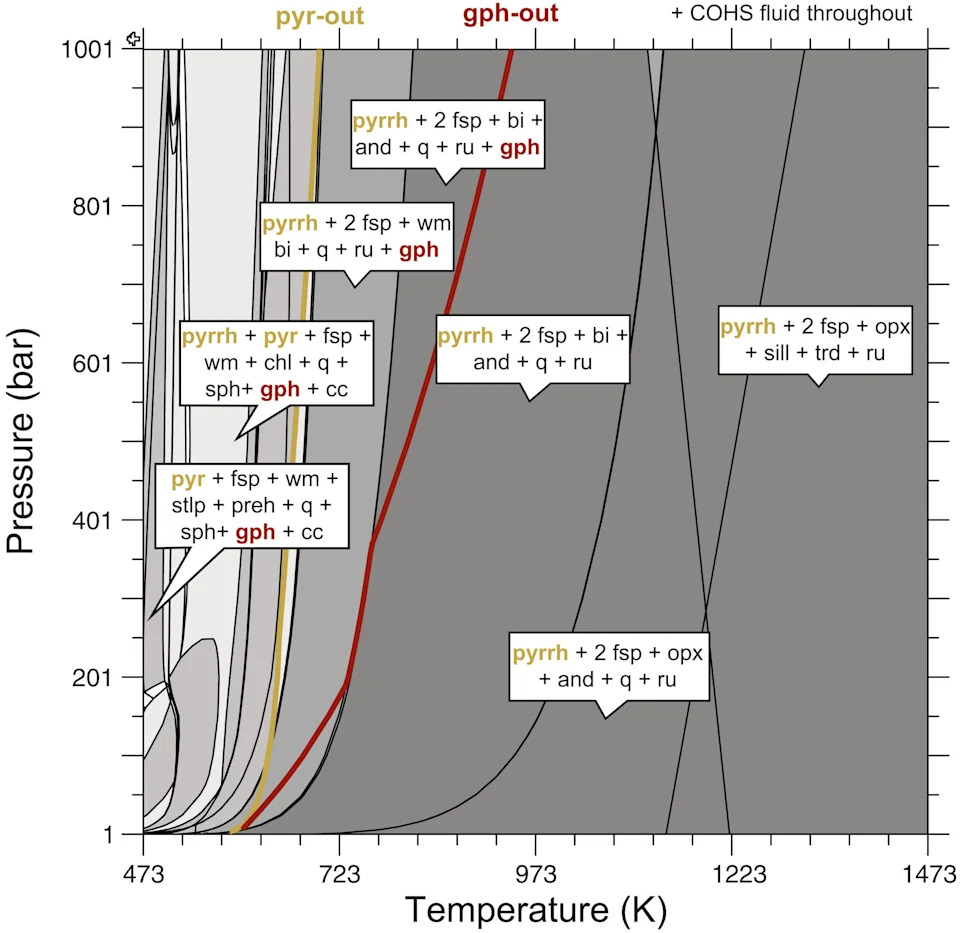
Equilibrium P-T phase diagram. (CREDIT: Science Advances)
Short Cool Spells, Long Warming Trends
Michael Diamond, assistant professor of meteorology and coauthor, explains the climatic roles: sulfur aerosols produce rapid, short-lived cooling, whereas carbon dioxide persists and raises baseline temperatures for centuries to millennia. The overlap of repeated sulfur-driven cool pulses with gradually increasing carbon creates oscillations — fast swings between cool and warm states that destabilize climates and ecosystems.
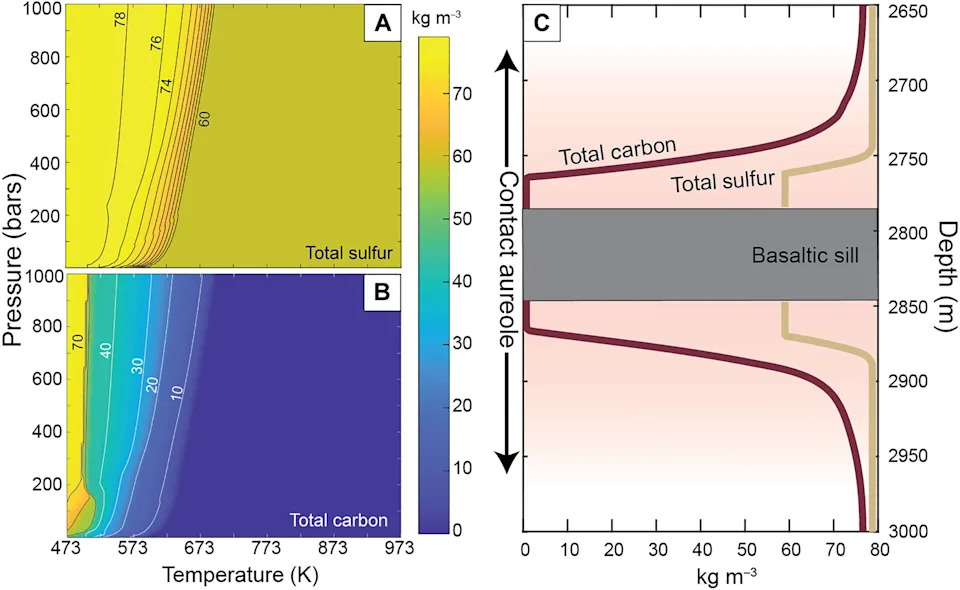
Metamorphic devolatilization. (CREDIT: Science Advances)
Implications For Mass Extinctions
Large igneous provinces (LIPs) such as the Siberian Traps have long been implicated in mass extinctions. The new models show that metamorphic devolatilization in basins adjacent to these intrusions could sustain emissions for centuries, making duration of release a critical factor. This sustained forcing helps explain the rapid climate oscillations inferred in events like the end-Permian mass extinction (~252 million years ago), when up to 96% of marine species vanished.
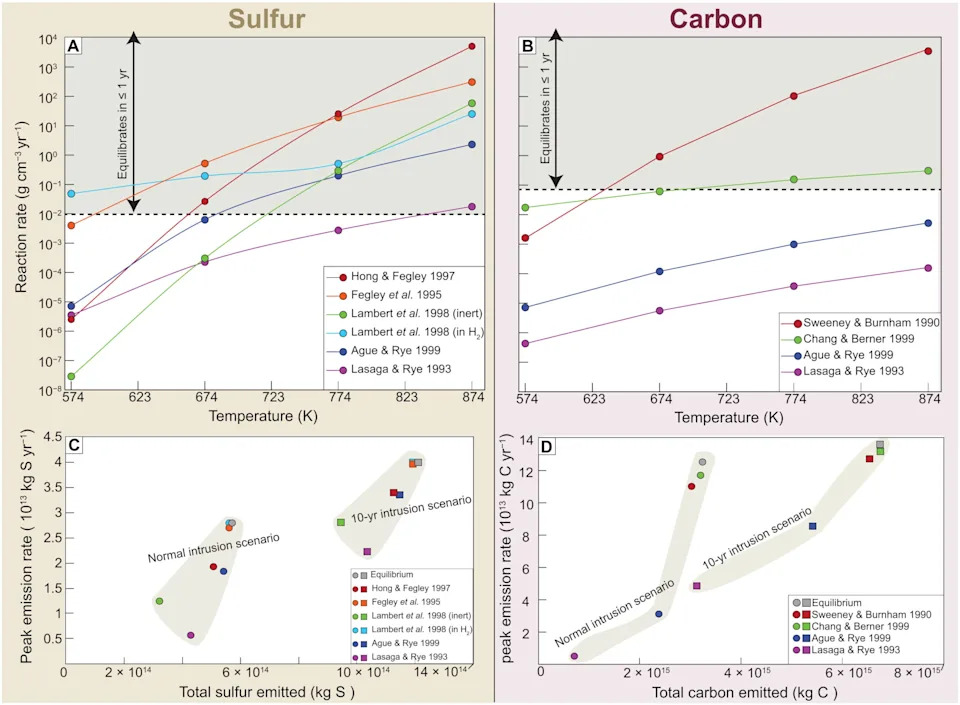
Metamorphic reaction kinetics and their effects on volatile emissions. (CREDIT: Science Advances)
Why Duration Matters More Than Peak Intensity
Previous hypotheses emphasized eruption magnitude or how high plumes reached. The FSU team demonstrates that persistent, lower-intensity emissions confined to lower atmospheric layers can still drive major climate change if they continue long enough to alter the planet's energy balance. Repeated short cooling events combined with long-term carbon buildup produce climate instability that repeatedly stresses ecosystems and slows recovery.
Modern Parallels And Future Work
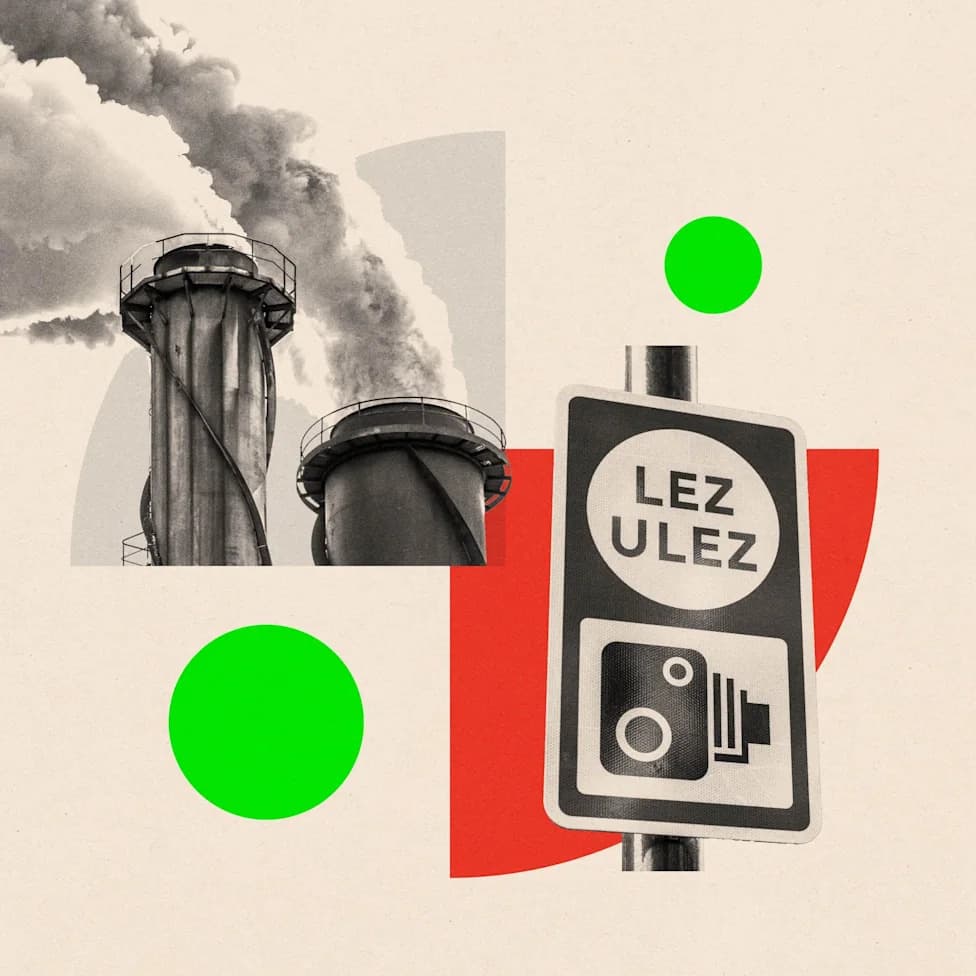
The study draws a useful analogy to modern industrial sulfur emissions, which have a temporary cooling effect by reflecting sunlight. Although modern releases are tiny compared with LIP-era emissions, the underlying physics is the same: sulfur cools; carbon warms. The researchers plan to search the geologic record for direct signatures of metamorphic gas release and to refine coupled thermal-geochemical-atmospheric models to better quantify timing and impacts.
What This Means: Recognizing sustained subterranean gas release as a meaningful contributor to past climate crises changes how scientists reconstruct extinction drivers and how they model Earth's climate sensitivity to large, prolonged perturbations.
Research available online in Science Advances. Reporting and analysis by Florida State University researchers Emily Stewart, Michael Diamond, and colleagues.
Help us improve.