When four words in a Hank Green video prompted viewers to suspect an AI-produced line, Green clarified the phrase was his but admitted heavy reliance on ChatGPT for research and vowed to slow his production. Experts say AI is increasingly used as a behind-the-scenes research assistant that can surface papers and summarize topics quickly. Still, they warn of risks to trust, originality and the communicator's voice, urging transparency and audience-driven boundaries.
Hank Green's AI Moment Fuels Debate: How ChatGPT Is Reshaping Science Communication
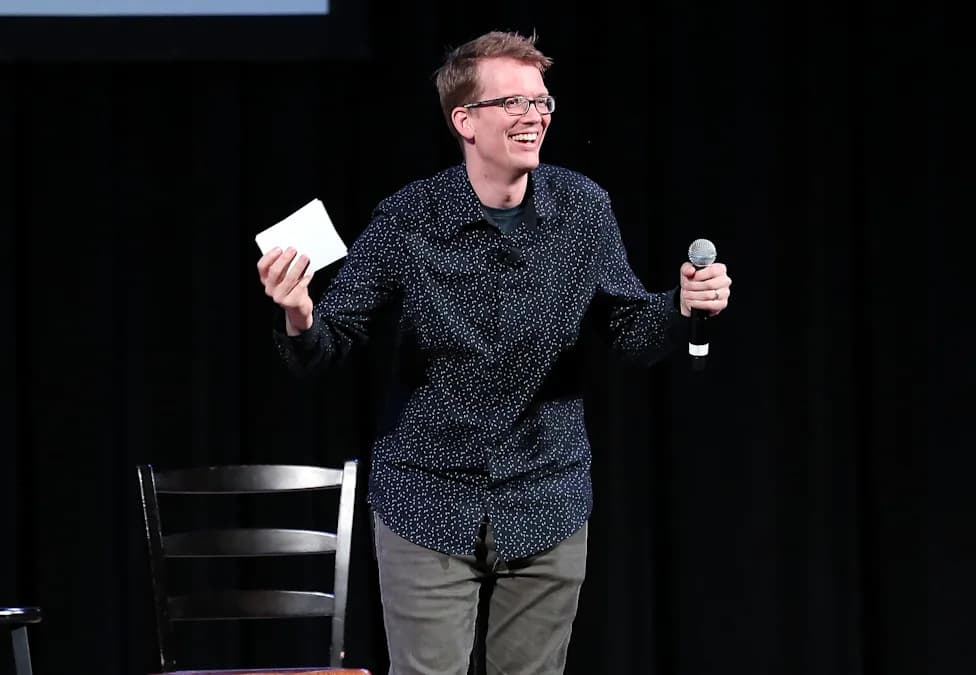
YouTube science personality Hank Green says AI didn’t write the line that set off the controversy. What concerned him was how heavily he had come to rely on it earlier in the process.
Four simple words — "I appreciate the pushback" — in a Hank Green video sparked a wave of suspicion that an artificial voice had been used, prompting fan backlash and a public apology. Green later clarified that the line was his own, but the episode prompted him to acknowledge heavy reliance on ChatGPT when researching video scripts and to promise a slower, more deliberate production pace.
Background
Green, a high-profile science communicator behind YouTube staples such as SciShow and Crash Course, initially posted an apology on X after viewers questioned the clip. As the discussion grew, he admitted on Reddit that his use of ChatGPT had become "not healthy," saying, "I've been moving so fast that my own process isn't actually clear to me." He plans to reduce his output tempo to regain clarity in his creative and editorial process.
AI Behind the Scenes
Communicators interviewed for this story drew a clear distinction between using AI for behind-the-scenes research and letting it generate public-facing content. Under tight deadlines, chatbots can quickly surface relevant papers, summarize unfamiliar topics and provide a rapid orientation — effectively shaping a communicator's initial understanding before they begin writing or recording.
"Because of the sheer volume of scientific output, it's so hard to keep track of everything," says Kanta Dihal, associate professor of science communication at Imperial College London. "To have a system that can do the filtering and data trawling is helpful — at a human pace, it's almost impossible to keep up."
Trust, Voice, And Homogenization
Many communicators expressed caution about allowing AI to author public-facing material. Joe Hanson, host of the PBS show Be Smart, emphasized that trust is the currency of science communication: creators must preserve a transparent relationship with their audience or risk eroding credibility.
Daphne Ippolito, a natural language processing researcher at Carnegie Mellon University, warned of a subtle but important risk: homogenization of language. When people rely heavily on AI to draft text, they may unconsciously adopt the tool's phrasing and tone, gradually reshaping their authentic voice.
Different Boundaries For Different Creators
Practices vary. Raven Baxter ("Raven the Science Maven") uses AI for coding and audience analysis but prefers to consult other scientists for topics outside her expertise. Hanson argued there is no universal rule: creators should negotiate boundaries with their audiences, be transparent about AI use, and respond to audience feedback as a guiding metric.
Practical Takeaways
- Use AI To Speed Research, Not Replace Judgment: Chatbots can surface papers and summarize material quickly, but creators should verify sources and add human context.
- Preserve Voice And Transparency: Disclose when AI influences public-facing content and prioritize maintaining an authentic tone.
- Listen To Your Audience: Audience trust should guide how and where AI is used — creators can adjust policies based on feedback.
Ultimately, the Hank Green episode is less about a single line and more about how AI is quietly changing the workflows of science communicators — offering efficiency but raising questions about rigor, originality and trust.
Help us improve.