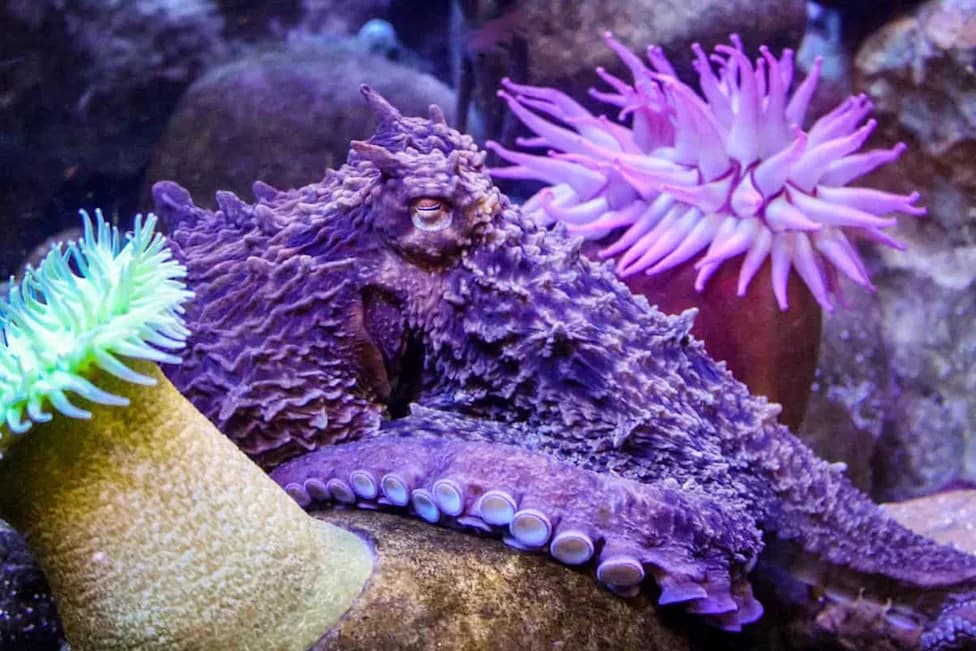
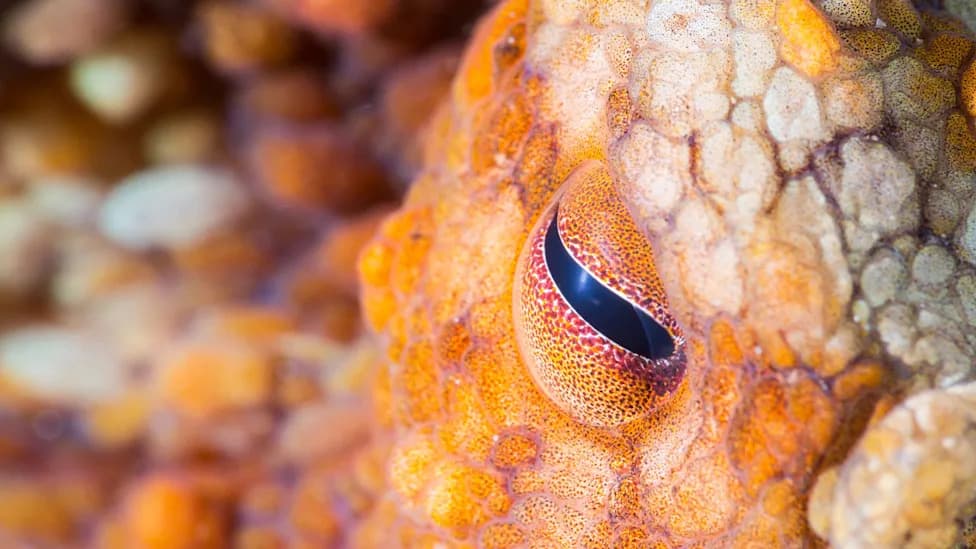
Cephalopods like the day octopus can change skin color and texture within milliseconds to hide, hunt and signal. Their skin has three specialized layers—chromatophores, iridophores and leucophores—while papillae alter surface texture to mimic coral, sand or rock. Although many cephalopods are effectively colorblind, U-shaped pupils and light-sensitive opsins in the skin provide alternative cues that help them match ambient light and wavelengths accurately.
How Colorblind Octopuses Match Colors Perfectly — The Science Behind Cephalopod Camouflage
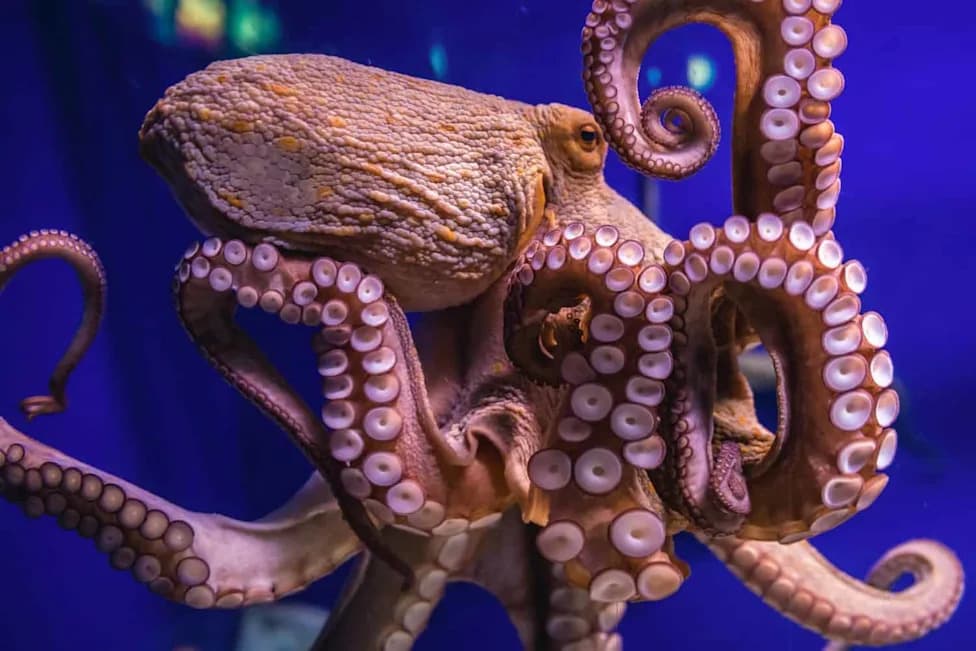
Common octopus in large sea water aquarium© Fotokon/Shutterstock.com
Cephalopods—squids, cuttlefish and octopuses—are among the animal kingdom's most astonishing masters of disguise. In milliseconds they can rewrite their skin's color and texture to hide, hunt or communicate. The day octopus, a relatively large species, is especially impressive: one researcher recorded a single individual changing appearance at least 1,000 times over seven hours.
How They Change Color and Texture
Their rapid transformations rely on a layered skin architecture of specialized cells. The outermost layer contains chromatophores, tiny organs with elastic pigment sacs that expand or contract to show black, brown, orange, red or yellow tones. Beneath those are iridophores, reflective cells that use stacked protein plates to produce iridescent blues, greens and golds. The deepest layer, leucophores, scatter ambient light to create white patches and help blend colors with the surroundings.
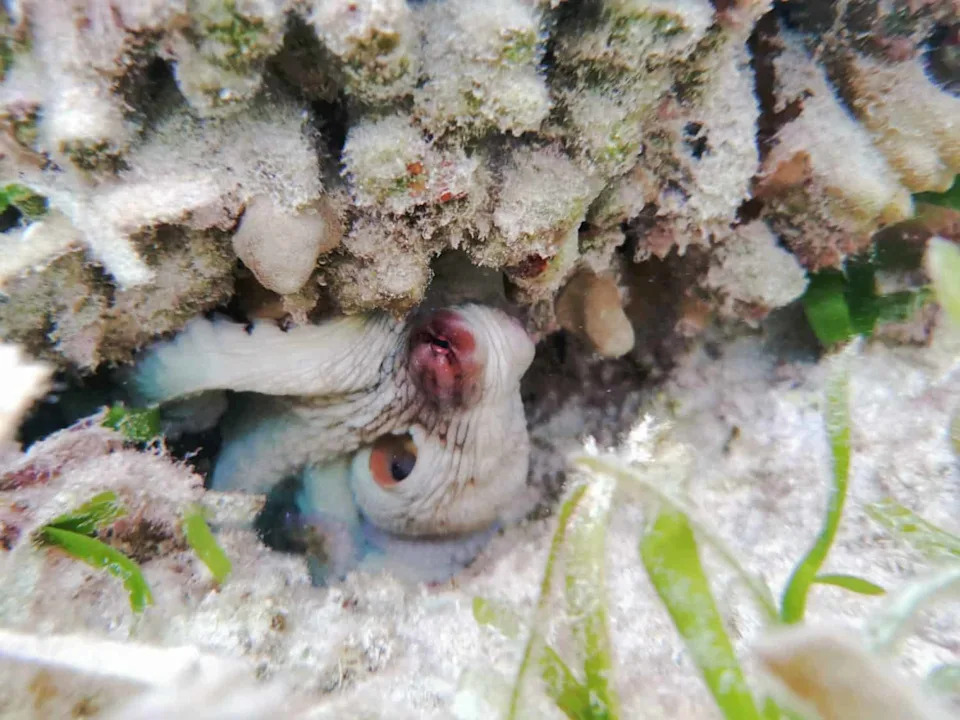
Octopuses are known to turn white while sleeping.©OkGo1981/Shutterstock.com
Papillae: The Skin's Sculptors
Color alone is only part of the disguise. Microscopic muscles control small projections called papillae, which the animal raises or flattens to change surface texture. By pumping fluid into these structures, octopuses can mimic the bumps of coral, the grain of sand, or the sharp edges of rock—adding three-dimensional realism to their color patterns.
Matching Colors Without Color Vision
Perhaps the most surprising fact is that many cephalopods are functionally colorblind: their retinas lack the multiple photoreceptor types humans use to see color. Scientists have proposed two complementary ways they nevertheless match colors so well.
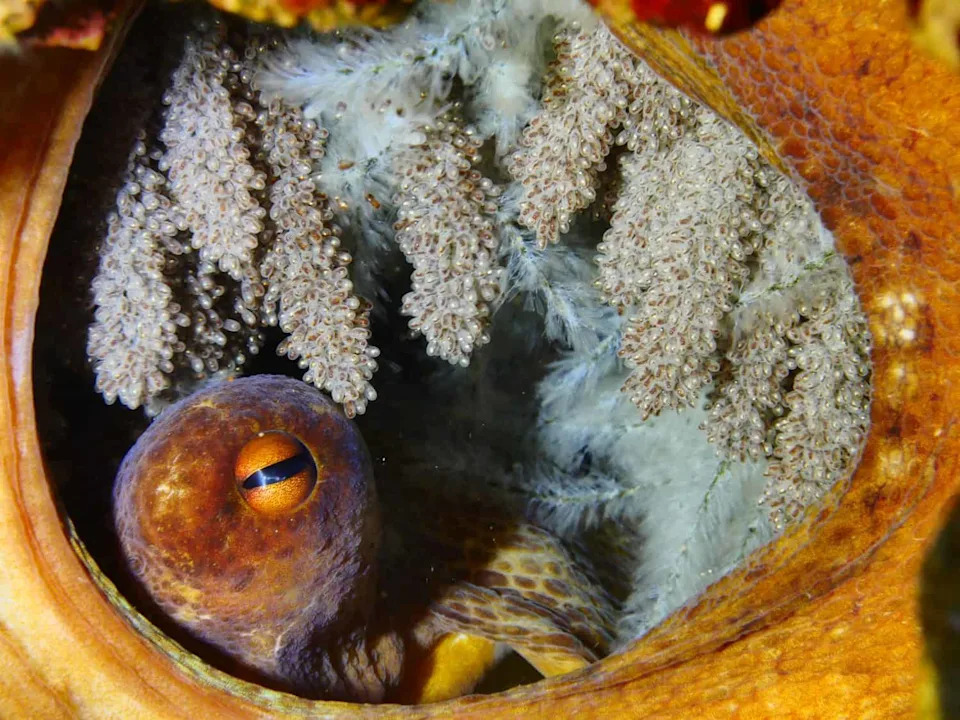
Despite being functionally color blind, octopuses have U-shaped pupils which may help them detect wavelengths in a different way than traditional color receptors.©scubadesign/Shutterstock.com
First, cephalopods have distinctive U-shaped pupils. These pupils may help exploit chromatic aberration—the tendency for different wavelengths to focus at slightly different distances—giving the animals cues about wavelength without conventional color receptors. Second, recent studies found opsins, light-sensitive proteins normally associated with eyes, present in cephalopod skin. Skin opsins allow local sensing of light intensity and aspects of wavelength, so the animal can receive real-time feedback from the surface it touches.
These systems—optical, neural and muscular—work together so that a colorblind animal can still produce near-perfect matches to complex environments.
Purpose and Behavior
Camouflage serves multiple roles: avoiding predators, ambushing prey and communicating. Color and texture shifts are linked to neural activity; for example, octopuses often adopt paler tones while sleeping, and more active sleep stages correlate with more noticeable color changes. Cephalopods can also use displays in social contexts—male Caribbean reef squids, for example, may turn red to court females and white to warn rivals, even showing different patterns on each side of the body to send simultaneous messages.
Researchers continue to investigate how chromatophores, iridophores, leucophores, papillae, U-shaped pupils and skin opsins interact. Together they provide a compelling explanation for how colorblind octopuses achieve rapid, precise camouflage that makes them nearly invisible in complex reef habitats.
Help us improve.